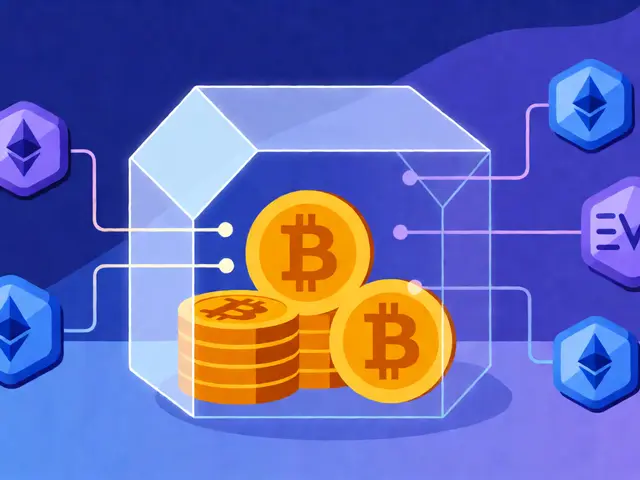
For years, Nigerian crypto traders operated in a legal gray zone. Banks blocked accounts, startups scrambled for offshore partners, and the Central Bank of Nigeria (CBN) issued bans that felt more like suggestions than laws. But everything changed on March 25, 2025. President Bola Ahmed Tinubu signed the Investments and Securities Act (ISA 2025) into law, replacing the outdated 2007 framework with a 226-page rulebook that finally gave digital assets a clear home in Nigerian law.
If you are trading Bitcoin, holding Ethereum, or running a local exchange, this new landscape matters. It is no longer about whether crypto is "allowed." It is about how strictly it is regulated, who watches the watchmen, and what taxes you owe. As of late 2026, the dust has settled enough to see the real-world impact. Here is exactly where you stand.
The End of Ambiguity: What ISA 2025 Actually Says
The core shift isn't just permission; it's classification. Before 2025, regulators debated if crypto was currency, commodity, or security. The ISA 2025 cuts through the noise by defining a crypto asset as a digital representation of value that can be transferred, digitally traded and used for payment or investment purposes. Crucially, it excludes digital versions of fiat money (like a hypothetical e-Naira) from this definition.
This means your Bitcoin is treated similarly to stocks or bonds under capital market rules. It is not illegal tender-you cannot walk into a supermarket in Lagos and pay for rice with BTC-but it is a recognized financial instrument. This distinction protects you from being labeled a criminal for owning coins, but it also subjects you to securities regulations.
- Legal Tender: No. The Naira remains the only official currency for settling debts.
- Legality of Ownership: Yes. Holding and trading are fully legal.
- Regulatory Body: The Securities and Exchange Commission (SEC) is now the primary regulator, not just the CBN.
Who Is Watching You? The New Enforcement Trio
You might remember the 2021 panic when banks froze crypto-related transactions. That era is over, but replaced by a much tighter surveillance net. The government didn't just hand power to one agency; they built a coordinated task force. If you think you can fly under the radar, think again.
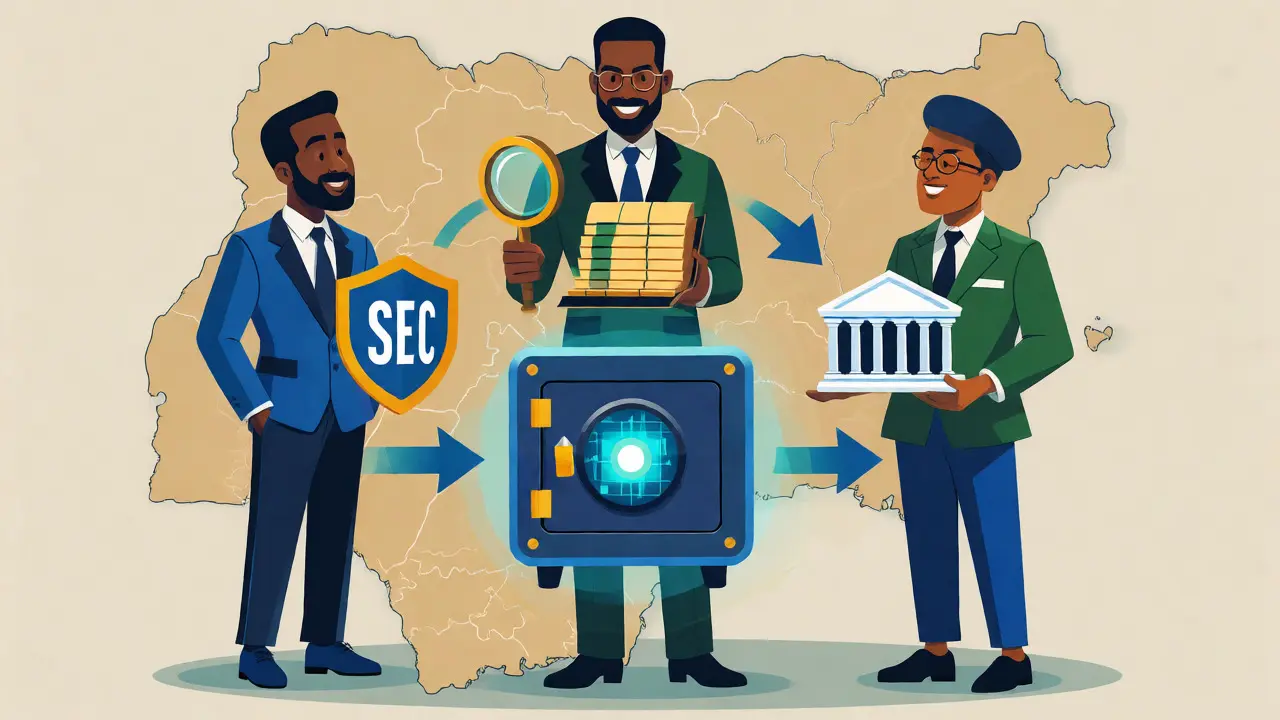
The SEC holds the keys to the kingdom. They approve exchanges, audit brokers, and can even fire executives of failing firms. But they don't work alone. The Economic and Financial Crimes Commission (EFCC) handles fraud investigations, while the Nigerian Financial Intelligence Unit (NFIU) tracks money laundering patterns. Meanwhile, the Central Bank of Nigeria (CBN) still oversees banking channels, ensuring that licensed Virtual Asset Service Providers (VASPs) have proper bank accounts.
| Agency | Primary Responsibility | Power Level |
|---|---|---|
| SEC | Licensing exchanges, regulating VASPs, consumer protection | High (Can revoke licenses) |
| CBN | Banking access, monetary policy alignment | Medium (Controls bank rails) |
| NFIU | AML/CFT compliance monitoring | High (Freezes suspicious funds) |
| EFCC | Fraud prosecution, Ponzi scheme crackdowns | High (Criminal enforcement) |
Taxes Are Coming: The NTAA 2025 Impact
Let’s talk about the elephant in the room: money leaving your pocket. The Nigeria Tax Administration Act (NTAA) 2025, which took full effect in early 2026, places heavy compliance burdens on platforms. You aren't necessarily taxed directly on every trade yet in the same way you are on salary income, but the infrastructure is being built to capture it.
VASPs are now responsible for collecting and remitting taxes. If an exchange fails to comply, they face steep fines-starting at ₦10 million ($6,693) for the first month of default, plus ₦1 million for each subsequent month. Why should you care? Because compliant exchanges will likely pass these costs down to you via higher fees or spread adjustments.
With an estimated $92.1 billion in crypto value flowing through Nigeria between July 2024 and June 2025, the government sees this as a massive revenue opportunity. Expect stricter KYC (Know Your Customer) checks. Anonymity is dying out in favor of auditable trails.
What Happened to the Ban? A Brief History Lesson
To understand why the current rules feel so strict, look back at the chaos. In February 2021, the CBN banned banks from dealing with crypto. It wasn't a ban on ownership, but it strangled the on-ramps. Nigerians responded by going peer-to-peer (P2P). By 2023, Nigeria had become the world leader in P2P volume. The government realized banning innovation was futile.
The softening began in 2023 when the CBN allowed banks to serve licensed VASPs. Then came the SEC’s Accelerated Regulatory Incubation Programme (ARIP) in mid-2024, testing waters with sandbox approvals. Platforms like Quidax and Busha were among the first to get greenlit. The ISA 2025 was the final piece, moving from experimental sandboxes to permanent, enforceable law.
NFTs and DeFi: Are They Regulated Too?
Not all digital assets are treated equally. The new law draws a sharp line between utility and speculation. Artistic NFTs-think digital art or collectibles-are largely left alone. However, if you buy an NFT marketed as an investment product promising returns, it falls under SEC scrutiny as a security.
Similarly, online forex trading platforms are now under the microscope. Previously, many fintech apps offered high-yield savings (like PiggyVest or Cowrywise) or offshore stock investments (like Bamboo) without strict securities oversight. Now, if the promise involves profit sharing from underlying assets, it’s regulated. This protects retail investors from "too good to be true" yields that often mask Ponzi structures.

Practical Implications for Traders and Investors
So, what do you actually need to do differently today?
- Check Your Exchange’s License: Don’t just use any app. Verify if your platform is registered with the SEC. Unlicensed platforms risk sudden shutdowns or frozen withdrawals.
- Expect Higher Compliance Friction: Uploading ID documents and proof of address is no longer optional. It’s mandatory for both you and the exchange.
- Keep Records for Taxes: While direct capital gains tax implementation varies, keeping a clean transaction history is vital. If the FIRS (Federal Inland Revenue Service) audits your bank statements linked to crypto inflows, you’ll want proof of source.
- Beware of "Guaranteed Returns": The EFCC is actively hunting schemes that promise fixed monthly profits on crypto deposits. If it sounds like a bank deposit but pays like a hedge fund, run.
The regulatory environment favors institutional-grade players. Small, unregulated local exchanges may struggle with compliance costs, leading to consolidation. For the average user, this means fewer choices but safer ones.
Why This Matters Beyond Nigeria
Nigeria’s approach is setting a precedent for Africa. With the largest population and highest adoption rates, its regulatory success or failure ripples across the continent. Other nations are watching to see if strict licensing stifles innovation or legitimizes the market. So far, the balance seems tilted toward legitimacy. The sheer volume of activity-nearly double South Africa’s-makes ignoring the sector impossible.
For international investors, Nigeria is no longer a "wild west" frontier. It is a regulated emerging market. This attracts serious capital but deters speculative fly-by-night operators. If you are building a portfolio, treat Nigerian crypto exposure with the same due diligence you would apply to any regulated equity market.
Is cryptocurrency illegal in Nigeria as of 2026?
No, cryptocurrency is not illegal. The Investments and Securities Act (ISA) 2025 explicitly recognizes digital assets as securities. While you cannot use them as legal tender for official payments, owning, trading, and investing in crypto is fully legal and regulated by the SEC.
Can I still use banks to buy crypto in Nigeria?
Yes. The 2021 ban on banks processing crypto transactions was lifted. Banks can now provide accounts to licensed Virtual Asset Service Providers (VASPs). However, individual bank accounts may still face scrutiny for frequent large transfers related to crypto, so using licensed exchanges with dedicated banking partnerships is recommended.
Do I have to pay tax on my crypto profits in Nigeria?
The Nigeria Tax Administration Act (NTAA) 2025 places compliance obligations on exchanges. While direct capital gains tax collection mechanisms are still maturing, exchanges are required to report transactions. Non-compliant VASPs face heavy penalties. Users should maintain records as the Federal Inland Revenue Service (FIRS) intensifies efforts to capture crypto-related income.
Which agencies regulate crypto in Nigeria?
The primary regulator is the Securities and Exchange Commission (SEC), which licenses exchanges and enforces securities laws. The Central Bank of Nigeria (CBN) oversees banking channels, while the Economic and Financial Crimes Commission (EFCC) and the Nigerian Financial Intelligence Unit (NFIU) handle fraud and anti-money laundering compliance respectively.
Are NFTs regulated in Nigeria?
It depends on the type. Artistic NFTs are generally unregulated. However, NFTs marketed as investment products or securities-those promising financial returns-are subject to SEC regulations under the ISA 2025. If you buy an NFT expecting profit rather than utility or art, it falls under securities law.