
Key Takeaways for Exchange Operators
- Timeline: Expect a total setup time of 4 to 8 months.
- Capital: Minimum share capital varies from CHF 20,000 (GmbH) to CHF 100,000 (AG).
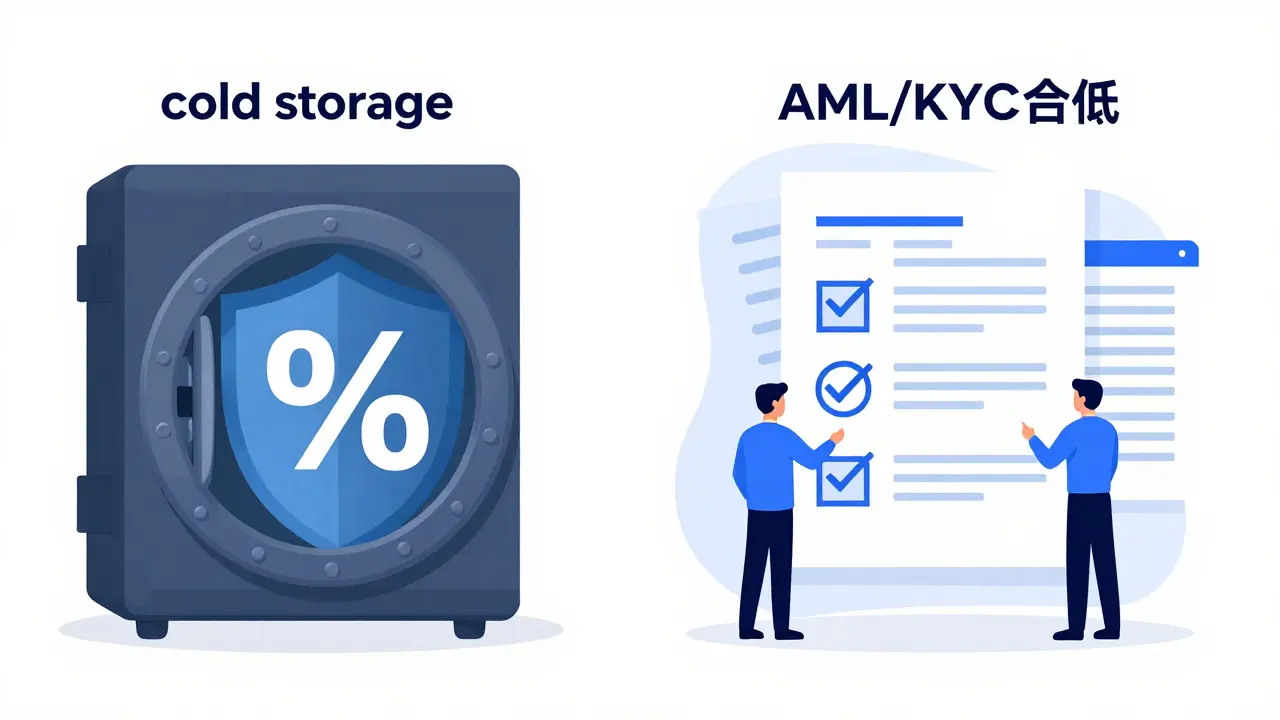
- Custody: 95% of client assets must be kept in cold storage.
- Compliance: Strict adherence to AMLA and FATF standards is non-negotiable.
- Edge: A FINMA license attracts institutional clients who avoid unregulated platforms.
Which License Do You Actually Need?
Because Switzerland regulates by activity, you might need one or several licenses depending on your business model. You can't just pick one and hope for the best; you have to map your services to the legal framework.| License Type | Primary Function | Best For... | Key Requirement |
|---|---|---|---|
| DLT Trading Venue | Integrated trading, clearing, and settlement | Institutional platforms & Security Tokens | High technical resilience (RTO/RPO) |
| VASP License | Virtual Asset Service Provider | Custodians and payment processors | Strict AML/KYC procedures |
| Crypto Exchange | Facilitating crypto-fiat or crypto-crypto trades | Retail and Pro trading platforms | Liquidity and market integrity rules |
| Crypto Broker | Intermediating transactions for clients | Asset management services | Fiduciary duty and transparency |
The DLT Trading Venue is a specialized license introduced under the 2020 DLT Law that allows a single entity to combine trading, clearing, and custody services . This is a game-changer for those building security token platforms, as it removes the need to contract multiple separate providers for settlement and custody.
The Step-by-Step Path to Authorization
Getting licensed is a marathon, not a sprint. If you rush the documentation, FINMA will likely send you back to the drawing board, adding months to your timeline.- Company Incorporation: You must first establish a legal entity. You can choose an AG (Aktiengesellschaft), which is a joint-stock company requiring CHF 100,000 in capital, or a GmbH, a limited liability company with a minimum of CHF 20,000. This phase typically takes 3 to 4 months.
- Documentation Assembly: This is where most applicants struggle. You need a comprehensive business plan, three-year financial projections, and a detailed security architecture.
- Security Infrastructure Setup: FINMA isn't interested in "trust me" promises. You must prove your security. This includes implementing multi-signature wallets (usually a 3-of-5 signing requirement) and ensuring that 95% of client assets are in cold storage.
- The Application Submission: Submit your package to FINMA. Be prepared for a back-and-forth process. Case officers are generally responsive, often providing feedback within 10 business days, but they are thorough.
- Final Approval and Launch: Once the license is granted, you can begin onboarding clients. Total time from day one to launch is usually 4 to 8 months.
Technical Requirements and Operational Resilience
FINMA treats crypto exchanges with the same rigor as traditional banks. If your system goes down, you can't just post a "we're working on it" tweet. You need documented operational resilience. Specifically, critical systems must have a Recovery Time Objective (RTO) of no more than 4 hours. This means if a server fails, you must be back online within that window. Furthermore, the Recovery Point Objective (RPO) must be 15 minutes, meaning you can't lose more than 15 minutes of transaction data. To prove this, you'll need to undergo annual penetration testing by auditors approved by FINMA. It's not enough to hire a random freelancer on a gig site; you need a recognized firm that understands Swiss financial standards. This level of scrutiny is why 83% of European hedge funds trust Swiss-licensed custodians with their assets-the safety is verified and audited.The Cost of Compliance: Is it Worth It?
Let's be real: the costs are steep. Between company registration, legal consultants (who can cost CHF 8,000 to 15,000 per month), and government fees, you're looking at an initial investment of CHF 20,000 to over CHF 100,000. Many operators find that ongoing compliance costs are 25-40% higher than they initially projected. You'll likely need a dedicated compliance team; on average, a licensed exchange employs about 3.2 full-time compliance staff just to keep the regulators happy. But here is the trade-off: while the EU's MiCA is the Markets in Crypto-Assets regulation, a comprehensive EU framework providing a 'passport' to operate across 27 member states offers wider reach, Switzerland offers deeper institutional trust. If your goal is to attract high-net-worth individuals and family offices, a FINMA license is a badge of honor that MiCA can't quite replicate in terms of prestige.
Common Pitfalls to Avoid
Many DeFi founders make the mistake of thinking that "decentralization" exempts them from licensing. FINMA uses a "substance-over-form" principle. If there is a central group of people controlling the protocol, or if the governance token distribution effectively concentrates power, FINMA will treat you like a financial institution. Another common hurdle is banking. About 62% of applicants struggle to find a Swiss bank willing to open a corporate account for a crypto business. Don't leave this until the end of your application process; start building those relationships early, or you'll have a license but no way to move fiat currency.How long does it actually take to get a FINMA license?
The entire process typically spans 4 to 8 months. This includes 3 to 4 months for the initial company incorporation (AG or GmbH) and another 1 to 4 months for the actual license approval process, depending on the complexity of your business model and the quality of your documentation.
What is the minimum capital requirement for a Swiss crypto exchange?
It depends on your company structure. An AG (joint-stock company) requires a minimum share capital of CHF 100,000, while a GmbH (limited liability company) requires at least CHF 20,000.
Do DeFi protocols need a FINMA license?
Potentially, yes. FINMA applies a "substance-over-form" approach. If the protocol is not truly decentralized and is managed by a central entity or a concentrated group of token holders, it may trigger licensing requirements under the AMLA or FMIA.
What are the custody requirements for client assets?
FINMA requires a very high security standard: 95% of client assets must be held in cold storage (offline wallets). Additionally, multi-signature wallets with a 3-of-5 signing requirement are generally expected for operational security.
How does Switzerland compare to MiCA for new exchanges?
MiCA allows "passporting," meaning one license lets you operate in 27 EU countries, which is a huge advantage for scaling. However, Switzerland is often preferred by institutional-grade platforms due to its long-standing reputation for stability, its specialized DLT laws, and its deep integration with traditional private banking.
What is the Travel Rule requirement in Switzerland?
Under the revised AMLA effective January 1, 2025, exchanges must comply with enhanced Travel Rule requirements for transactions exceeding CHF 1,000, meaning the identity of the sender and receiver must be verified and transmitted.