Imagine a cryptocurrency that doesn’t just promise value but holds actual Bitcoin in a digital vault to back it up. That’s the core pitch of EverValue Coin, known by its ticker EVA. It’s not another meme coin riding on hype; it’s an ERC-20 token on the Arbitrum network designed with a specific economic model: every token is mathematically tied to wrapped Bitcoin (wBTC) held in a smart contract called the Burn Vault.
If you’ve been looking for a way to get exposure to Bitcoin without buying whole coins, or if you’re interested in how deflationary mechanics work in DeFi, EVA is worth understanding. But before you buy, you need to know exactly how this backing works, where to trade it, and what risks are involved. Here is everything you need to know about EverValue Coin as of late 2026.
The Core Concept: Real Bitcoin Inside
Most cryptocurrencies derive their value from community sentiment, utility within a specific app, or scarcity alone. EverValue Coin takes a different route. It claims to be "a token with real Bitcoin inside." The project launched in 2024 on Arbitrum One, a Layer-2 scaling solution for Ethereum, which means transactions are faster and cheaper than on the main Ethereum chain.
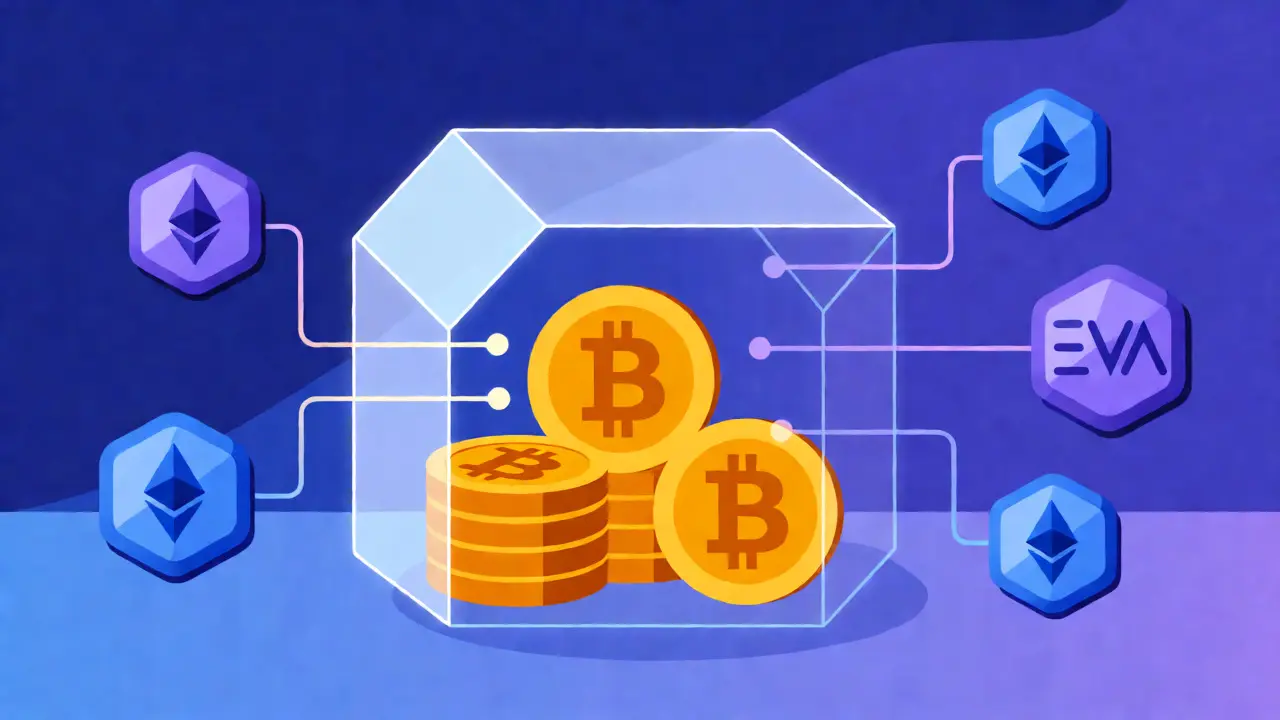
The genius-or at least the marketing hook-lies in the Burn Vault. This is a dedicated smart contract that accumulates wBTC from two sources: proceeds from Bitcoin mining operations linked to the project and revenue from EVA token sales. Every day, new Bitcoin flows into this vault. Crucially, you cannot withdraw that Bitcoin directly. To access the underlying BTC value, you must burn your EVA tokens. This mechanism creates a structural floor for the price because the amount of Bitcoin per token increases over time as the supply of EVA decreases through burns.
This setup distinguishes EVA from stablecoins like USDT or USDC, which are pegged to fiat currency, and from wrapped Bitcoin tokens like WBTC, which track Bitcoin’s price one-to-one. EVA aims to appreciate relative to Bitcoin due to its fixed supply cap and increasing collateral ratio.
Tokenomics: Scarcity and Supply Mechanics
EVA’s economic design mirrors Bitcoin’s most famous feature: scarcity. The maximum supply is hard-capped at exactly 21,000,000 tokens. There is no "mint" function, meaning no additional tokens can ever be created beyond this limit. As of September 2026, reports indicate that approximately 18.5 million EVA tokens are in circulation, leaving roughly 2.5 million yet to enter the market or locked in reserves.
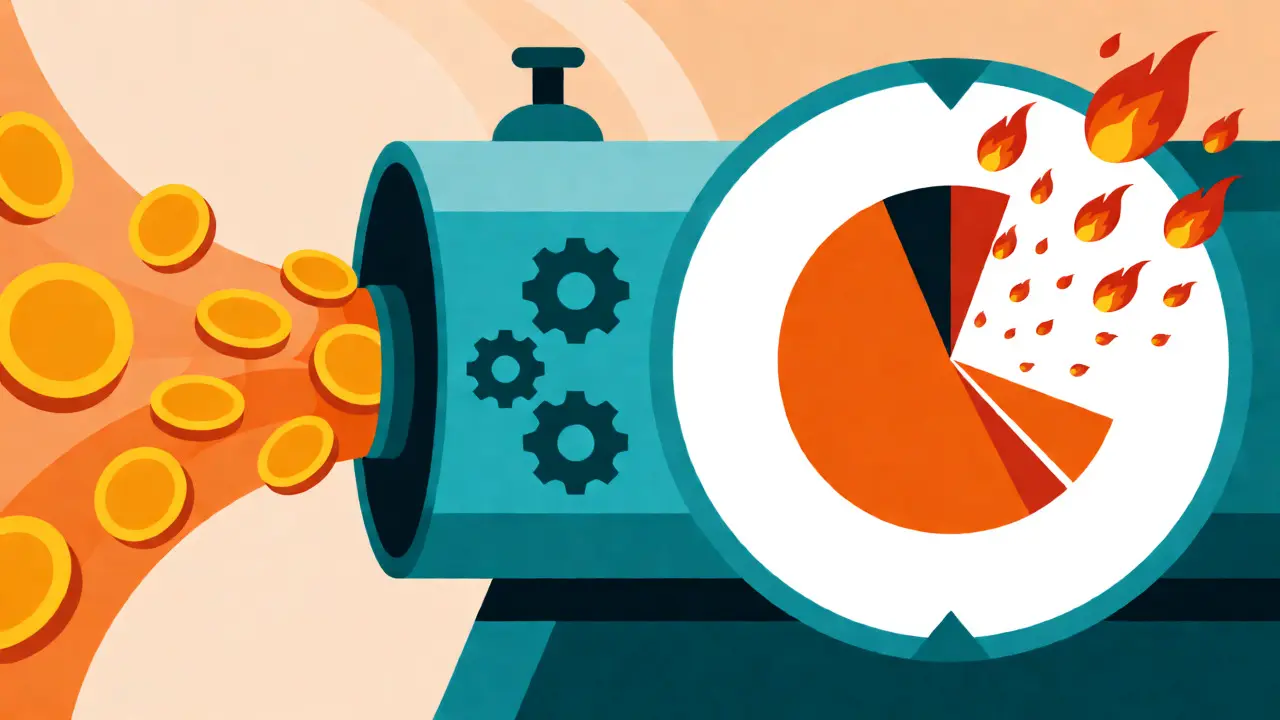
Why does this matter? Because supply and demand drive price. With a capped supply, any increase in demand must result in a higher price per unit. Add the deflationary pressure of the Burn Vault, where tokens are effectively removed from circulation when users redeem BTC, and you have a model built for potential long-term appreciation. However, remember that past performance doesn’t guarantee future results. While the supply is fixed, demand can fluctuate wildly based on market sentiment.
| Attribute | Details |
|---|---|
| Ticker | EVA |
| Network | Arbitrum One (ERC-20) |
| Max Supply | 21,000,000 Tokens |
| Backing Asset | Wrapped Bitcoin (wBTC) |
| Security Audit | Hacken |
| Launch Year | 2024 |
How the Burn Vault Works
The Burn Vault is the heart of the EverValue ecosystem. It’s audited by Hacken, a reputable blockchain security firm, which adds a layer of trust regarding the code’s integrity. The vault holds wBTC, and its balance is verifiable on-chain. In early 2025, reports showed the vault holding over 233 BTC. By mid-2026, this figure had grown, reflecting continuous inflows from mining revenues and sales.
Here’s the practical implication: The "Burn Price" is calculated by dividing the total BTC in the vault by the circulating supply of EVA. This gives you a theoretical floor price in satoshis (the smallest unit of Bitcoin). If you hold EVA, you are essentially holding a claim on a fraction of the Bitcoin in that vault. When you decide to exit, you burn your EVA tokens, and the equivalent amount of wBTC is released to you. This process enforces the deflationary aspect-every redemption reduces the circulating supply of EVA, theoretically making the remaining tokens more valuable.
Where to Buy and Trade EVA
You don’t need to be a DeFi expert to buy EverValue Coin, though having some familiarity helps. The token is listed on several centralized exchanges (CEXs), including MEXC, BingX, Mercado Bitcoin, and WEEX. For those who prefer decentralized finance (DeFi), EVA is available on Arbitrum-based DEXs like Uniswap v4, PancakeSwap, and 1inch.
To buy via DeFi, you’ll need a wallet compatible with Arbitrum, such as MetaMask or Rabby. You’ll also need ETH on the Arbitrum network to pay for gas fees. The transaction speeds are fast, and costs are significantly lower than on Ethereum Mainnet. If you prefer simplicity, using a CEX like MEXC might be easier, as you can buy directly with credit cards or other cryptocurrencies without managing private keys immediately.

Risks and Considerations
No investment is risk-free, and EVA has specific vulnerabilities you should watch out for:
- Volatility: Despite being backed by Bitcoin, EVA trades like a high-beta altcoin. Its price can swing dramatically independent of Bitcoin’s movements due to liquidity issues or market speculation.
- Smart Contract Risk: Even with audits, bugs can exist. The Burn Vault logic is complex, and any failure there could impact the ability to redeem BTC.
- Regulatory Uncertainty: Crypto regulations vary by country. Australia, where I’m writing from, has evolving rules around crypto assets. Ensure you understand the tax implications in your jurisdiction.
- Liquidity Depth: While trading volume is healthy, it’s not comparable to major coins like BTC or ETH. Large sell orders could impact the price more significantly.
Also, note that the backing depends on the continued flow of Bitcoin into the vault. If mining revenues drop or token sales slow down, the rate at which the BTC-per-token ratio increases might slow, affecting the perceived value proposition.
Final Thoughts
EverValue Coin represents an interesting experiment in tokenomics. By combining the scarcity of Bitcoin with the transparency of on-chain reserves, it offers a unique product in the crowded crypto market. It’s not just a speculative asset; it has a tangible underlying value proposition. However, it remains a niche player compared to giants like Bitcoin or Ethereum. If you believe in the concept of asset-backed tokens and want exposure to Bitcoin with a deflationary twist, EVA is worth researching further. Just keep your expectations realistic and never invest more than you can afford to lose.
Is EverValue Coin backed by real Bitcoin?
Yes, EverValue Coin (EVA) is backed by Wrapped Bitcoin (wBTC) held in a smart contract known as the Burn Vault. The amount of wBTC in the vault is verifiable on-chain, and the project claims that daily deposits from mining revenues and token sales ensure continuous backing for each EVA token.
What network does EverValue Coin use?
EVA operates on the Arbitrum One network as an ERC-20 compatible token. This allows for low transaction fees and fast settlement times compared to the Ethereum Mainnet, while maintaining compatibility with most Ethereum wallets and DeFi protocols.
Can I exchange EVA for Bitcoin directly?
You can redeem EVA for Bitcoin by burning your tokens through the Burn Vault smart contract. This process releases the equivalent amount of wBTC to your wallet. Alternatively, you can sell EVA for Bitcoin on supported exchanges like MEXC or Uniswap.
Is EverValue Coin audited?
The Burn Vault smart contract has been audited by Hacken, a well-known blockchain security company. This audit helps verify that the code governing the deposit and withdrawal of Bitcoin functions correctly and securely.
What is the maximum supply of EVA?
The maximum supply of EverValue Coin is hard-capped at 21,000,000 tokens. No new tokens can be minted after this limit is reached, creating a scarcity model similar to Bitcoin’s 21 million cap.