When you need to swap tokens instantly without waiting for order books to fill or deposits to clear, Kyber Network delivers. Unlike centralized exchanges where you wait for matching buyers and sellers, Kyber connects you directly to liquidity pools on-chain. It’s not flashy. It doesn’t have charts or margin trading. But if you’re running an e-commerce store that accepts crypto payments, or building a dApp that needs guaranteed settlement, Kyber works - and it works fast.
What Kyber Network Actually Does
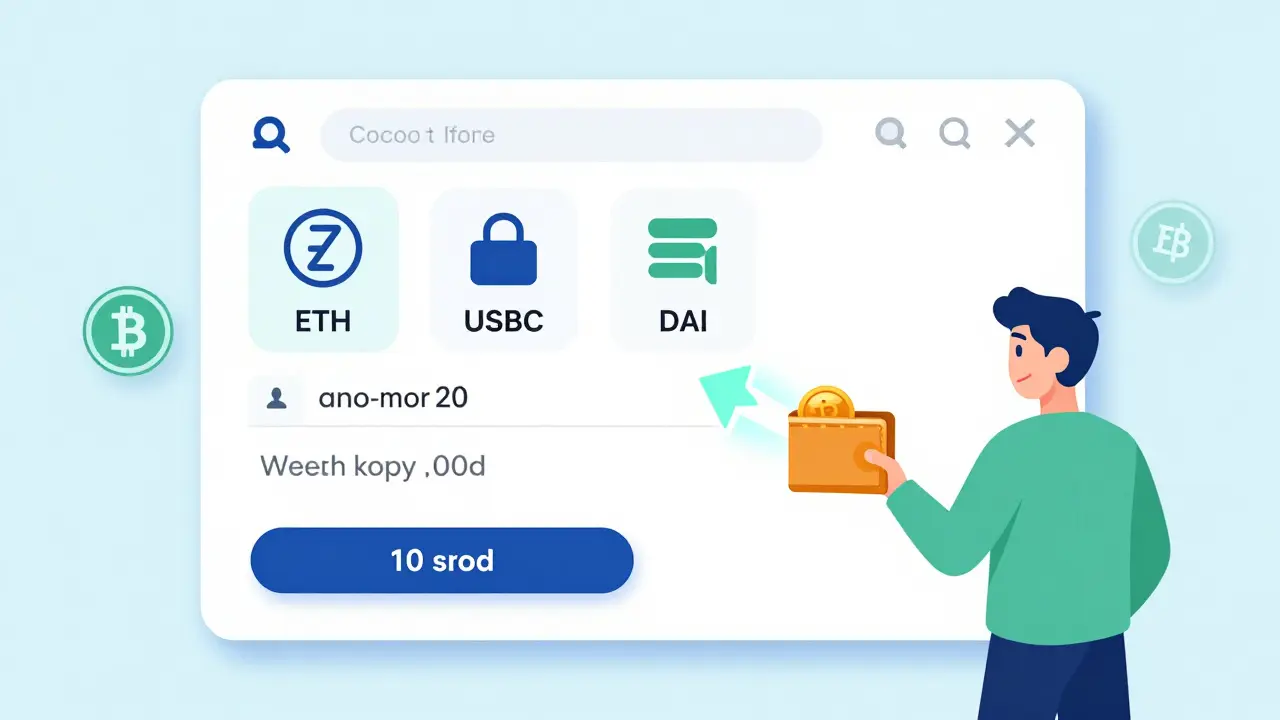
Kyber Network isn’t a traditional exchange. It’s a liquidity protocol. Think of it like a middleman that pulls together token liquidity from dozens of sources - Uniswap pools, market makers, individual liquidity providers - and gives you one clean price in a single transaction. No wrapping. No multi-step approvals. Just swap ETH for DAI, or USDC for MKR, and it’s done in under 10 seconds.
It runs on Ethereum as an ERC-20 token called KNC. You need an Ethereum wallet like MetaMask to use it. No KYC. No account creation. You connect your wallet, pick your tokens, and hit swap. That’s it.
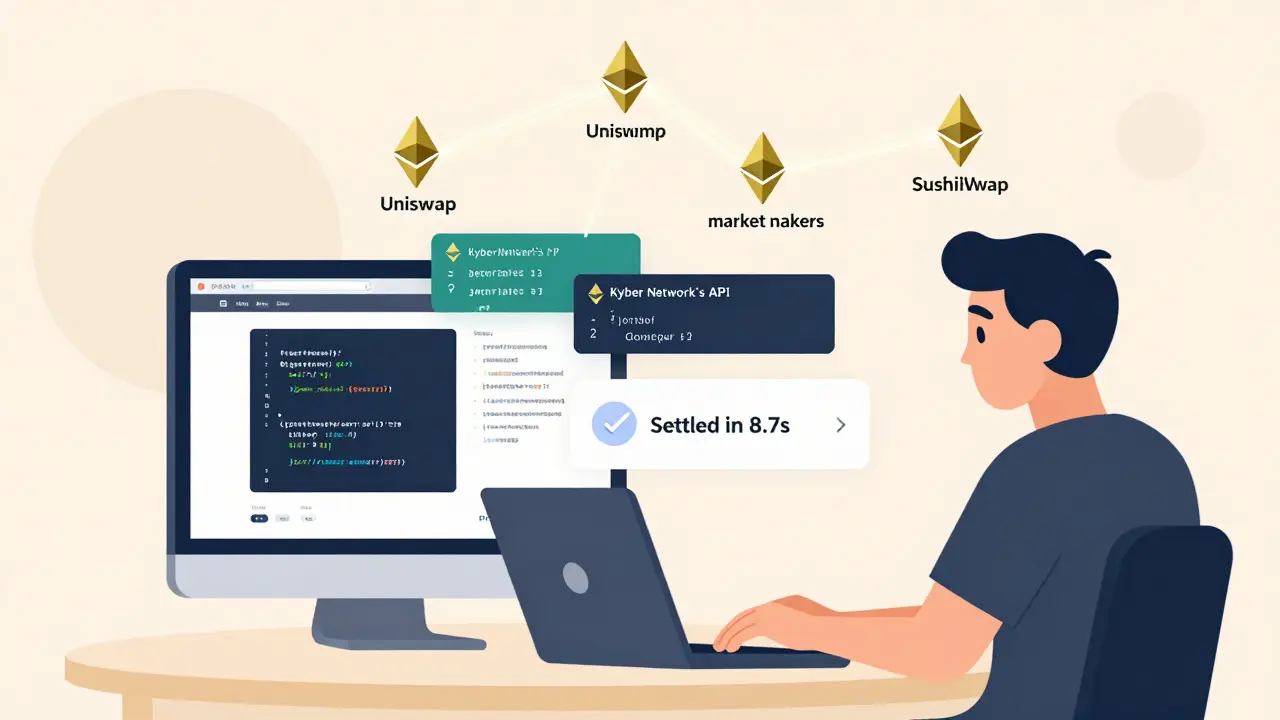
The 2025 Swap Flow V3 upgrade cut average swap times from 15 seconds to 8.7 seconds and reduced slippage by 37% during volatile markets. That’s not just a tweak - it’s a material improvement for anyone relying on real-time settlement.
How Kyber Compares to Uniswap and SushiSwap
Most people compare Kyber to Uniswap. They’re both decentralized. Both run on Ethereum. Both let you swap tokens without a middleman. But here’s the difference:
- Uniswap uses automated market makers (AMMs) with constant product formulas. You get the best available price from its liquidity pools, but you might need two transactions if the token isn’t directly paired.
- Kyber aggregates liquidity from multiple sources in one go. It finds the best rate across Uniswap, SushiSwap, and professional market makers - then executes it in a single on-chain transaction.
For traders, Uniswap v3’s concentrated liquidity and advanced features like limit orders win. For merchants? Kyber wins. Why? Because Kyber guarantees settlement before the customer leaves your checkout page. If you’re selling a product and need to know the payment is final before shipping, Kyber’s speed and reliability matter more than fancy trading tools.
Who Uses Kyber - And Why
The real strength of Kyber isn’t in retail trading. It’s in integration.
Over 1,842 e-commerce platforms used Kyber’s payment solutions in Q3 2025, up from 1,207 in 2024. One merchant on Reddit reported processing $250,000 in crypto payments with zero failed transactions over three months. How? Customers paid in any ERC-20 token - ETH, USDT, LINK - and the merchant received stablecoins automatically, settled in under 15 seconds.
Developers love Kyber’s API. Integration takes 3-5 business days. The documentation is solid. The support team responds to GitHub issues within 48 hours in 95% of cases. But here’s the catch: you need to know what you’re doing. If you’re not familiar with Ethereum gas fees, slippage tolerance, or smart contract calls, you’ll struggle. There are no beginner tutorials. No video walkthroughs. Just code and docs.
Fees and Costs
Kyber charges a flat 0.10% fee on successful limit orders. Some reports say it’s 0% - that’s likely for certain reserve types or promotional periods. Either way, it’s competitive. There are no withdrawal fees beyond the Ethereum network gas cost. That’s better than many centralized exchanges that slap on hidden withdrawal charges.
Gas fees are your only variable cost. During peak Ethereum congestion, you might pay $5-$15 per swap. But Kyber’s V3 upgrade optimized transaction size, reducing gas usage by about 12% compared to older versions.
Token Utility: What’s KNC For?
KNC is the governance token. Holders vote on protocol upgrades, fee structures, and reserve allocations. Since the 2020 Katalyst upgrade, KNC holders can earn a share of the 0.10% trading fees. That’s a real incentive - not just speculation.
As of December 2025, KNC has a market cap of $53.4 million and a circulating supply of 170 million tokens. That’s tiny compared to Uniswap’s $3.2 billion. But KNC isn’t meant to be a store of value. It’s a utility token for governance and fee distribution. If you’re not planning to vote or earn protocol revenue, holding KNC doesn’t add much value.

Downsides and Risks
Kyber isn’t perfect.
- No user-friendly interface: The swap page is barebones. No price charts, no history, no order types. It’s a tool, not a platform.
- Slippage during volatility: Even with V3 improvements, sudden price swings can still cause unfavorable rates. Experienced users set rate thresholds to avoid bad swaps - but that’s not obvious to newcomers.
- Weak educational resources: Trustpilot reviews (3.7/5) mention confusion among new users. There’s no glossary, no FAQ for beginners, no help button.
- Low community activity: Kyber has 12,543 monthly active members across Discord and Telegram. Uniswap has nearly 90,000. That means fewer community-driven tools, fewer third-party integrations, and slower feedback loops.
Regulatory risk exists too. With MiCA in force across the EU since January 2025, decentralized protocols face increased scrutiny. But because Kyber is non-custodial - you hold your own keys - it’s in a better position than centralized exchanges that store user funds.
Is Kyber Right for You?
Ask yourself:
- Are you a merchant or developer? If yes - Kyber is one of the best options for crypto payments. Fast, reliable, no intermediaries.
- Are you an active trader? If yes - stick with Uniswap, SushiSwap, or a centralized exchange. Kyber doesn’t offer limit orders, stop-losses, or advanced charts.
- Are you new to crypto? If yes - start with a simple app like Coinbase or Crypto.com. Kyber assumes you know what gas fees are and how wallets work.
Kyber doesn’t try to be everything. It’s focused. It solves one problem really well: instant, trustless token swaps for on-chain applications. If that’s your need, it’s a standout. If you want to day trade or track price trends, look elsewhere.
What’s Next for Kyber?
The roadmap is clear: expand beyond Ethereum. By Q2 2026, Kyber plans to support Polkadot and five other blockchains. That’s huge. Right now, it’s locked to Ethereum’s high fees and slow speeds. Cross-chain support could unlock massive growth - especially for merchants dealing with users on Solana, Polygon, or Arbitrum.
Price predictions vary wildly. Some analysts say KNC could hit $199 by 2050. Others say it’ll be €1.05 by 2034. The truth? KNC’s value isn’t tied to price speculation. It’s tied to adoption. If more merchants use it, more developers build on it, and more liquidity providers join the reserves, the protocol grows - and KNC holders benefit.
Right now, Kyber is a niche tool for a specific use case. But in DeFi, niche tools that solve real problems often outlast flashy platforms that try to do everything.
Is Kyber Network a good crypto exchange for beginners?
No, not really. Kyber’s interface is minimal and assumes you understand wallets, gas fees, and Ethereum. There are no tutorials, no help guides for new users, and no customer support chat. If you’re just starting out, use a centralized exchange like Coinbase or Binance to buy your first tokens, then move to Kyber only if you need to swap them instantly for a dApp or merchant payment.
Can I use Kyber to trade Bitcoin?
Not directly. Kyber only supports ERC-20 tokens on Ethereum. To trade Bitcoin, you’d need to wrap it into wBTC (wrapped Bitcoin), which is an ERC-20 token that represents Bitcoin on Ethereum. Once you have wBTC, you can swap it for other tokens using Kyber. But that adds steps and extra fees.
How does Kyber make money?
Kyber charges a 0.10% fee on successful limit orders. That fee is distributed to KNC token holders who stake their tokens or participate in governance. Kyber itself doesn’t hold or profit from user funds - it’s a protocol, not a company. All fees are paid directly to liquidity providers and KNC stakers, not to a central entity.
Is Kyber safer than centralized exchanges?
Yes, in terms of custody. With Kyber, you never give up control of your funds. You swap directly from your wallet using your private keys. Centralized exchanges like Binance or Kraken hold your crypto for you - meaning if they get hacked or freeze accounts, you lose access. Kyber’s non-custodial design eliminates that risk.
Does Kyber support mobile apps?
Kyber doesn’t have an official mobile app. But you can access it through any Ethereum wallet app that supports dApps - like MetaMask, Trust Wallet, or Rainbow. Just open the wallet, go to the browser, and visit kyberswap.com. It works fine on mobile, though the experience is still basic compared to full-featured DeFi apps.
What’s the difference between Kyber and a DEX aggregator?
Kyber is both a liquidity protocol and a DEX aggregator. It doesn’t just find the best price across other DEXes like 1inch or Paraswap - it also provides its own liquidity through reserve managers. This means Kyber can guarantee a rate even if other pools are thin. For merchants, that guarantee matters more than finding the absolute cheapest rate.
Can I earn interest on my KNC tokens?
Not directly. KNC doesn’t offer staking rewards like some other tokens. But if you hold KNC and participate in governance, you can vote on fee distribution. When the protocol collects trading fees, a portion is distributed to KNC holders based on their voting power and participation. So you earn indirectly through governance, not through staking.
How does Kyber handle slippage?
Kyber lets you set a maximum slippage tolerance before swapping - usually between 0.5% and 2%. If the market moves too much and the final rate is worse than your tolerance, the swap is canceled. The V3 upgrade improved slippage by 37% during volatility by optimizing how liquidity is sourced and priced. Still, during extreme market swings, you might get a worse rate than expected.