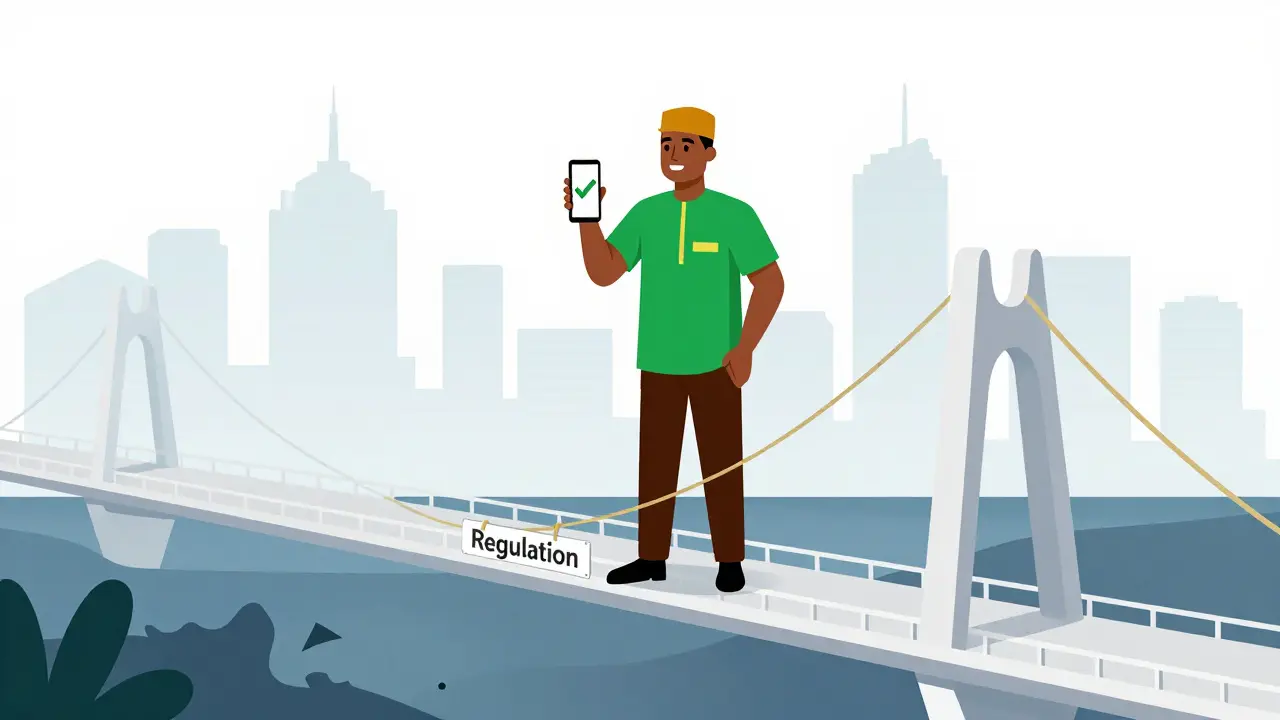
For years, trading cryptocurrency in Nigeria is the most populous country in Africa with a rapidly growing digital economy and high crypto adoption rates felt like walking a tightrope. One day you could trade freely; the next, your bank account might freeze without warning. If you are asking whether crypto is regulated in Nigeria today, the answer has shifted dramatically from "no" to "yes, heavily." The landscape changed completely in 2025 when new laws replaced the old bans with strict oversight.
You are no longer operating in a legal gray area. The government now treats digital assets as securities, meaning every exchange, wallet provider, and trader must follow specific rules set by federal agencies. This guide breaks down exactly what those rules are, who enforces them, and how they affect your daily trading habits in 2026.
The End of the Ban: How Laws Changed in 2025
To understand where we stand today, you have to look at the turning point. For nearly a decade, the Central Bank of Nigeria (CBN) is the monetary authority of Nigeria responsible for currency issuance and banking regulation told banks not to process crypto transactions. This created a messy situation where users relied on peer-to-peer (P2P) markets because traditional banking channels were closed off.
That era ended in December 2023 when the CBN officially lifted its ban on crypto transactions. But the real game-changer came in March 2025. President Bola Ahmed Tinubu signed the Investments and Securities Act (ISA) 2025 is landmark legislation that redefined digital assets as securities under Nigerian law. This law replaced the outdated 2007 version and explicitly recognized cryptocurrencies as financial instruments.
Why does this matter to you? Because it moved crypto out of the shadows and into the hands of regulators. It means the government acknowledges crypto’s value but wants control over how it moves through the economy. The ambiguity is gone, replaced by a clear, albeit strict, legal framework.
Who Watches the Watchers? Key Regulatory Bodies
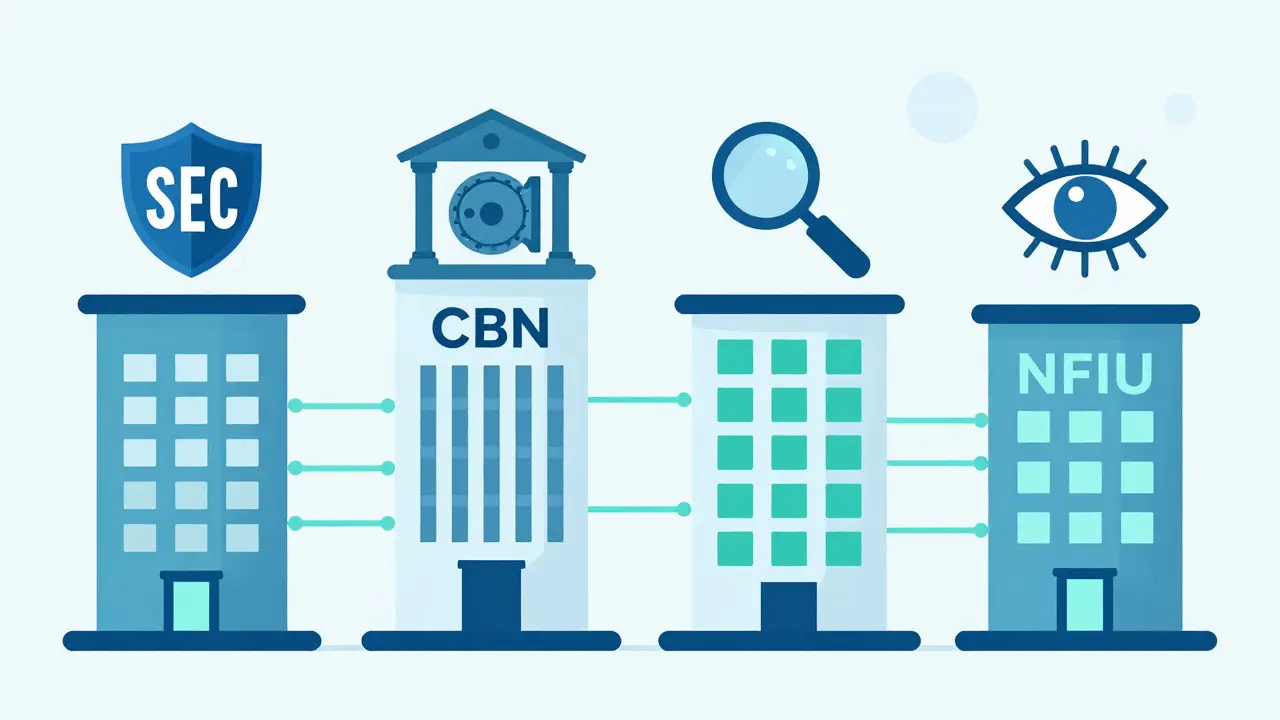
In Nigeria, crypto regulation isn’t handled by just one person or office. It’s a multi-agency effort designed to cover every angle of the industry. Understanding who does what helps you know where to go if you have issues or need compliance advice.
- Securities and Exchange Commission (SEC): They are the primary boss for crypto exchanges. Under the ISA 2025, the SEC oversees all virtual asset service providers (VASPs). They issue licenses and ensure platforms aren’t running scams.
- Central Bank of Nigeria (CBN): While they don’t license exchanges directly, they regulate the banks. Their VASP Guidelines allow licensed crypto businesses to open corporate accounts, which was previously impossible.
- Economic and Financial Crimes Commission (EFCC): Think of them as the police force for financial crimes. They work with the SEC to investigate fraud, money laundering, and Ponzi schemes involving crypto.
- Nigerian Financial Intelligence Unit (NFIU): They monitor suspicious transaction reports. If your trading patterns look like money laundering, the NFIU steps in.
This coordinated approach means there are fewer loopholes than before. You can’t hide behind one agency’s lack of jurisdiction because another will pick up the slack.
Licensing Requirements for Exchanges and Businesses
If you are running a crypto business in Nigeria, the barrier to entry has risen significantly. The SEC introduced detailed licensing categories under its Digital Assets Rules 2022, which now operate alongside the ISA 2025. You cannot just launch a website and start taking deposits.
| Requirement | Details |
|---|---|
| Paid-up Capital | Minimum capital thresholds vary by license type, ensuring financial stability. |
| Fidelity Bonds | Companies must hold insurance bonds to protect against employee fraud or theft. |
| Local Presence | Mandatory Nigerian corporate registration and physical office locations. |
| Management | Key management roles must be held by Nigerian residents. |
| Compliance Officer | A dedicated officer must report to the SEC and NFIU regularly. |
By late 2024, only two major exchanges, Busha is one of the first Nigerian crypto exchanges to receive provisional licensing from the SEC and Quidax is a leading licensed crypto exchange in Nigeria known for its P2P trading features, had received provisional licenses. Dozens of other companies applied, but the vetting process is thorough and slow. This protects users from shady operators but limits choice for traders.
Taxes and Penalties: What You Pay in 2026
Regulation brings revenue collection. With the signing of the Nigeria Tax Administration Act (NTAA) 2025 is legislation introducing specific tax obligations and penalties for cryptocurrency activities in June 2025, the tax man is now watching your wallet. The act takes full effect in 2026, meaning you need to prepare your finances now.
The NTAA introduces crypto-specific taxes. While individual retail traders often face lower scrutiny, businesses and VASPs are on the hook for significant reporting. The penalties for non-compliance are steep. If a VASP defaults on its obligations, the initial fine is ₦10 million (approximately $6,693) for the first month. Every additional month of delay adds ₦1 million ($669) to the bill. The SEC can also suspend or revoke licenses entirely.
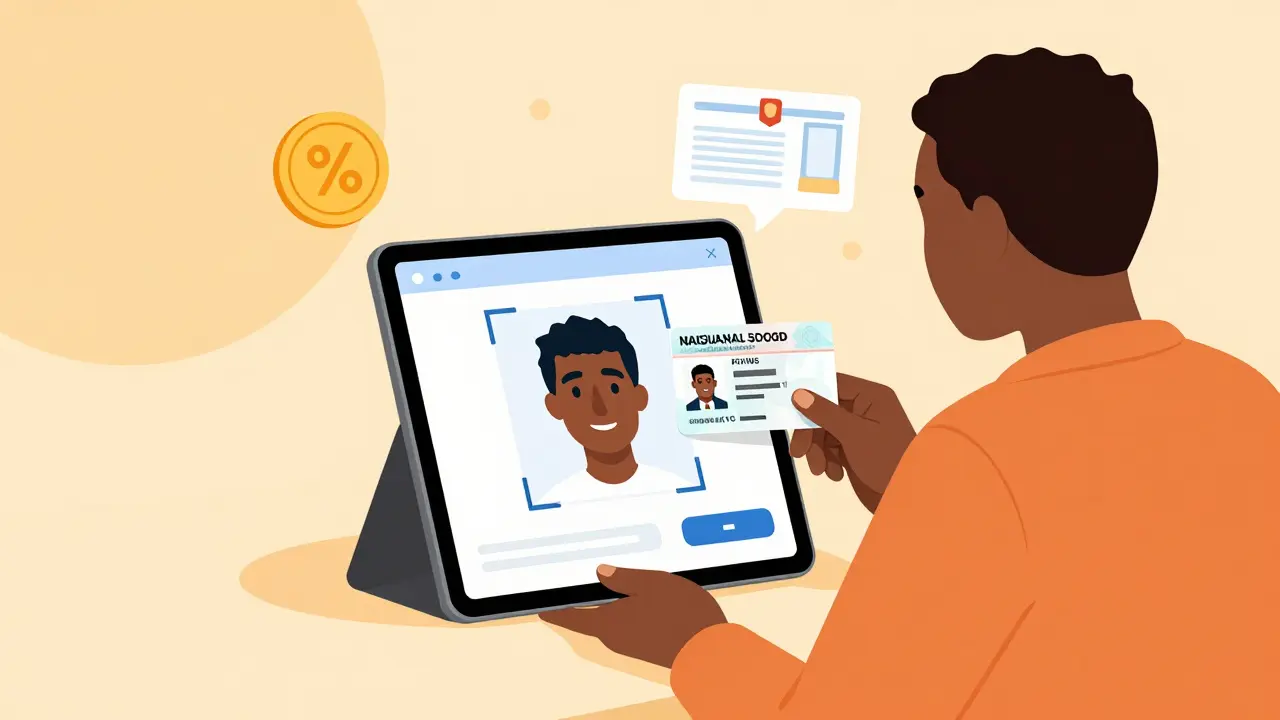
For everyday users, this means exchanges will likely implement stricter Know Your Customer (KYC) checks to ensure they can report your earnings accurately. Expect more friction when withdrawing funds, as platforms verify your identity to avoid these massive fines.
Impact on Daily Traders and Users
How does all this bureaucracy affect you buying Bitcoin or Ethereum? On paper, things should be smoother. Banks can now legally serve crypto businesses, so you might see fewer frozen accounts. However, the reality is mixed.
Many users still prefer P2P trading because it feels less monitored. But even P2P platforms are cracking down. Licensed exchanges like Busha and Quidax require full KYC verification. You can’t just sign up with an email anymore. You need ID, proof of address, and sometimes even video verification.
There is also a concern about surveillance. The new laws give regulators access to telecom records for investigations. While this targets criminals, some users worry about privacy. The trade-off is safety versus anonymity. In 2026, anonymity in Nigerian crypto is largely dead for anyone using formal channels.
Comparison with Other African Markets
Nigeria isn’t alone in regulating crypto, but its approach is unique. Let’s compare it to neighbors like Kenya and South Africa.
- Kenya: Has introduced crypto-specific taxes but lacks a comprehensive licensing framework for exchanges similar to Nigeria’s ISA 2025.
- South Africa: Has a mature regulatory environment with the Financial Sector Conduct Authority (FSCA) overseeing markets, but adoption rates are lower than in Nigeria.
- Nigeria: Leads in volume. Between July 2024 and June 2025, Nigeria received an estimated $92.1 billion in crypto value. This makes it a prime target for regulatory attention.
Nigeria’s strategy is aggressive. By creating a structured licensing system first, it aims to become a fintech hub. This contrasts with countries that simply taxed existing activity without building a supportive infrastructure.
Future Outlook: What Comes Next?
The regulatory framework is still maturing. We expect more exchanges to get licenses in late 2026 as the SEC clears its backlog. There may also be refinements to the rules based on early feedback. For example, the definition of "investment-focused NFTs" vs. "artistic NFTs" is still being clarified. Currently, only NFTs marketed as financial products fall under SEC purview.
Long-term, Nigeria’s position looks strong. The large user base and government commitment to clarity attract foreign investment. However, success depends on balancing innovation with consumer protection. If regulations become too burdensome, users might flee to decentralized protocols or offshore platforms, leaving the government with less tax revenue and control.
Is it legal to buy Bitcoin in Nigeria in 2026?
Yes, it is legal. Since the implementation of the Investments and Securities Act 2025 and the lifting of the CBN ban, buying and selling cryptocurrency is a regulated financial activity. You must use licensed platforms to ensure compliance.
Which crypto exchanges are licensed in Nigeria?
As of mid-2026, Busha and Quidax are the most prominent exchanges with provisional licenses from the SEC. More platforms are expected to join as the licensing process continues. Always check the SEC’s official registry for the current list.
Do I have to pay tax on my crypto profits?
Under the Nigeria Tax Administration Act 2025, crypto gains are subject to taxation. While enforcement varies for small retail traders, businesses and high-volume traders must declare their income. Failure to comply can result in penalties.
Can my bank account be frozen for crypto trading?
It is less likely now than in previous years, but still possible if you engage in suspicious activities or use unlicensed platforms. The CBN allows banks to serve licensed crypto businesses, but individual accounts linked to illicit activities remain at risk.
What happens if I use an unlicensed exchange?
Using unlicensed exchanges carries significant risk. These platforms are not protected by Nigerian law, meaning you have no recourse if they hack, scam, or shut down. Additionally, the EFCC actively investigates and shuts down illegal operations.