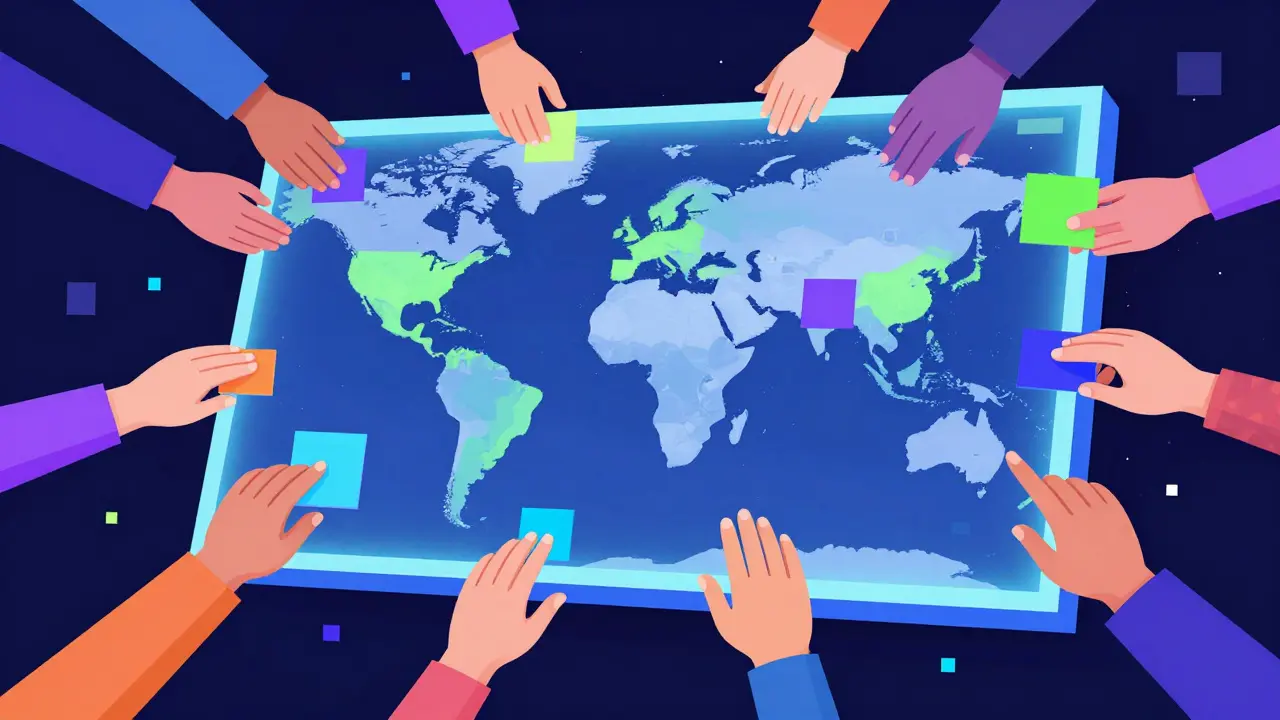
Imagine a giant, digital canvas where thousands of people from across the globe fight for every single pixel. Now imagine that your ability to claim and defend those pixels earns you actual money. That is the core of Not Pixel (PX) is a utility token powering a decentralized digital art marketplace and multiplayer gaming environment hosted as a mini-app on Telegram. Built on the TON blockchain, it turns the act of creating pixel art into a competitive economy. Unlike most crypto projects that ask for money upfront, Not Pixel focuses on a "win-to-earn" philosophy, meaning your skills and time are the primary currency.
The Brains Behind the Pixel
Not Pixel didn't appear out of nowhere. It was founded by Sasha Plotvinov, the same visionary who launched Notcoin. This connection is crucial because it means Not Pixel isn't just a standalone experiment; it's part of a broader effort to bring blockchain utility to the millions of users already on Telegram. By leveraging the TON blockchain, the platform avoids the clunky interfaces of traditional crypto wallets, making it accessible to anyone who can send a text message.
The project functions as a social experiment in creativity and competition. Players engage in a shared digital canvas, completing tasks and participating in tournaments to earn rewards. Because it's hosted within Telegram, it taps into a massive existing user base, removing the friction that usually kills new crypto apps.
How the PX Token Actually Works
To understand Not Pixel (PX), you have to look at its internal economy. The token isn't just a speculative asset; it's the fuel for the entire canvas. One of the most interesting technical details is the conversion ratio: 1,000 pixels in the game equal 1 $PX token. This creates a direct link between in-game effort and token value.
The supply is strictly capped at roughly 250 million tokens (specifically 249,999,988), which introduces a level of scarcity similar to rare physical art. If you're wondering who owns the tokens, the distribution was designed to avoid the common "whale" problem where a few insiders hold everything:
- Community and Miners: 70% to 80% of the supply is dedicated to the people actually playing and mining the tokens.
- The Team: A small slice (8%) is reserved for the creators, but these were 100% locked at launch to prevent a "pump and dump" scenario.
- Marketing and Liquidity: About 12% is set aside to keep the token tradeable and the project growing.
Crucially, the token is ownerless. In the world of decentralized finance, this means there is no single "CEO" who can flip a switch and change the rules. The power sits with the community holders.
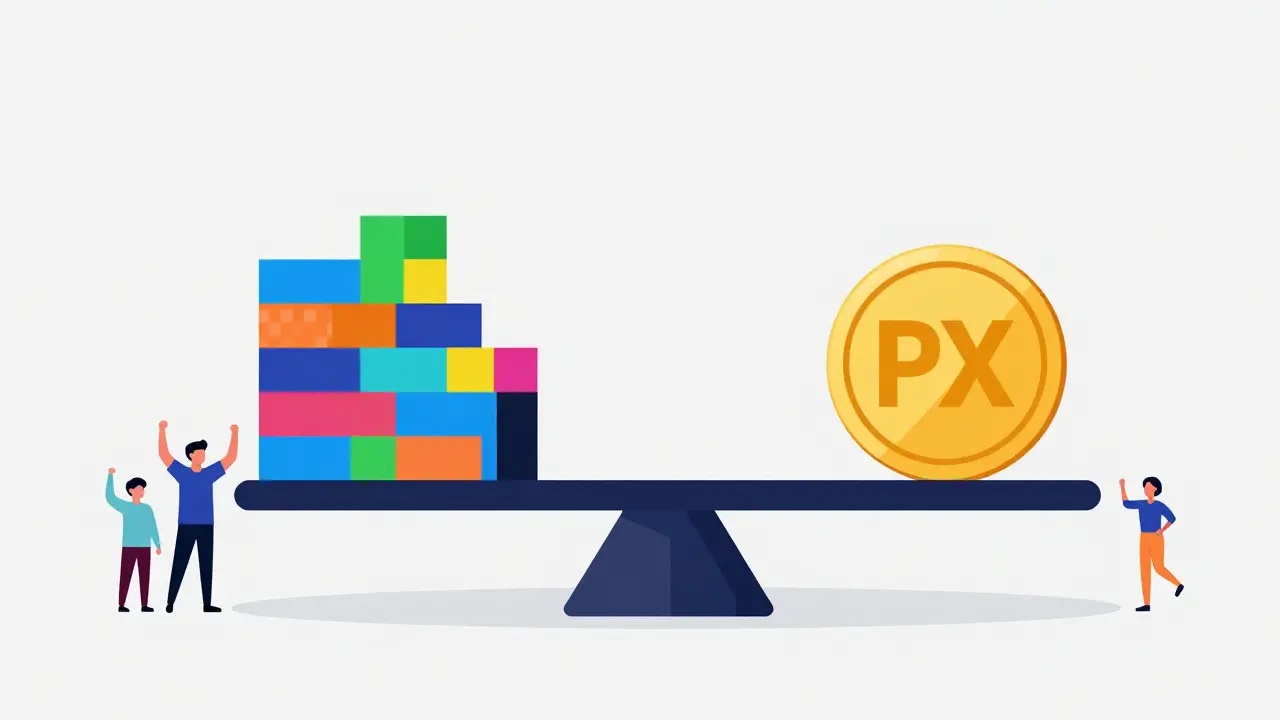
Win-to-Earn vs. Play-to-Earn
Most people are familiar with "Play-to-Earn" (P2E) games, which often feel like second jobs or require you to buy expensive NFTs just to start playing. Not Pixel flips this script with a win-to-earn model. In this system, your rewards are based on skill, creativity, and dedication rather than how much money you spend.
If you are a talented pixel artist or a strategic gamer, you can climb the ranks and earn PX tokens without ever opening your wallet. This creates a more equitable environment. You aren't just "clicking a button" to mine; you are competing on a canvas, joining "Squads" (Telegram-based communities), and winning tournaments. It's as much a social network as it is a financial asset.
Utility: What Can You Actually Do with PX?
A token without a use is just a digital ticket to nowhere. PX tokens have several concrete applications within the ecosystem:
- Buying Digital Art: You can use PX to purchase exclusive collectibles and digital art pieces created by other users.
- Bidding in Auctions: Rare items often go to auction, where PX is the only way to secure a high-value piece.
- Supporting Artists: The platform allows for crowdfunding, meaning you can use your tokens to help a digital artist finish a massive project.
- NFT Integration: Not Pixel integrates with Non-Fungible Tokens (NFTs), allowing players to turn their pixel creations into unique assets that can be traded on the broader blockchain market.
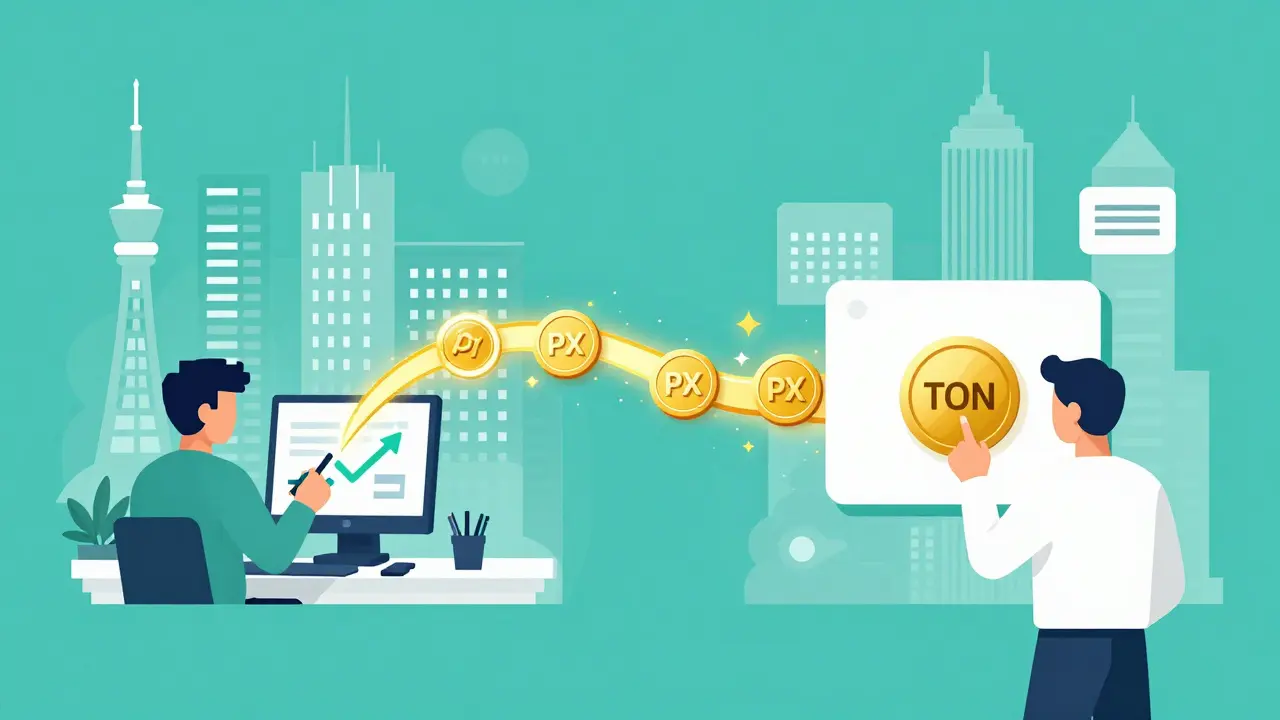
Consider a scenario where an artist in Tokyo creates a stunning pixel masterpiece. A collector in New York sees it on the canvas, bids PX tokens via the TON network, and instantly owns the asset. No banks, no middle-men, and no waiting for international transfers.
Market Performance and Availability
As of April 2026, the market for Not Pixel remains volatile but active. Based on recent data, the price has hovered around $0.0158 USD. While this might seem low, the value is driven by the active user base and the Fully Diluted Valuation (FDV) milestones the team is targeting.
| Attribute | Value / Detail |
|---|---|
| Total Supply | ~250 Million PX |
| Blockchain | TON (The Open Network) |
| Primary Model | Win-to-Earn |
| Exchange Availability | STON.fi (and others in pipeline) |
| Conversion Rate | 1,000 Pixels = 1 $PX |
The Road Ahead: Risks and Potential
Is Not Pixel the next big thing or just another Telegram trend? The potential is huge because it sits at the intersection of gaming, art, and social media. The roadmap includes a fully decentralized pixel canvas and new game modes that will push the limits of what the TON network can handle. If they can maintain community engagement, the growth potential through 2030 is significant.
However, it's not without risks. The crypto market is notoriously swingy. Regulatory changes regarding "mini-apps'" that pay users could create hurdles. Plus, there's always the competition from other blockchain gaming projects. The long-term survival of $PX depends on whether the game remains fun once the initial hype wears off.
How do I earn Not Pixel (PX) tokens?
You earn PX tokens by participating in the Not Pixel mini-app on Telegram. This involves creating pixel art on the shared canvas, completing specific tasks, and winning tournaments. Because it's a win-to-earn model, rewards are based on your skill and activity rather than financial investment.
Is Not Pixel available on Binance?
Binance has been mentioned in plans for listing, but the process involves various bureaucratic and compliance steps. Currently, the token is more readily available on decentralized exchanges like STON.fi.
What makes Not Pixel different from Notcoin?
While both were created by Sasha Plotvinov and exist in the Telegram/TON ecosystem, Notcoin was primarily a "tap-to-earn" social experiment. Not Pixel is a creative marketplace and game where users actually build art and compete for territory on a digital canvas.
Can I turn my pixel art into an NFT?
Yes. The Not Pixel platform integrates with NFT technology, allowing users to tokenize their digital creations. This turns a simple piece of pixel art into a tradeable digital asset with verified ownership on the blockchain.
Who controls the Not Pixel token?
The token is designed to be ownerless. This means there is no single central authority or entity that controls the $PX supply or its distribution, keeping the ecosystem decentralized and community-driven.