Imagine walking into a massive digital carnival. You don't pay with cash or credit cards; you buy specific tickets to ride the roller coaster, play the games, or eat at the food stalls. Platform tokens are exactly those tickets, but for the digital economy. They aren't just speculative coins waiting for the next bull run; they are the operational fuel that keeps entire ecosystems running. If you've ever wondered why some crypto projects survive market crashes while others vanish, it often comes down to whether their platform tokens have real utility or if they're just empty hype.
As we sit here in September 2026, the landscape has shifted dramatically since the early ICO days. Investors are no longer throwing money at whitepapers with vague promises. They want to see usage. They want to know if people are actually using the service the token unlocks. This guide breaks down how to evaluate these assets, where the value actually comes from, and what risks you need to watch out for before putting your capital to work.
What Exactly Are Platform Tokens?
At their core, platform tokens are utility tokens. Unlike Bitcoin, which is primarily a store of value or "digital gold," or Ethereum, which serves as a settlement layer, platform tokens are designed to grant access rights to specific products or services within a particular digital ecosystem. Think of them as software licenses that trade on open markets.
The technical backbone for most of these tokens was established by the ERC-20 standard introduced in 2015 on the Ethereum blockchain. Before this, creating a new token meant building an entirely new blockchain network-a costly and complex endeavor. The ERC-20 standard allowed developers to launch tokens on top of existing infrastructure, drastically lowering barriers to entry. Today, while newer standards exist on chains like Solana or Polygon, the concept remains the same: fungible digital assets that represent access, not just currency.
It is crucial to distinguish these from Non-Fungible Tokens (NFTs). Platform tokens are generally fungible, meaning one unit is interchangeable with another. This fungibility is vital for liquidity. If you hold 10 units of a platform token, you can sell any single one without worrying about its unique history or rarity. This characteristic makes them behave more like traditional commodities or shares in terms of trading mechanics.
Where Does the Value Come From?
If you strip away the marketing jargon, the value of a platform token is tied directly to the demand for the underlying service. It’s a simple supply-and-demand equation, but with a twist: the supply is often fixed or algorithmically controlled, while demand fluctuates based on user activity.
Consider the tokenization trend sweeping through industries like retail, automotive, and healthcare. When a company tokenizes a process, they reduce friction and inefficiencies. For example, in supply chain management, a platform token might be used to verify ownership transfers between parties instantly. As more companies adopt this system, the demand for the token increases because every transaction requires it. This creates a fundamental value proposition that is distinct from pure speculation.
| Feature | Platform Token | Traditional Stock | Bitcoin |
|---|---|---|---|
| Primary Utility | Access to services/features | Ownership equity/dividends | Store of value/medium of exchange |
| Value Source | Network usage & adoption | Company earnings & growth | Scarcity & monetary policy |
| Risk Profile | High (Platform failure) | Moderate (Market/Economy) | Moderate (Volatility) |
| Liquidity | Variable (Exchange dependent) | High (Major exchanges) | Very High |
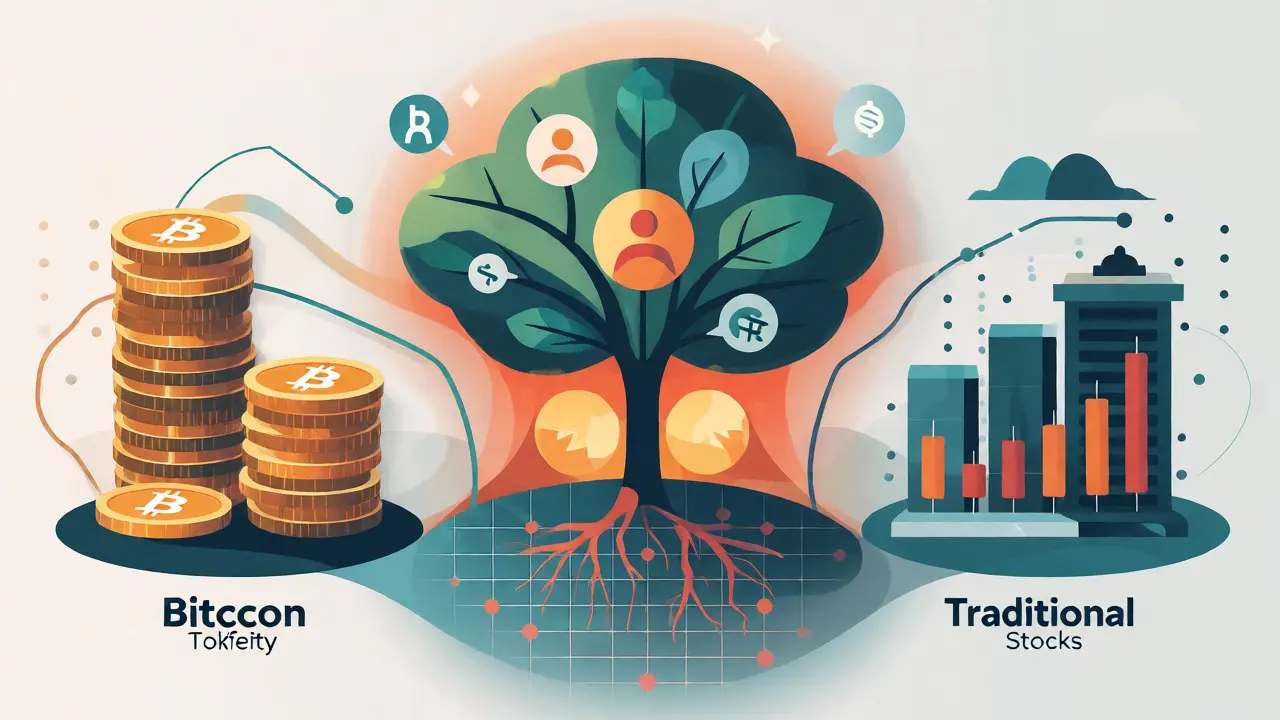
This table highlights a critical point: platform tokens occupy a unique middle ground. They offer the upside potential of high-growth tech stocks but carry the volatility and technical risks of cryptocurrencies. Your investment thesis shouldn't just be "this chart looks good." It needs to be "people are increasingly paying to use this service."
Evaluating Investment Potential: The Due Diligence Checklist
So, how do you spot a winner? In 2026, the easy money from buying everything that launched is gone. You need to dig deeper. Here are the key factors I look at when analyzing a platform token's potential.
- Real-World Adoption: Is anyone actually using the platform? Look for metrics like Daily Active Users (DAU), transaction volume, and revenue generated by the protocol. A token with zero usage is just code.
- Tokenomics Sustainability: How is the supply managed? Fixed-supply tokens (like Bitcoin) rely on scarcity. Inflationary tokens need mechanisms to burn tokens or lock them up to offset dilution. Check if the team holds a large percentage of the supply-if they dump, the price tanks.
- Regulatory Clarity: The regulatory landscape for tokens is still evolving. Security tokens, which are often platform-based, face stricter rules than pure utility tokens. Ensure the project isn't trying to dodge securities laws by calling itself a "utility" when it acts like a stock.
- Competitive Moat: Can another blockchain easily copy this platform? Network effects are powerful. If a platform has millions of users and developers building on it, it becomes harder for competitors to displace it.
Let's look at a concrete example. Consider a decentralized finance (DeFi) platform token. Its value rises when users deposit assets to earn yield. But if the platform suffers a smart contract hack, confidence evaporates instantly. Unlike a bank, there's no FDIC insurance. Your due diligence must include checking audit reports and bug bounty programs.

The Risks You Can't Ignore
Investing in platform tokens isn't for the faint of heart. The concentration risk is significant. Because these tokens are tied to a single platform, if that platform fails-whether due to technical bugs, poor management, or better competition-the token can go to zero. There is no diversified portfolio effect here.
Another major hurdle is liquidity. While major tokens like Uniswap (UNI) or Chainlink (LINK) trade heavily on global exchanges, smaller platform tokens might only be available on decentralized exchanges (DEXs) with low volume. This means you might struggle to sell your position during a panic without crashing the price yourself.
Finally, consider the governance challenges. Many platforms allow token holders to vote on upgrades. While democratic, this can lead to slow decision-making or contentious forks if the community disagrees. These internal conflicts can distract from development and hurt long-term value.
Future Outlook: Where Is This Heading?
We are moving past the experimental phase. Tokenization is becoming integrated into traditional business processes. Industries like media entertainment and sports are using platform tokens to engage fans directly, bypassing intermediaries. Healthcare providers are exploring tokenized records for secure data sharing.
The future belongs to platforms that solve real problems efficiently. The "build it and they will come" era is over. Now, it's "solve it well, and the value will follow." Investors who focus on fundamentals-user growth, revenue sustainability, and technical robustness-are likely to outperform those chasing memes and hype cycles.
If you're looking to enter this space, start small. Diversify across different sectors. Don't put all your eggs in one platform basket. And always remember: the token is just a claim on the network's success. If the network doesn't succeed, the token is worthless.
How is a platform token different from a cryptocurrency like Bitcoin?
Bitcoin is primarily a store of value and medium of exchange with no inherent utility beyond being money. Platform tokens, however, provide access to specific services or features within a digital ecosystem. Their value is derived from the demand for those services, not just speculation on their monetary status.
Are platform tokens considered securities?
This depends on the jurisdiction and the specific structure of the token. If investors expect profits primarily from the efforts of others, regulators may classify it as a security. Pure utility tokens, where the primary purpose is accessing a service, are less likely to be classified as securities, but the line can be blurry.
What happens if the platform behind the token shuts down?
If the platform ceases operations and the token has no other utility or resale value, the token typically loses most or all of its value. Unlike stocks, where liquidation assets might retain some value, a failed platform token often becomes a dead asset unless it retains brand recognition or secondary market interest.
How does tokenomics affect investment returns?
Tokenomics refers to the economic model of the token, including supply schedules, inflation rates, and distribution. Poor tokenomics, such as excessive inflation or large insider holdings that unlock suddenly, can dilute investor returns even if the platform grows. Good tokenomics align incentives between users, developers, and investors.
Can I lose all my money investing in platform tokens?
Yes. The risk profile is high. Technical failures, regulatory bans, competition, or simply lack of adoption can drive the price to near zero. Always invest only what you can afford to lose completely.