Key Takeaways
- GOHOME is a Solana-based meme cryptocurrency that gained fame from a viral White House website error in January 2025, trading at premium prices significantly higher than traditional meme coins.
- The token has an exceptionally low circulating supply of roughly 450,000 tokens out of a total supply of ~10 million, with the majority locked until 2029.
- High centralization risk exists because a small number of wallets control a large portion of the available supply, leading to potential price manipulation.
- Unlike utility-driven projects, GOHOME relies entirely on community sentiment and humor, making it highly volatile and speculative.
- Investors should be aware of the "Infinite Money Glitch" narrative and the massive supply unlock scheduled for 2029, which could drastically impact the price.
You’ve probably seen the ticker. It’s not Dogecoin. It’s not Shiba Inu. It’s GOHOME, a token that trades for hundreds of dollars per coin instead of fractions of a cent. If you’re wondering how a meme coin can cost more than a high-end smartphone, you’re not alone. The answer lies in a mix of political satire, extreme scarcity tactics, and the wild west nature of the Solana blockchain ecosystem.
GOHOME isn’t just another dog-themed token. It emerged from a specific moment in time-a glitch on the White House website following Donald Trump’s inauguration in January 2025. What started as a joke about a "go home" button on a 404 error page turned into one of the most expensive meme coins in history. But before you rush to buy, let’s break down what this token actually is, how it works, and whether it’s a golden opportunity or a risky trap.
The Origin Story: From Website Glitch to Crypto Phenomenon
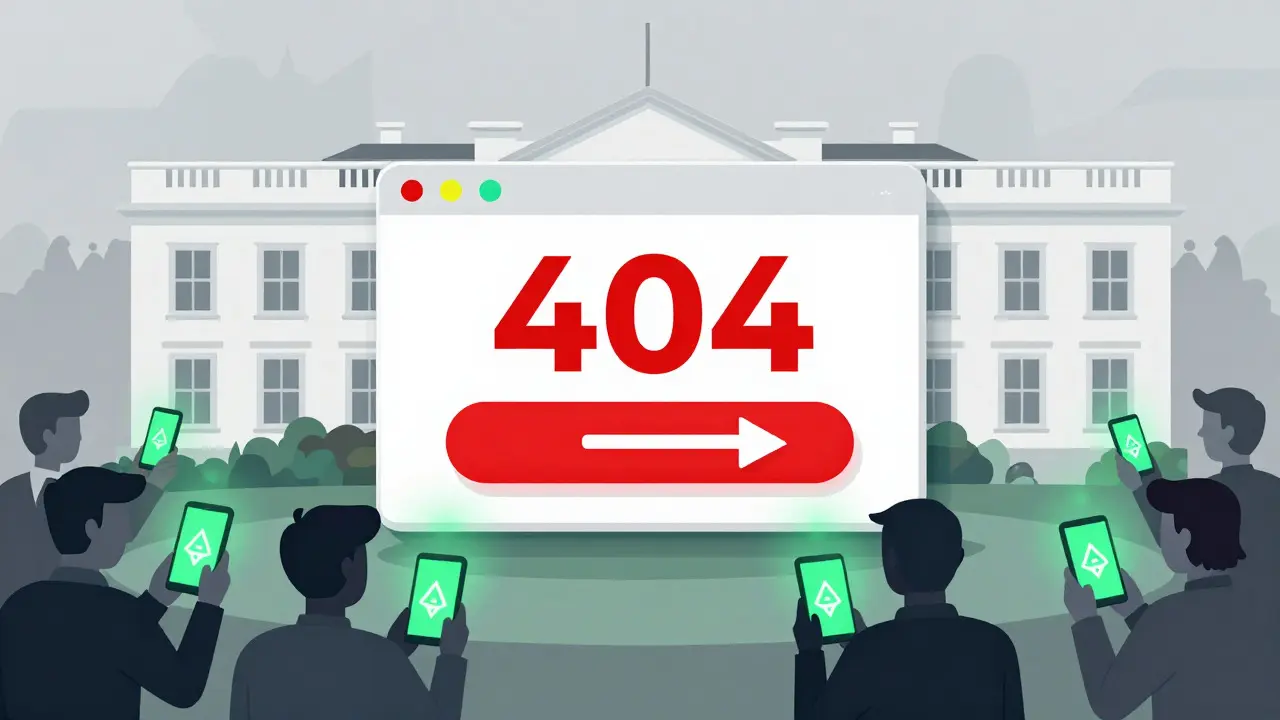
To understand GOHOME, you have to look back at January 21, 2025. The day after Donald Trump’s inauguration, visitors to the White House website encountered a peculiar error. Instead of a standard redirect, a 404 page displayed a prominent "go home" button. Within hours, the internet latched onto it. Memes spread like wildfire, and within days, a token named GOHOME appeared on the Solana blockchain.
The project didn’t start with a whitepaper or a grand vision for decentralized finance. It started with humor. The anonymous development team positioned GOHOME as a community built on "proper etiquette" and "subtle humor." This aligns perfectly with the meme coin culture, where narrative often outweighs utility. However, unlike many fleeting memes, GOHOME managed to stick around. By mid-2025, it was being called the "most expensive memecoin in history" by major exchanges like Gate.com.
This origin story is crucial because it defines the token’s value proposition. There is no underlying technology solving real-world problems. There are no staking rewards tied to network security. The value is purely derived from collective belief and the exclusivity of owning a piece of a viral cultural moment. For some, that’s enough. For others, it’s a red flag.
Tokenomics: Scarcity as a Strategy
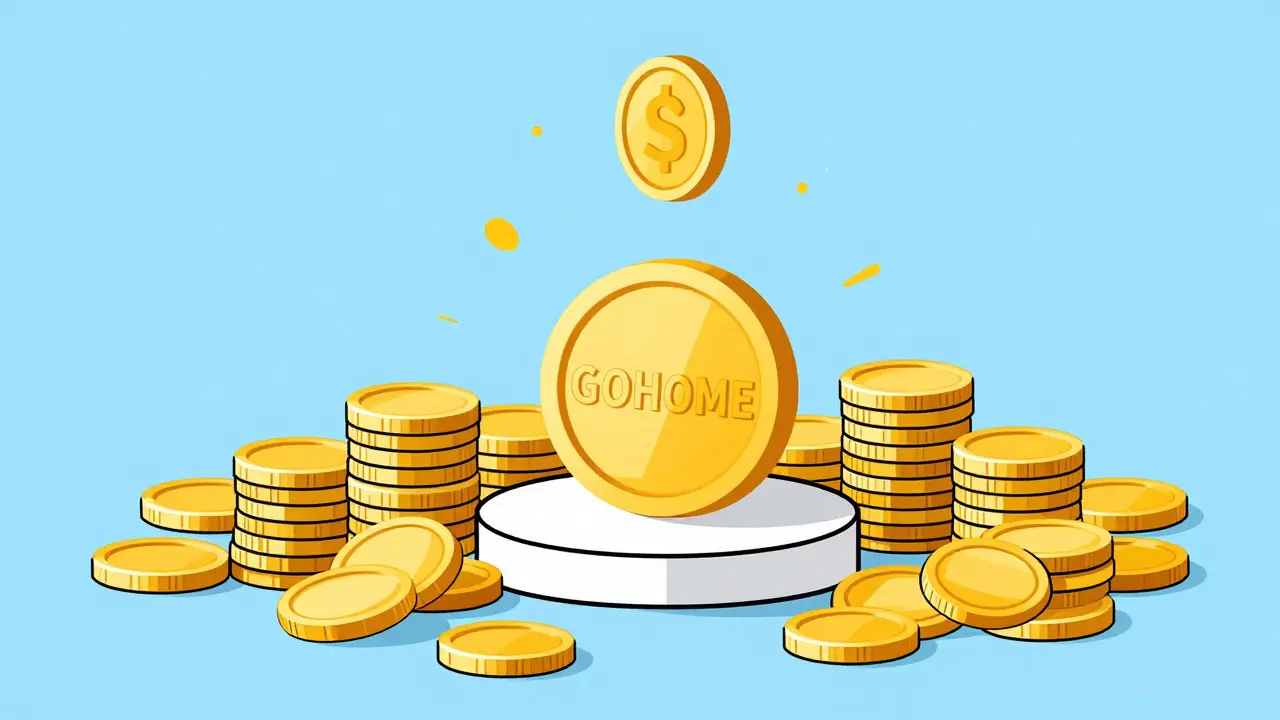
If you’re used to buying thousands of tokens for a few dollars, GOHOME will shock you. As of late 2025, a single GOHOME token trades between $150 and $240. How does a meme coin achieve such a high price point? The answer is simple math: supply and demand.
| Category | Amount (Tokens) | Status |
|---|---|---|
| Total Supply | ~10,000,000 | Fixed |
| Circulating Supply | ~450,000 - 525,000 | Available for Trade |
| Locked Until 2029 | ~9,000,000 | Inaccessible |
| Team Vesting | 500,000 | Locked 3-24 Months |
| Liquidity Pool | ~50,000 | Locked |
The key takeaway here is the incredibly low circulating supply. Only about 5% of the total tokens are actually available for trading. This artificial scarcity drives up the price per unit. When there are fewer tokens available, buyers have to compete for them, pushing the price higher. This is a common tactic in meme coins, but GOHOME takes it to an extreme level.
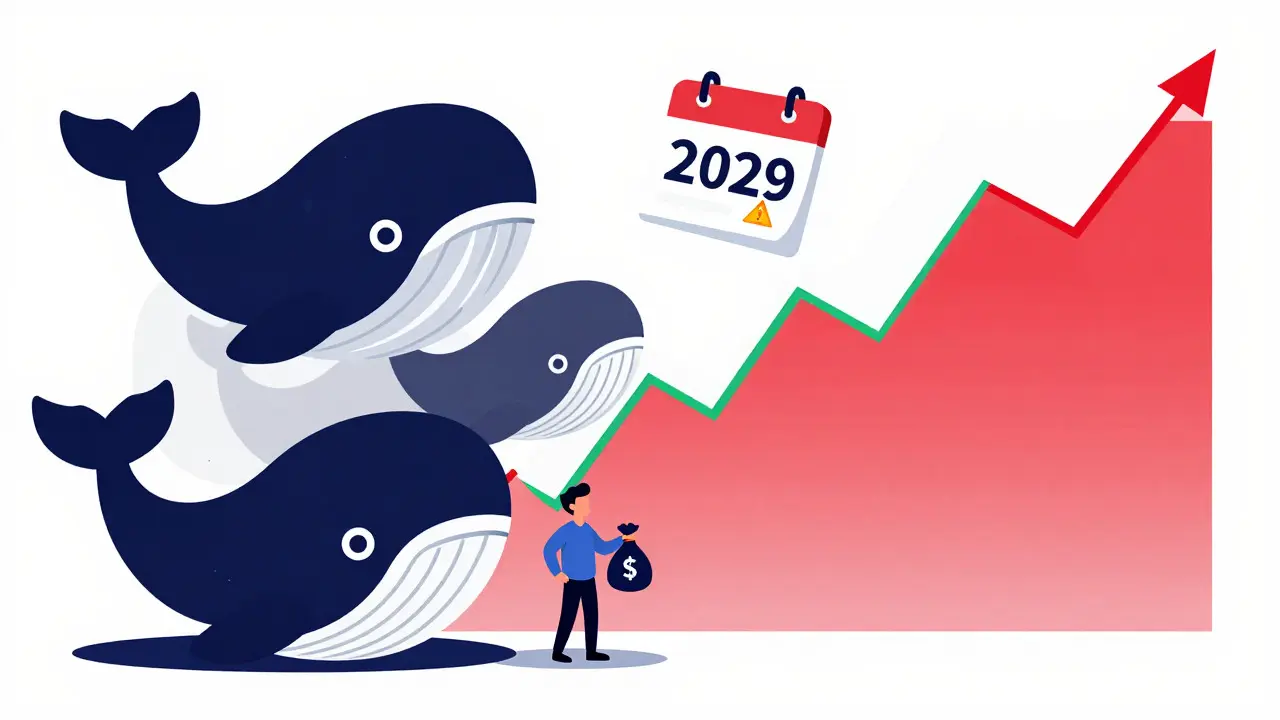
However, this structure comes with a catch. The vast majority of tokens-roughly 9 million-are locked until 2029. This creates a significant future sell pressure risk. When those locks expire, the circulating supply could increase by over 2,000%. Unless demand grows exponentially to match this new supply, the price could plummet. Investors need to keep this timeline in mind when evaluating long-term holding strategies.
Centralization Risks: Who Controls GOHOME?
One of the core promises of cryptocurrency is decentralization. GOHOME, however, struggles with this concept. Analysis from CoinCodex reveals that a handful of entities control a significant portion of the token’s supply. Specifically, whale wallets hold approximately 70% of the circulating supply. This means that a few large holders can manipulate the market by dumping their tokens, causing sudden price crashes.
This centralization is a major concern for retail investors. Unlike Bitcoin, where ownership is distributed among millions of users, GOHOME’s power is concentrated. The anonymous development team also retains influence through vested tokens. While some of these are locked for short periods, the lack of transparency regarding the team’s identities adds another layer of risk. You’re trusting faceless developers with your capital.
Community feedback reflects this tension. On Reddit, users praise the token’s humor and potential gains but warn of its volatility. One user noted, "Volume spikes correlate perfectly with whale wallet movements. Not for weak hands." This sentiment highlights the speculative nature of the asset. It’s less of an investment and more of a gamble on whether the next big buyer will step in.
How to Buy GOHOME: A Step-by-Step Guide
If you decide to take the plunge, buying GOHOME is relatively straightforward due to its presence on the Solana blockchain. Here’s how you can get started:
- Set Up a Solana Wallet: You’ll need a compatible wallet like Phantom or Solflare. These are user-friendly and widely supported. Download the extension or mobile app and secure your seed phrase offline.
- Fund Your Wallet with SOL: GOHOME is traded against Solana (SOL). Buy SOL on a centralized exchange like Coinbase or Binance, then transfer it to your wallet address. Keep some extra SOL for transaction fees, which are typically under $0.001.
- Connect to a Decentralized Exchange (DEX): Use platforms like Raydium or Jupiter. Connect your wallet to the DEX interface.
- Search for GOHOME: Enter the contract address for GOHOME to ensure you’re buying the correct token. Be cautious of fake tokens with similar names.
- Swap SOL for GOHOME: Set your slippage tolerance appropriately (often 1-5% for volatile tokens) and confirm the transaction. Monitor the swap to ensure it completes successfully.
While the process is simple, the challenges lie in timing and risk management. Price swings of 10-15% within 15 minutes are common. Always use limit orders if possible to avoid paying inflated prices during rapid pumps.
Market Performance and Volatility
GOHOME’s price action has been nothing short of dramatic. Since its launch, it has seen an all-time high of $277.70 and lows dipping below $200. This volatility is characteristic of meme coins but amplified by its low liquidity and high concentration of holdings.
Trading volume remains healthy, ranging from $3 million to $13 million daily. This indicates active interest, but it also suggests that the market is driven by short-term traders rather than long-term holders. Data shows that 78% of holders maintain positions for less than seven days. This turnover rate reinforces the token’s status as a speculative vehicle rather than a store of value.
Comparatively, GOHOME stands out in the meme coin landscape. While Dogecoin and Shiba Inu trade at fractions of a cent, GOHOME commands a premium. This distinction attracts a different type of investor-one willing to pay more for perceived exclusivity. However, this premium also means higher entry barriers and greater psychological pressure during downturns.
Future Outlook: Can GOHOME Survive?
The long-term viability of GOHOME hinges on several factors. First, the community must remain engaged. Meme coins thrive on attention, and any shift in cultural relevance could lead to a decline in interest. Second, the team needs to navigate the upcoming token unlocks carefully. If they fail to manage expectations around the 2029 unlock, panic selling could ensue.
Some analysts predict that GOHOME could achieve significant recognition if listed on major exchanges like Binance. Such a listing would bring increased liquidity and credibility. However, historical data suggests that premium-priced meme coins without utility have a high failure rate. Bloomberg Crypto notes that 92% of tokens trading above $100 with no utility fail within 18 months. GOHOME is currently testing this statistic.
Ultimately, GOHOME is an experiment in digital scarcity and community-driven value. It offers high reward potential but comes with substantial risk. Whether it becomes the "Bitcoin of meme coins" or fades into obscurity depends on how well it balances hype with sustainable growth.
Is GOHOME a scam?
GOHOME is not inherently a scam, but it carries high risks typical of meme coins. The anonymous team and centralized supply distribution create opportunities for manipulation. Always do your own research and only invest what you can afford to lose.
Why is GOHOME so expensive compared to other meme coins?
The high price is due to its extremely low circulating supply. With only about 5% of tokens available for trading, scarcity drives up the cost per unit. This is a deliberate strategy to create exclusivity and potentially higher percentage gains for early adopters.
When will the locked GOHOME tokens be released?
Approximately 9 million GOHOME tokens are locked until 2029. This long-term lockup is designed to prevent immediate sell-offs, but it poses a significant risk to the price once the tokens become accessible.
Can I stake GOHOME for rewards?
Currently, GOHOME does not offer staking rewards. Its value is primarily speculative, based on market demand and community sentiment rather than yield-generating mechanisms.
Which wallet is best for storing GOHOME?
Since GOHOME is built on Solana, wallets like Phantom, Solflare, or Backpack are ideal. Ensure your wallet supports SPL tokens and keep your seed phrase secure to protect your assets.