
Remember the chaos of August 2017? Bitcoin split into two chains overnight. If you were holding your coins on an exchange that hadn't updated its systems yet, you might have woken up with zero access to your funds. Or worse, you tried to spend your new Bitcoin Cash and accidentally spent your original Bitcoin too. That was a replay attack in action.
Crypto forks aren't just technical glitches; they are moments where protocol rules change, creating either a single upgraded chain (a soft fork) or two separate, incompatible chains (a hard fork). For anyone holding digital assets, an upcoming fork is a critical event. It’s not just about market speculation; it’s about asset preservation. If you don't prepare, you risk losing access to your holdings, suffering from transaction failures, or missing out on free assets created by the split.
This guide cuts through the noise. We’re going to walk you through exactly what to do before, during, and after a fork. Whether you’re a long-term holder or an active trader, these steps will help you keep your keys, protect your coins, and claim any new assets without panic.
Understanding the Fork Timeline
Forks don’t happen randomly. They are scheduled based on block height or a specific date. This means you know when the divergence will occur. The most common misconception is that you need to act at the exact second of the fork. In reality, the danger zone starts days before and extends days after.
Think of it like a highway construction project. You wouldn't drive onto the road while workers are moving barriers. Similarly, you should pause transactions around the activation point. Most experts recommend a "freeze" period starting 24-48 hours before the expected fork block and lasting until 2-3 days after. During this window, network stability can be shaky. Miners might be switching software, nodes might be syncing, and exchanges often suspend deposits and withdrawals to prevent confusion.
If you send coins during this unstable period, your transaction might get stuck, confirmed on the wrong chain, or lost entirely. Patience is your best tool here. Wait for the dust to settle. Check major block explorers and community forums to confirm which chain has majority support before you start moving money again.
The Golden Rule: Control Your Private Keys
If there is one rule to remember, it is this: Not your keys, not your coins. This cliché becomes literal law during a fork. When a blockchain splits, the history of transactions duplicates. If you hold 5 BTC on an exchange, and the chain forks, you technically own 5 BTC on Chain A and 5 units of Coin B on Chain B. But who controls those keys?
If you use a custodial service (like Coinbase or Binance), you rely entirely on their policy. Some exchanges credit both assets automatically. Others require you to submit a claim form. Some might even delist the new fork entirely, leaving you with worthless tokens if you didn't withdraw them beforehand. By keeping your coins in a non-custodial wallet where you control the private keys, you guarantee access to all resulting chains.
Self-custody is the practice of managing cryptocurrency directly using a wallet where the user holds the private keys and seed phrase, rather than relying on a third-party service. This approach ensures that you can independently verify balances and claim forked assets on any compatible chain.
Hardware wallets like Ledger Nano S or Trezor are excellent choices because they isolate your keys from internet-connected devices. Software wallets such as Exodus, Coinomi, or Mycelium also work well, provided you back up your seed phrase securely offline.
Pre-Fork Checklist: Backups and Compatibility
Before the fork date arrives, take time to audit your setup. Don't wait until the last minute to discover your backup is corrupted.
- Verify your seed phrase: Write down your recovery seed on paper or metal. Never store it digitally in plain text. Test it! Try restoring your wallet on a different device or a fresh installation of the same software. If the addresses and balances match perfectly, you're good to go.
- Check address formats: This is crucial for Bitcoin-related forks. If your coins sit in SegWit (bech32) addresses, some older forked chains might not support them natively. Ensure your claiming wallet supports legacy addresses or has a mechanism to map SegWit outputs to the new chain.
- Update your software: Run the latest version of your wallet client. Developers often release patches specifically to handle fork logic and prevent bugs during consensus changes.
- Learn to sign messages: Many fork-claiming tools require you to prove ownership of an address by signing a message with your private key. Practice this function now so you aren't fumbling with commands when the pressure is on.
Navigating Security Risks: Replay Attacks
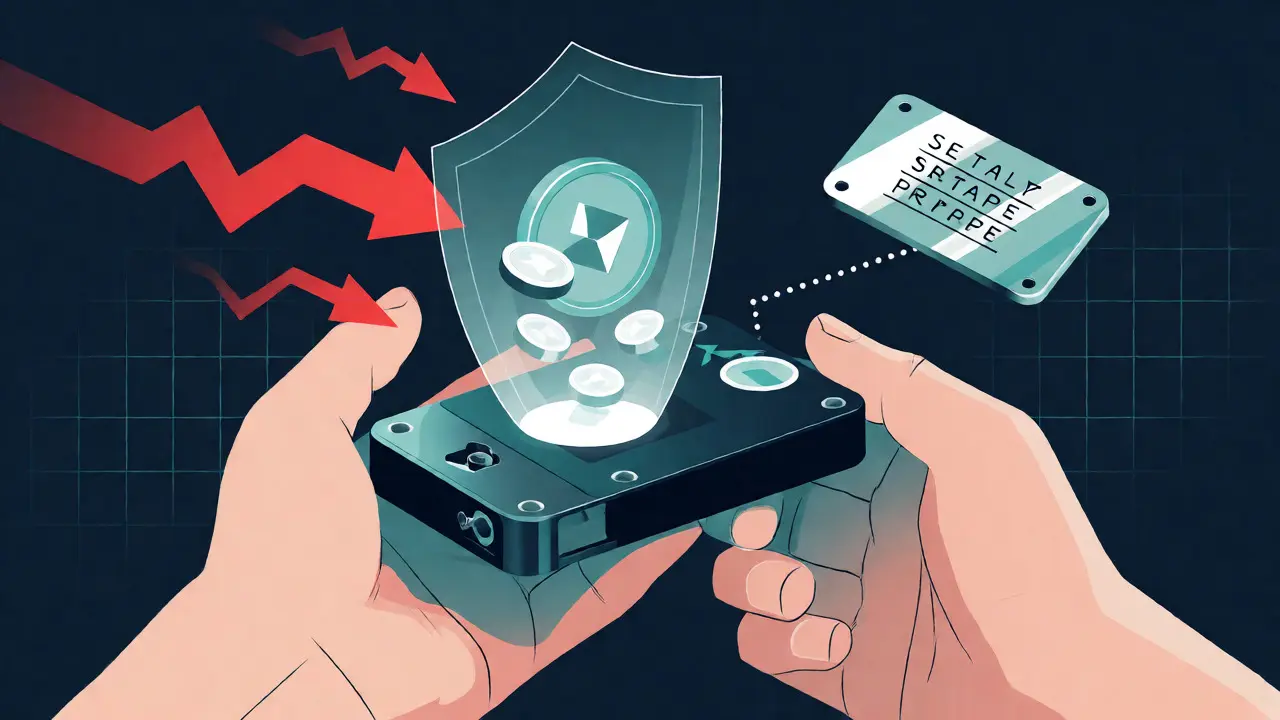
A replay attack sounds scary, but it’s straightforward. Without proper protection, a transaction sent on Chain A could also be valid on Chain B. Imagine you send $100 worth of Bitcoin to a friend. If the fork lacks replay protection, that same transaction might also move $100 worth of Bitcoin Cash to the same address. You’ve effectively paid twice.
Most modern forks include built-in replay protection, but never assume it's perfect. The safest strategy, recommended by security experts like Diogo Monica, involves splitting your coins immediately after the fork stabilizes.
- Wait for the fork to activate and ensure the network is stable.
- Create a brand-new wallet on Chain A (the original chain).
- Send all your funds from your old wallet to this new wallet. Wait for at least six confirmations.
- Do the same for Chain B. Create a new wallet on the forked chain and sweep your funds there.
- Now, your coins on Chain A live in Address Set X, and your coins on Chain B live in Address Set Y. Transactions on one chain won't affect the other because the addresses differ.
This method adds a small fee cost for two transactions but eliminates the risk of accidental double-spending across chains.
Claiming Your Forked Coins
Once the dust settles, you’ll want to access your new assets. Here is how to do it safely.
| Custody Type | Control Over Keys | Fork Support Risk | Best For |
|---|---|---|---|
| Hardware Wallet | Full (Offline) | Low (User manages claims) | Long-term holders, high value |
| Desktop/Mobile Wallet | Full (Online/Hot) | Medium (Software updates needed) | Active users, medium value |
| Exchange (Custodial) | None (Third-party) | High (Depends on policy) | Traders needing liquidity |
To claim coins, you typically import your private keys or seed phrase into a wallet designed for the new fork. Be extremely cautious here. Only download software from official sources. Scammers love forks. They create fake websites that look identical to legitimate wallet providers, asking you to enter your seed phrase to "claim" your coins. Once you paste that seed, your funds are gone.
Never enter your seed phrase into a random website. If possible, use a hardware wallet to interact with the forked chain via a companion app. This keeps your keys isolated while allowing you to view and manage the new assets.
What If You Leave Funds on an Exchange?
We know not everyone wants to manage private keys. If you prefer convenience, leaving funds on an exchange is an option, but it comes with caveats. First, check the exchange's announcement page. Do they support the fork? Will they credit both assets? Is there a suspension of trading?
Some exchanges freeze withdrawals for weeks. If you need liquidity, you might be stuck. Additionally, if the forked coin gains significant value, the exchange might delay listing it, preventing you from selling immediately. If you choose this route, treat the exchange as a temporary parking spot, not a permanent home for large holdings during uncertain times.
Post-Fork Hygiene
After the initial excitement fades, maintain good habits. Keep records of all addresses and balances at the time of the fork snapshot. Tax authorities in many jurisdictions treat forked coins as taxable income at the moment of receipt. Having precise data makes filing easier later.
Also, monitor the health of the new chain. Does it have active developers? Is hash power stable? Sometimes, a forked chain dies within months due to lack of interest. Holding onto dead assets ties up capital. Decide early if you plan to hold, trade, or discard the new token.
Can I lose my coins if I do nothing during a fork?
Generally, no. Your original coins remain safe on the main chain. However, you might lose access to the forked assets if you don't claim them, especially if they are held on an exchange that doesn't support the new chain. Doing nothing usually means you keep your original balance but miss out on potential new assets.
Is it safe to send transactions right after the fork?
It is risky. Network congestion, node synchronization issues, and potential replay attacks make immediate transactions dangerous. It is best to wait 24-72 hours until the network stabilizes and major services resume normal operations.
Do I need to pay fees to claim forked coins?
Yes, typically. Claiming forked coins involves broadcasting a transaction on the new chain, which requires network fees. These fees vary depending on the congestion of the new network at the time of claiming.
What happens if my wallet doesn't support the fork?
If your current wallet doesn't recognize the new chain, you cannot see or spend the forked coins directly. You will need to export your private keys and import them into a wallet that does support the fork, or use a specialized claiming tool provided by reputable developers.
Are replay attacks still a threat today?
Modern forks often include built-in replay protection mechanisms, such as unique chain IDs or special transaction flags. However, not all forks implement this perfectly. Using distinct addresses for each chain remains the most robust defense against replay attacks.
Final Thoughts
Preparing for a crypto fork isn't rocket science, but it requires attention to detail. The core principles are simple: secure your keys, pause your activity, and verify everything. By taking control of your custody and understanding the mechanics of chain splits, you turn a potentially stressful event into a manageable routine. Remember, in the world of blockchain, preparation is the only true hedge against uncertainty.