Remember when you had to check five different decentralized exchanges just to find a decent price for your swap? Those days are mostly gone, thanks to aggregators. But here is the twist most people miss in 2026: 1inch Exchange isn't really trying to be your go-to app anymore. It wants to be the engine running under the hood of every other wallet and exchange you use.
If you are looking at 1inch today, you need to understand this shift. Co-founder Sergej Kunz has been loud about it-most of their business now comes from API integrations with giants like Binance, Coinbase, and MetaMask, not from users clicking buttons on the 1inch website. So, does that make 1inch obsolete for you as an individual trader? Absolutely not. In fact, using the platform directly might give you access to tools and fee structures that big centralized exchanges hide behind their own margins. Let's break down what 1inch actually offers in 2026, who should still use it, and how its new infrastructure model changes the game.
What Exactly Is 1inch Exchange?
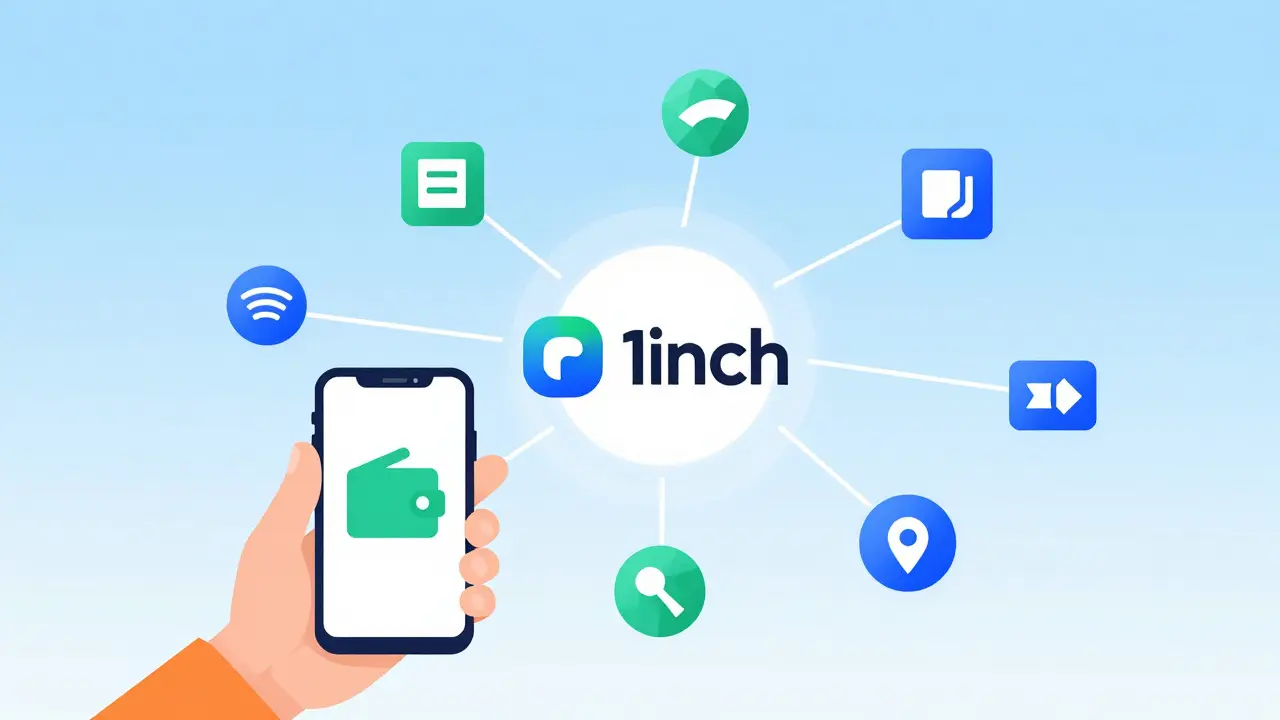
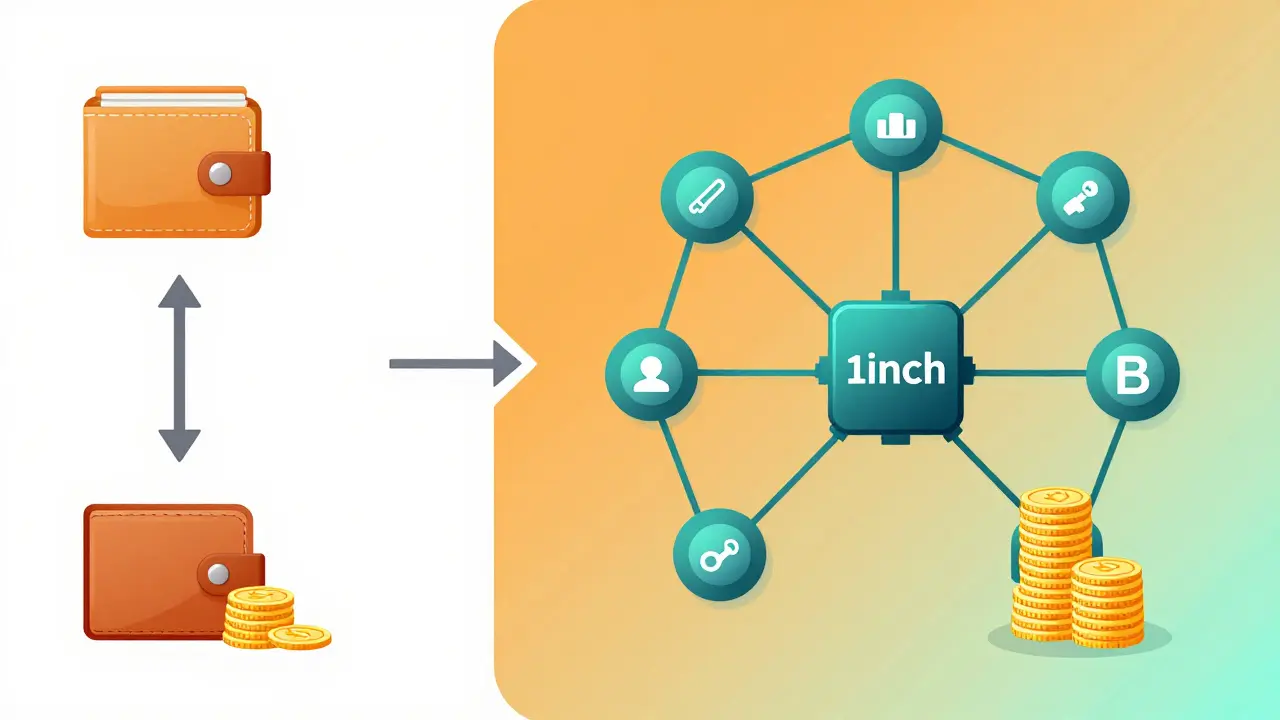
At its core, 1inch is a decentralized exchange (DEX) aggregator. Think of it like Kayak or Skyscanner, but for crypto. Instead of holding your funds in a central vault (like Coinbase or Binance), 1inch connects directly to your private wallet. It then scans hundreds of liquidity sources across multiple blockchains to find the best route for your trade.
The magic happens in the backend with the Pathfinder algorithm. This smart contract doesn't just look at one exchange. It splits your single trade into multiple chunks and routes them through different platforms-Uniswap, SushiSwap, Balancer, and dozens more-to minimize slippage and maximize your return. If you try to sell $10,000 worth of a token on a single small DEX, you might move the price against yourself significantly. 1inch prevents this by spreading the load.
In 2025, 1inch updated its price route discovery algorithm, claiming up to 6.5% better swap rates compared to previous versions. That is real money saved on large trades. For example, if you are swapping $10,000 worth of ETH for USDC, a 6.5% improvement in efficiency could mean keeping an extra $650 in your pocket compared to a standard direct swap on a single pool.
The Big Shift: From Consumer App to DeFi Infrastructure
This is the most critical part of this review. In mid-2025, 1inch pivoted hard. They stopped competing directly with user-friendly apps and started selling their technology to the industry. Today, when you use the "Swap" feature in MetaMask, Trust Wallet, or even on some centralized exchanges, you are likely using 1inch's routing logic.
Why does this matter to you? Because it means 1inch has become the backbone of non-custodial trading. They predict that within 5 to 10 years, traditional centralized exchanges will vanish, leaving only user interfaces built on top of DeFi protocols like 1inch. By using 1inch directly, you are accessing the source code of this future, often with lower fees than the intermediaries who resell their service.
| Feature | Using 1inch Directly | Using via Partner (e.g., MetaMask) |
|---|---|---|
| Fees | Lower (direct protocol fee) | Higher (partner markup included) |
| Advanced Tools | Full access (Limit Orders, Fusion) | Limited or hidden |
| Cross-Chain Options | 13+ networks, zero gas cross-chain | Varies by partner support |
| Token Rewards | Eligible for 1INCH rewards | Rarely available |
Key Features That Set 1inch Apart in 2026
Even though they are focusing on B2B infrastructure, the consumer-facing features remain robust. Here is what you get when you log in:
- Fusion 2.0: This upgrade significantly improved swap speed and efficiency. It allows for faster execution during high-volatility periods, which is crucial when markets are moving fast.
- Cross-Chain Swaps: You can swap assets between Ethereum, Solana, Binance Smart Chain, and over ten other networks without manually bridging tokens first. As of August 2025, intent-based cross-chain swaps connect Solana and EVM networks with MEV protection, meaning bots can't front-run your transaction.
- Zero Gas Fees for Cross-Chain: When swapping across chains, 1inch absorbs the gas costs for the bridge transactions, saving you the hassle of needing native tokens on both chains.
- Chi Gastoken System: If you are trading on Ethereum, gas fees can still bite. The Chi system helps optimize these costs by bundling transactions efficiently.
- Limit Order Protocol v3: Unlike most DEXs that only offer market orders, 1inch lets you set specific entry and exit prices. This is vital for traders who want to avoid emotional decision-making during pump-and-dump cycles.
Security and Trust: How Safe Is Your Money?
Since 1inch is non-custodial, they never hold your funds. Your assets stay in your wallet (MetaMask, Ledger, etc.) until the moment the swap executes. This eliminates the risk of exchange hacks where billions are stolen from central servers.
However, security in DeFi is about more than just custody. It's about smart contract integrity. 1inch has undergone multiple audits and integrates with Skynet, a decentralized internet layer, to ensure data reliability. They also prioritize MEV (Maximum Extractable Value) protection. In simple terms, MEV attacks happen when miners or validators reorder transactions to profit at your expense (like buying right before you buy to push the price up). 1inch's architecture includes safeguards to minimize this exposure, ensuring you get the price quoted to you.
Customer support is available via email, live chat, and Telegram. While you won't have a human refunding lost funds (because they don't hold them), the team is responsive for technical issues related to failed transactions or UI bugs.
The 1INCH Token: Utility Beyond Speculation
The 1INCH token is the governance fuel of the ecosystem. Holding it isn't just about hoping the price goes up; it gives you actual rights and benefits:
- Governance Voting: Token holders vote on proposals regarding platform upgrades, fee structures, and new chain integrations.
- Fee Sharing: A portion of the platform's transaction fees is distributed to stakers. If you stake your 1INCH tokens, you earn passive income from the network's activity.
- Upcoming Liquidity Protocol: Future updates require the use of 1INCH tokens for certain liquidity provision activities, increasing demand and utility.
For long-term investors, staking 1INCH provides a hedge against inflation while supporting the network's growth. It turns the token from a speculative asset into a productive one.
User Experience: Intuitive or Complex?
Reviews from 2025 highlight a split in opinion. BlockchainReporter.net and CoinBureau praise the sleek, intuitive interface, noting that navigation is clear for those familiar with DeFi. However, CryptoAdventure points out that newcomers might find the initial setup daunting. Connecting wallets, approving transactions, and understanding slippage tolerance requires a baseline of crypto literacy.
That said, 1inch has invested heavily in education. Their help center and community channels are active. If you have used MetaMask or Uniswap before, 1inch will feel familiar. If you are brand new to crypto, you might want to start with smaller amounts to get comfortable with the gas fee dynamics and confirmation times.
Who Should Use 1inch Exchange?
1inch is not for everyone. Here is how to decide:
- Use 1inch if: You want the absolute best price on large swaps, you trade across multiple chains frequently, you value privacy and self-custody, or you want to participate in DeFi governance.
- Avoid 1inch if: You prefer the simplicity of centralized exchanges (buy/sell with a credit card), you are uncomfortable managing private keys, or you trade very small amounts where gas fees outweigh the savings from aggregation.
Final Verdict
In 2026, 1inch Exchange remains a top-tier choice for serious crypto traders. Its pivot to infrastructure hasn't weakened its consumer offering; it has strengthened it by ensuring the underlying technology is battle-tested by millions of users across major platforms. If you are willing to learn the basics of DeFi, 1inch offers superior pricing, advanced tools like limit orders, and robust security that centralized exchanges simply cannot match. Just remember: you are responsible for your own keys. Lose them, and no one can help you.
Is 1inch Exchange safe to use in 2026?
Yes, 1inch is considered highly secure because it is non-custodial. Your funds never leave your wallet unless you execute a trade. The platform uses audited smart contracts and MEV protection to prevent manipulation. However, always verify contract addresses and be cautious of phishing sites.
Does 1inch charge fees?
1inch charges a small protocol fee (typically around 0.3%) on swaps, which is competitive with other DEXs. Additionally, you pay network gas fees for blockchain transactions. Cross-chain swaps often include zero gas fees for the bridge portion, making them cost-effective.
Can I use 1inch on my phone?
Yes, 1inch offers a mobile wallet application available on iOS and Android. It supports portfolio tracking, swaps, and NFT management, providing a seamless experience for on-the-go trading.
How does 1inch compare to Uniswap?
Uniswap is a single liquidity pool DEX, while 1inch is an aggregator that searches Uniswap, SushiSwap, and others simultaneously. This usually results in better prices and less slippage on 1inch, especially for larger trades.
Do I need to KYC to use 1inch?
No, 1inch is a decentralized platform and does not require Know Your Customer (KYC) verification. You can trade anonymously using any compatible Web3 wallet.