You think you’re hiring a talented developer from Southeast Asia or Eastern Europe. They have a perfect resume, speak fluent English, and offer to work for 30% below market rate. Then they ask to be paid in cryptocurrency. It sounds like a deal too good to miss. But behind that screen might not be a freelancer-it could be an agent of the North Korean regime, funneling millions into nuclear weapons programs.
This isn’t science fiction. It’s the reality of one of the most sophisticated state-sponsored money laundering operations in history. As of mid-2026, we are looking back at a record-breaking period for these schemes. Between January and September 2025 alone, the Democratic People's Republic of Korea (DPRK) generated at least $1.65 billion through these illicit channels. That figure includes massive heists, but a significant portion comes from a quieter, more persistent method: deploying IT workers overseas under false identities.
Why does this matter to you? Whether you are a startup founder, a compliance officer, or just someone curious about how digital currency is weaponized, understanding this mechanism is crucial. These aren't just random hackers; they are part of a structured economic survival strategy for a regime under heavy international pressure. Let’s break down exactly how this works, why it’s so effective, and what companies can do to stop it.
The Anatomy of the Deception
To understand the scale, you have to look at the structure. This isn’t a lone wolf operation. It’s a coordinated effort involving specific entities and tools designed to bypass United Nations Security Council resolutions. The primary facilitator often cited by investigators is Chinyong Information Technology Cooperation Company, which was designated by the U.S. Treasury's Office of Foreign Assets Control (OFAC) on July 8, 2025. This entity acts as the bridge, identifying skilled programmers within North Korea and preparing them for export.
Once selected, these workers undergo rigorous training not just in coding, but in deception. They need to disappear digitally. According to Chainalysis' June 10, 2025 blog post, operatives use a layered approach to obfuscation:
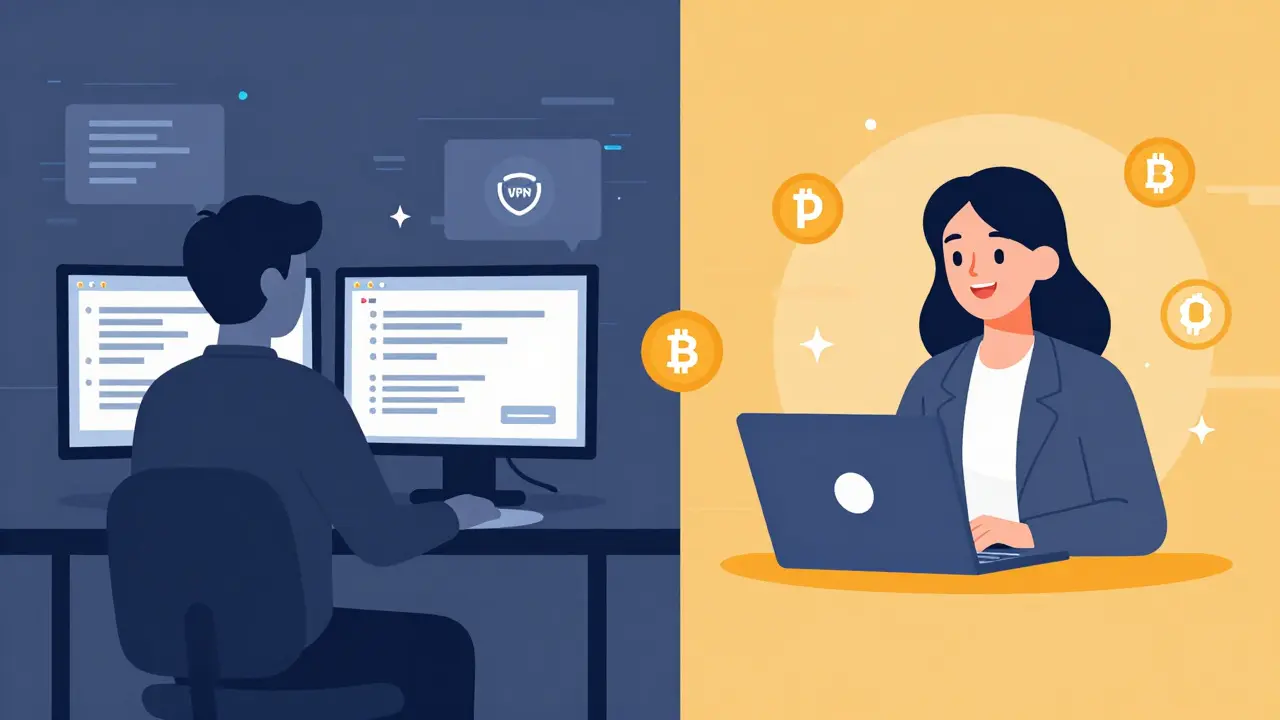
- Virtual Private Networks (VPNs): To mask their IP addresses, making it appear they are logging in from countries like Vietnam, Thailand, or even Western nations.
- Fraudulent Identity Documents: Forged passports, driver’s licenses, and educational certificates. The RCMP noted that 92% of verified applications contained forged credentials.
- AI-Powered Deepfakes: This is the game-changer. Operatives use real-time AI voice and face-swapping software during video interviews. They can mimic facial expressions and voice tones perfectly, fooling HR managers who rely on Zoom calls for verification.
The goal is simple: get hired remotely. They target international companies, particularly those desperate for cost-effective talent. Once employed, they don’t steal code immediately. Instead, they build trust. They show up on time, deliver quality work, and integrate into the team. This patience is what makes them dangerous. Unlike traditional cybercriminals who hit hard and run, these operatives play the long game.
The Money Trail: From Salary to Sanctions Evasion
Here is where the cryptocurrency aspect becomes critical. Why crypto? Because it’s fast, borderless, and difficult to trace if handled correctly. These workers specifically request payment in stablecoins like USDC or USD Coin and USDT or Tether.
Stablecoins are ideal for this scheme because their value doesn’t fluctuate wildly, making salary calculations easy for the employer. More importantly, they are compatible with Over-the-Counter (OTC) traders-individuals or firms that buy large amounts of crypto directly from clients in exchange for fiat currency (like dollars or euros). This allows the North Korean operatives to convert their digital earnings into usable cash without triggering automatic alerts on major exchanges.
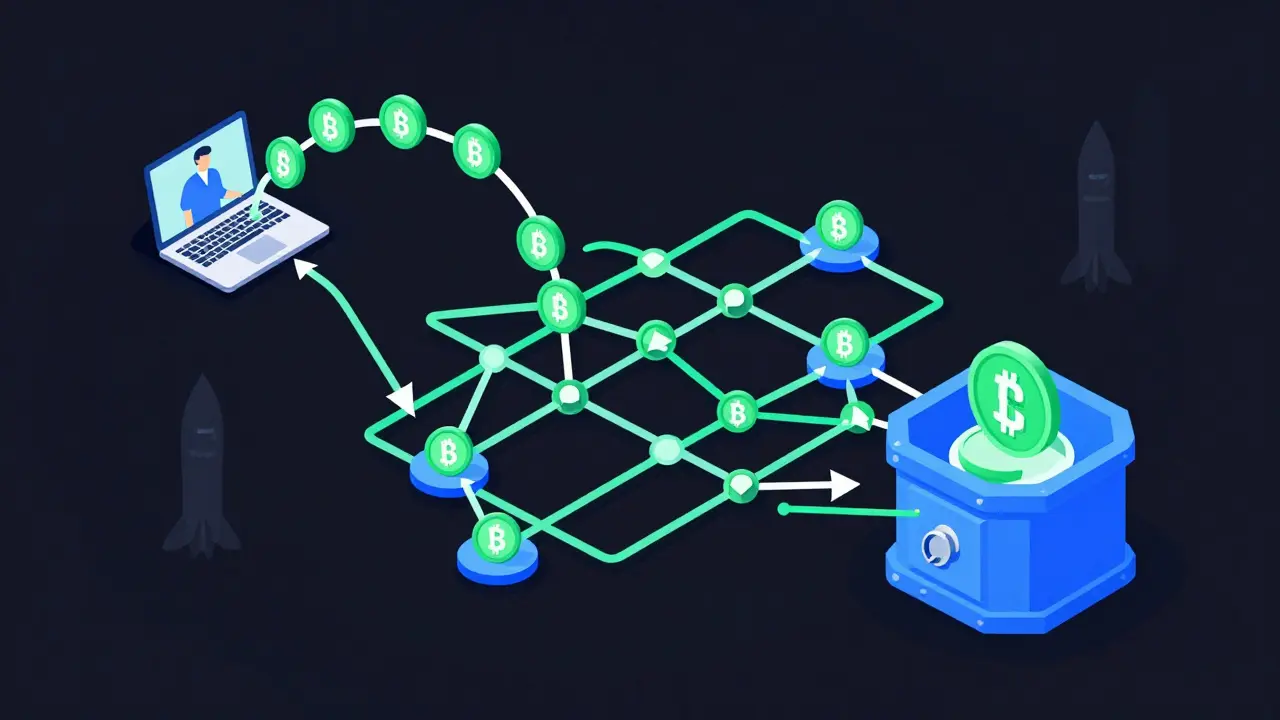
On-chain analysis reveals a distinct pattern. These workers receive regular payments of consistent amounts-often around $5,000 per month. This consistency mimics a legitimate salary. However, once the funds hit their wallets, the money moves quickly. The laundering process involves fragmenting the funds across numerous blockchain addresses. This "churning" makes it incredibly hard for analysts to follow the trail.
Eventually, the fragmented funds are consolidated and transferred to senior DPRK operatives. Names like Kim Sang Man and Sim Hyon Sop frequently appear in these transaction clusters. Both are previously sanctioned individuals who act as the financial gatekeepers. From there, the money is converted to fiat through fictitious accounts on mainstream exchanges or via OTC traders. One notable facilitator, known only as 'Lu,' was sanctioned by OFAC in December 2024 for his role in moving these funds. The U.S. Department of Justice’s civil forfeiture complaint filed on June 5, 2025, highlighted how extensively this network uses infrastructure in Russia and the UAE to obscure the final destination of the money.
Red Flags Every Employer Should Know
If you hire remote staff, you are a potential target. The Royal Canadian Mounted Police (RCMP) issued a detailed advisory on July 16, 2025, outlining specific red flags that indicate a candidate might be part of this scheme. Ignoring these signs has cost businesses dearly. The Canadian Anti-Fraud Centre reported an average loss of $47,000 per incident, with 78% of cases involving cryptocurrency payments.
Here is what you need to watch for:
| Indicator | What to Look For | Why It Matters |
|---|---|---|
| Pricing Anomalies | Bids 20-30% below market rate | DPRK workers are instructed to undercut competitors to secure quick hires. |
| Payment Preferences | Insistence on crypto/stablecoins | Legitimate freelancers usually prefer bank transfers or PayPal; crypto is a red flag for anonymity. |
| Identity Inconsistencies | Vague background, no LinkedIn history | Operatives create fake personas with little digital footprint prior to the application. |
| Technical Glitches | Poor audio/video sync during calls | AI deepfake technology can struggle with high-bandwidth requirements, leading to lag or unnatural movements. |
| Contract Urgency | Willing to start before signing | They want access to systems and payment setups before legal ties are established. |
Another major warning sign is the use of multiple IP addresses from different countries. If your new hire logs in from Vietnam one day and Germany the next, that’s a problem. Legitimate remote workers usually have a stable location. Furthermore, inconsistencies in personal information are common. A worker might claim to live in Bangkok but have a phone number registered in Moscow. Always verify documentation directly with the issuing institutions. Don’t just take a PDF at face value.

The Strategic Impact: Funding Weapons Programs
It’s easy to view this as a corporate fraud issue, but the stakes are global security. The Multilateral Sanctions Monitoring Team (MSMT)-an independent body comprising Australia, Canada, France, Germany, Italy, Japan, the Netherlands, New Zealand, South Korea, the UK, and the US-released a pivotal report on October 23, 2025. Their findings were stark: these funds are systematically funneled into the "unlawful development of its WMD (weapons of mass destruction) and ballistic missile programs."
Under Secretary of the Treasury for Terrorism and Financial Intelligence John K. Hurley stated on July 24, 2025: "The North Korean regime continues to target American businesses through fraud schemes involving its overseas IT workers, who steal data and demand ransom." This highlights a dual-threat model. While the steady income from IT jobs provides baseline funding, these operatives also position themselves to steal sensitive data. Once they have access to a company’s internal networks, they can exfiltrate intellectual property or install ransomware, adding another layer of extortion revenue.
The MSMT report also revealed that officials used stablecoins for procurement-related transactions. This includes buying military equipment and raw materials like copper, which is essential for munitions production. So, when you pay a fake developer in USDT, you aren’t just losing money-you might indirectly be supplying materials for missiles. This connection transforms a business risk into a geopolitical crisis.
Government Crackdowns and Future Outlook
The response from governments has been swift and severe. In 2025, we saw a coordinated escalation in enforcement actions. The U.S. Department of Justice unsealed a five-count wire fraud and money laundering indictment on July 22, 2025, charging four North Korean nationals who stole over $900,000 in virtual currency. Earlier that year, on June 5, the DOJ filed a civil forfeiture complaint seeking over $7.7 million in assets tied to a laundering network using fraudulent identities like 'Joshua Palmer' and 'Alex Hong.' The FBI successfully seized these digital assets, including USDC, ETH, and high-value NFTs.
Sanctions have expanded beyond individual hackers to include the infrastructure supporting them. On July 24, 2025, the Treasury Department sanctioned Vitaliy Sergeyevich Andreyev, Kim Ung Sun, Shenyang Geumpungri Network Technology Co., Ltd, and Korea Sinjin Trading Corporation. At least fifteen Chinese banks were also identified in a Ministry of Foreign Affairs report as having been used to launder these funds.
Looking ahead to late 2026, the landscape is shifting. The Financial Action Task Force (FATF) issued updated guidance on virtual asset service providers in June 2025, specifically addressing the DPRK threat. Additionally, the Treasury Department’s Financial Crimes Enforcement Network (FinCEN) is developing enhanced blockchain analytics capabilities. A prototype system expected to launch in Q1 2026 aims to identify DPRK-linked wallet clusters with 89% accuracy.
Industry analysts predict a 25-30% decrease in successful infiltrations by Q4 2026 due to improved verification protocols. However, North Korea’s adaptability remains a concern. As AI detection improves, they will likely develop better deepfake technology. The battle is ongoing, requiring constant vigilance from both regulators and private sector employers.
How much money did North Korea make from crypto in 2025?
According to the Multilateral Sanctions Monitoring Team (MSMT), North Korea generated at least $1.65 billion from illicit crypto activities between January and September 2025. This includes proceeds from exchange hacks and IT worker schemes.
Why do North Korean IT workers insist on being paid in cryptocurrency?
Cryptocurrency, particularly stablecoins like USDT and USDC, allows for anonymous, cross-border transfers that are difficult to trace. It enables the regime to bypass UN sanctions and convert funds into fiat currency through OTC traders without alerting traditional banking systems.
Can I detect if my remote employee is using AI deepfakes?
Yes, look for technical glitches such as poor audio-video synchronization, unnatural eye movements, or background inconsistencies. Conduct interviews using multiple communication platforms simultaneously, as maintaining a deepfake across different apps is technically challenging for operatives.
What are the biggest red flags when hiring remote developers?
Major red flags include requests for cryptocurrency payment, bids significantly below market rate (20-30% lower), inconsistent identity documents, and a willingness to start work before signing a formal contract. Also, be wary of candidates with no verifiable digital footprint prior to their application.
How are governments fighting these schemes?
Governments are using a multi-pronged approach: sanctioning key facilitators like Chinyong Information Technology Cooperation Company, seizing digital assets through DOJ civil forfeiture complaints, and enhancing blockchain analytics via FinCEN to track wallet clusters with higher accuracy.