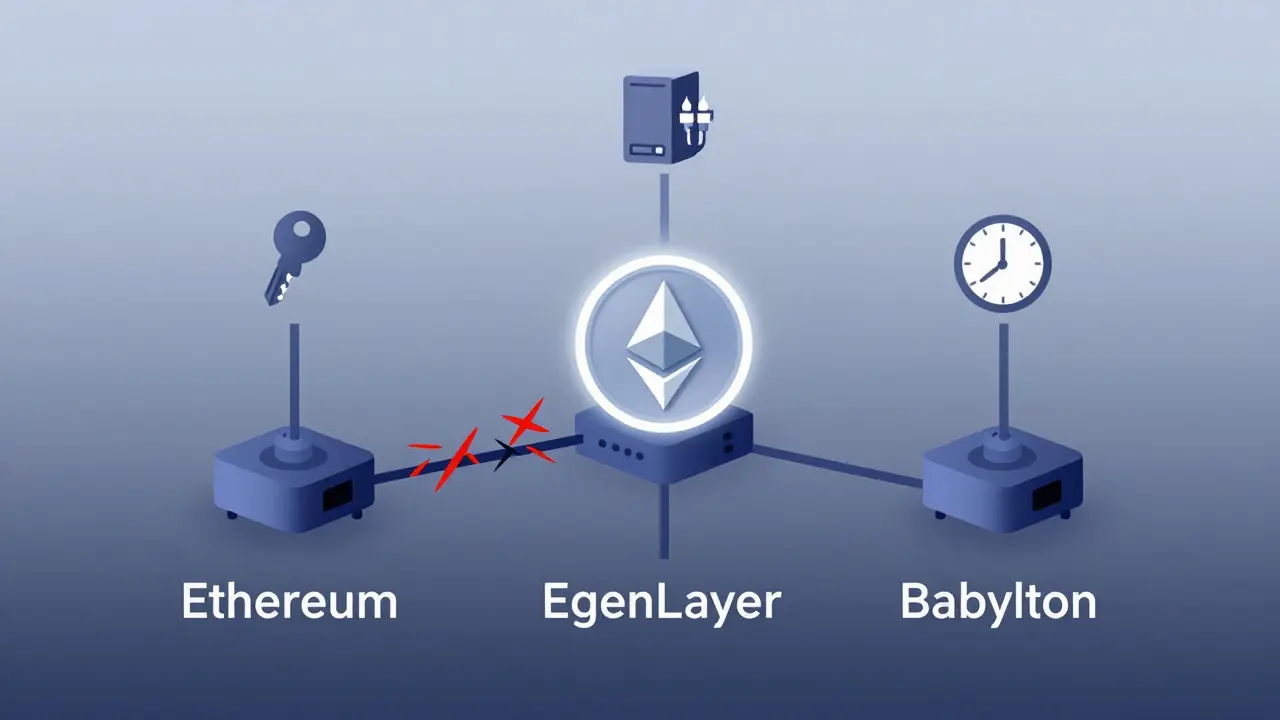
Restaking is making waves in blockchain, letting validators earn rewards across multiple networks by locking up their stake just once. But there’s a hidden danger lurking beneath the surface: slashing. And unlike simple downtime penalties, restaking can turn a small mistake into a massive financial loss-fast.
What Is Slashing, Really?
Slashing isn’t just a fine. It’s a blockchain-enforced punishment where a portion of your staked tokens gets permanently destroyed. This happens when a validator breaks the rules in a way that threatens network security. The goal? Keep everyone honest. If you try to cheat, the system doesn’t just say "no"-it takes your money. In Ethereum’s proof-of-stake system, slashing kicks in for three main violations:- Proposing two different blocks for the same slot (double proposal)
- Signing two conflicting attestations for the same block height (double voting)
- Attesting to blocks that "surround" another-essentially trying to rewrite history
Why Restaking Makes Slashing Worse
Restaking lets you use the same ETH stake to secure multiple chains-like EigenLayer, Babylon, or other emerging protocols. Sounds efficient? It is. But it also means one mistake can trigger slashing on all networks you’re signed up for. Imagine you run a validator node for Ethereum. You set up a backup server to avoid downtime. You copy your private key to the backup. Seems smart. But now, if both servers are online at the same time and try to sign the same block, the network sees it as a double-signing attempt. Boom. Slashing. And if you’re restaking on two other chains using that same stake? They all slash you too. There’s no public data yet on how many restaking validators have been slashed. But experts agree: the risk is higher. Why? Because you’re juggling more protocols, more rules, more dependencies. One network might allow a 5-minute downtime window. Another might slash after 30 seconds. You need to know them all.The Hidden Cost: More Than Just Lost Tokens
Losing 10 ETH to slashing hurts. But the real damage? Your reputation. In staking, trust is everything. Delegators don’t just pick validators based on APY. They pick based on history. Reliability. Transparency. A single slashing event can trigger a mass exodus. Delegators pull their funds. Staking platforms blacklist you. Institutional investors walk away. Recovering from that takes months-sometimes years. You need to publish detailed incident reports, overhaul your infrastructure, and prove you’ve fixed everything. And even then, many will never trust you again. In markets where dozens of validators offer near-identical yields, reputation isn’t just nice to have-it’s your competitive edge. Lose it, and you lose your business.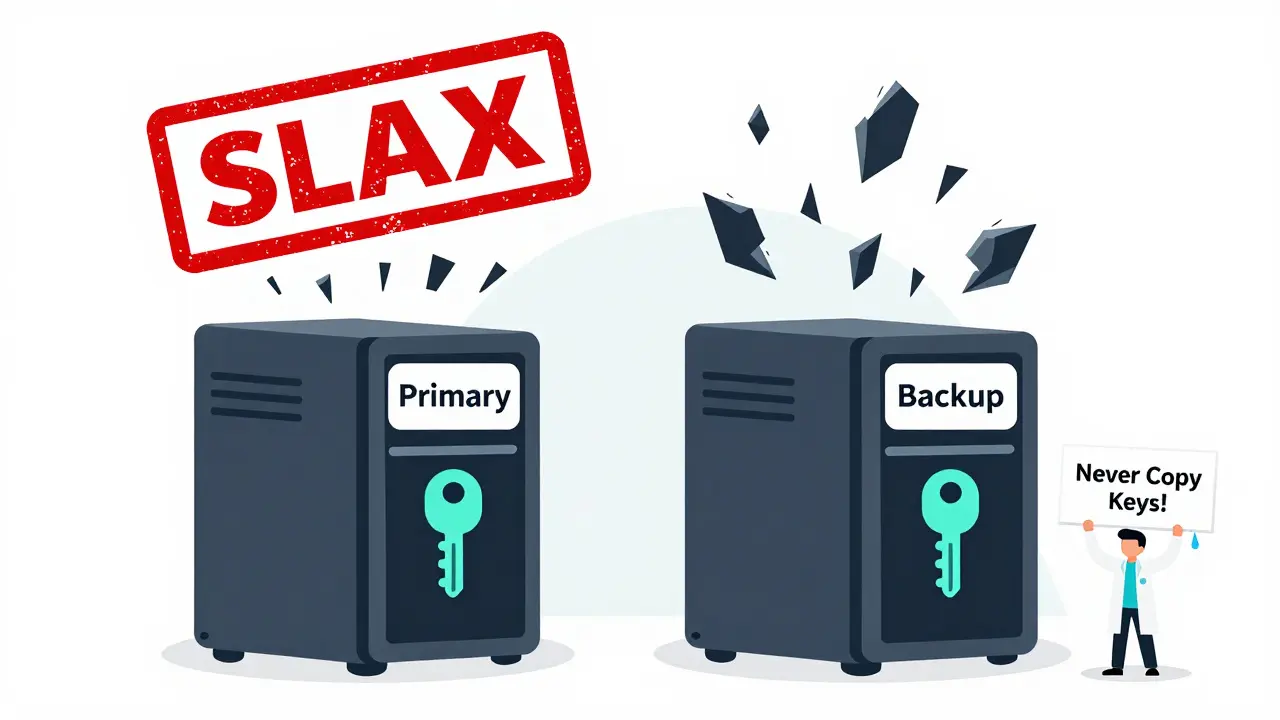
How to Avoid Slashing Altogether
You can’t eliminate risk. But you can crush it. Here’s how:- Use remote signing: Never store your validator key on the same machine that connects to the internet. Use a dedicated hardware signing device (like a Ledger or YubiKey) or a secure air-gapped system. This prevents hackers from stealing your key and signing malicious blocks.
- Implement key sharding: Split your validator key into multiple parts. Require at least two of three shards to sign a block. Even if one server is compromised, it can’t act alone.
- Deploy sentry nodes: Your main validator node should never connect directly to the network. Instead, use trusted "sentry" nodes as intermediaries. If one sentry is attacked, the others still keep your validator alive.
- Monitor everything: Set up alerts for block production delays, attestation misses, and network sync issues. Use tools like Prometheus + Grafana. Check your node’s health daily-not weekly.
- Never duplicate keys: If you’re setting up a backup, use a different validator key. Don’t copy the same one. Ever.
- Stay updated: Each protocol changes its slashing rules. Ethereum 2.0 didn’t slash for downtime. Now it does under certain conditions. Follow official network updates. Skip the Reddit threads.
What Institutional Stakers Must Do
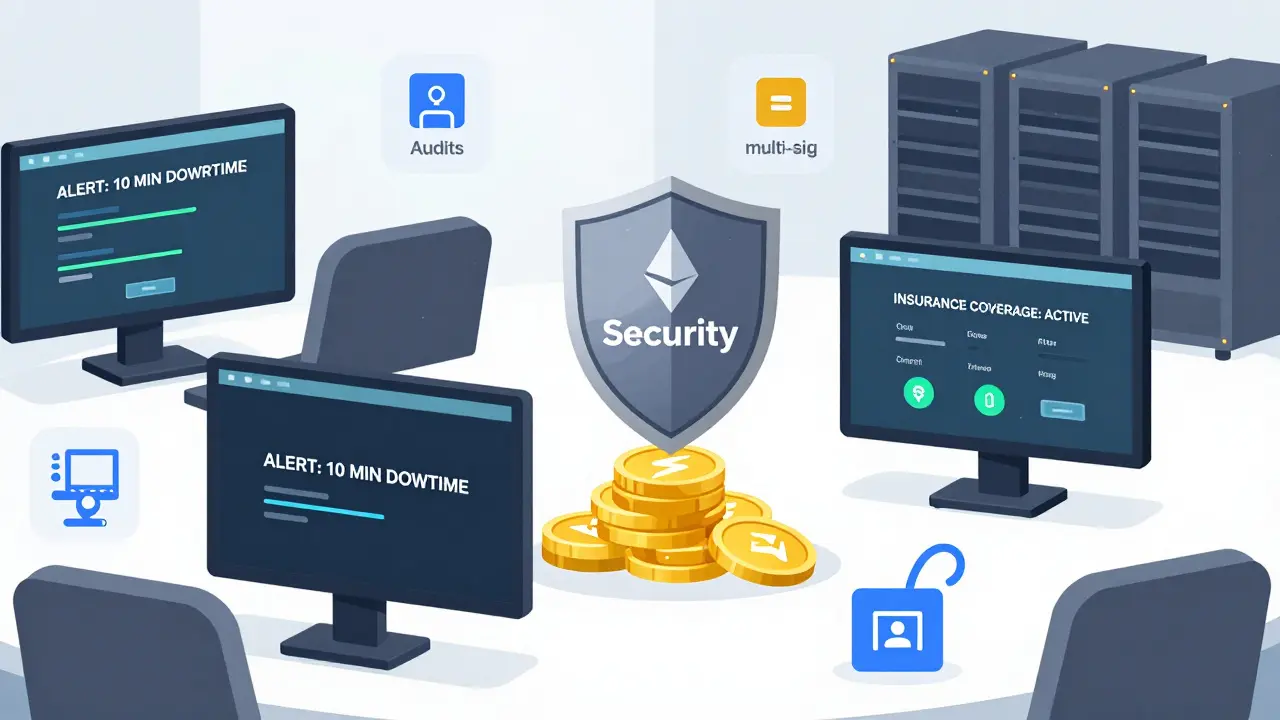
If you’re managing crypto assets for a fund, family office, or fintech platform, treat staking like you would bond investments or hedge fund custody. Here’s what you need:- Multi-signature wallets for key access
- Independent audit trails for every validator action
- Geographically distributed nodes to avoid regional outages
- Insurance coverage for slashing losses (yes, some providers now offer this)
- Clear governance policy that defines who can approve changes, upgrades, or new restaking protocols
The Future of Slashing
As more value flows into restaking, slashing penalties could get stricter. Some experts believe networks will increase slash amounts to deter attacks as TVL grows. Others warn that too much punishment will scare away validators, weakening decentralization. The truth? There’s a tightrope. Networks need to punish bad behavior-but not so hard that good operators quit. The best systems will evolve with smarter slashing logic: maybe only slashing for intentional attacks, not accidental downtime. For now, assume the worst. Assume every rule matters. Assume one mistake can erase months of earnings.Final Takeaway
Restaking offers huge rewards. But it’s not a passive income stream. It’s an active security operation. If you’re not treating it like one, you’re already at risk. The safest restakers aren’t the ones chasing the highest APY. They’re the ones who’ve hardened their infrastructure, automated their monitoring, and built redundancy into every layer. They know: in blockchain, security isn’t optional. It’s the only thing that keeps your money alive.Can you get slashed just for being offline?
Yes, but only under specific conditions. In Ethereum, simply being offline doesn’t trigger slashing. You lose rewards, but your stake stays intact. However, if your node goes offline during a critical window-like when you’re supposed to attest to a block that others are voting on-you might be flagged as "inconsistent," which can lead to slashing if combined with other violations. Some restaking protocols have stricter liveness rules than Ethereum, so being offline for even 10 minutes could be dangerous depending on the chain.
Is restaking safer than regular staking?
No-not inherently. Restaking increases your exposure. With regular staking, you’re only responsible for one network’s rules. With restaking, you’re juggling multiple, each with different slashing conditions, uptime requirements, and upgrade cycles. If you’re not managing each one with precision, you’re multiplying your risk. The convenience of restaking comes with a heavy operational burden.
Do all restaking platforms have the same slashing rules?
No. Each protocol defines its own slashing conditions. Ethereum’s slashing rules are well-documented. But newer restaking systems like Babylon or EigenLayer may have unique penalties for things like misaligned attestation timing, incorrect data availability proofs, or failure to participate in cross-chain consensus. Always read the specific protocol’s documentation before restaking. Never assume rules are the same.
Can you insure against slashing?
Yes, but it’s rare and expensive. A few insurance providers now offer slashing coverage for institutional stakers, typically covering 50-80% of losses if slashing occurs due to technical failure-not human error or negligence. These policies require audits of your infrastructure, mandatory use of remote signing, and proof of monitoring systems. Retail stakers rarely have access. Don’t rely on insurance as your main defense.
What’s the #1 mistake restakers make?
Copying validator keys between servers. It seems like a smart backup plan. But when two servers with the same key go online simultaneously, the network sees it as a double-signing attack. That’s an automatic slash. Always use separate keys for each node. Use key sharding or remote signing instead of duplication.