Walking into a new crypto exchange can feel like entering a casino where you aren't quite sure who owns the house. With thousands of platforms popping up, finding one that doesn't just look pretty but actually keeps your funds safe is the real challenge. Koinbay is a centralized cryptocurrency exchange launched in 2024 that aims to simplify trading for both beginners and pro traders. It operates as a white-label service, meaning it uses established infrastructure to get up and running quickly rather than building every line of code from scratch. But does a new player from the Comoros islands have what it takes to compete with the giants?
Quick Look: Koinbay at a Glance
- Launched: April 2024
- Regulation: Licensed in Anjouan, Union of Comoros
- Asset Support: 200+ cryptocurrencies including the native KBT Token
- Trading Tools: Spot, Margin, Futures, and Grid trading
- Funding: Credit cards, bank transfers, and major blockchain networks
Who is Koinbay and Where are They Based?
Before you deposit a single Satoshi, you need to know who is holding the keys. Koinbay is operated by KOINBAY LTD. They are incorporated under the International Business Companies Act of the Autonomous Island of Anjouan, Union of Comoros. For those not familiar with global finance, this region is a popular hub for companies seeking a business-friendly environment with fewer hurdles than New York or London.
The platform is a "White Label Service Provider." In plain English, this means they've essentially leased the "engine" of a proven exchange and put their own branding, logo, and user interface on top of it. This is a common move for new exchanges to ensure the technical side-like order matching and wallet management-works without the bugs of a brand-new proprietary system. However, it also means the platform's uniqueness depends more on its service and fees than on groundbreaking technology.
Trading Features: From Simple Swaps to Complex Strategies
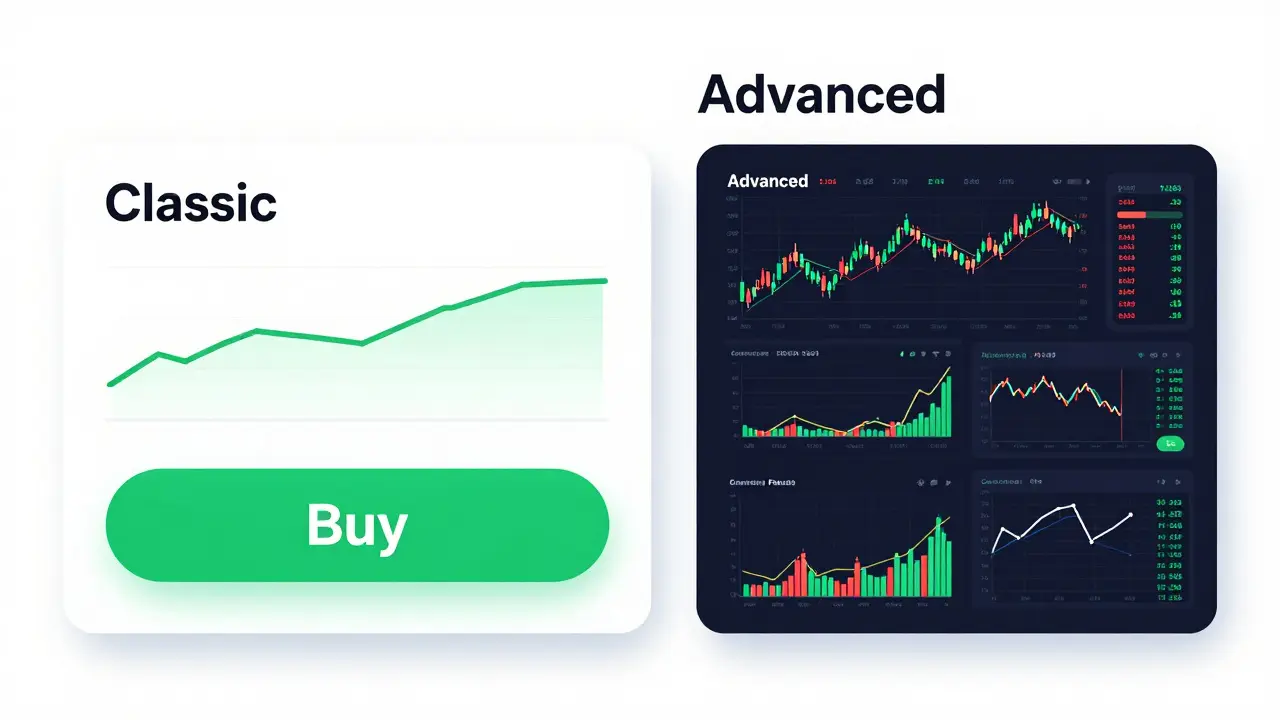
Whether you just want to buy some Bitcoin or you're trying to automate your profits, Koinbay covers the bases. They offer a dual-interface system: a "Classic" view for people who find complex charts intimidating, and an "Advanced" view for those who live and breathe candlesticks.
The exchange supports a massive variety of assets-over 200 tokens in total. Aside from the usual suspects like Ethereum and Litecoin, they have their own KBT Token. The platform isn't just for simple buying and selling; it includes several professional-grade tools:
- Spot Trading: The standard way to trade. You can use Limit Orders to buy at a specific price or Market Orders to get in immediately.
- Margin and Futures: For those who want to leverage their positions to amplify gains (though this also amplifies risks).
- Grid Trading: A bot-like strategy that buys low and sells high within a specific price range, which is great for sideways markets.
- Staking and Loans: Instead of letting your coins sit idle, you can earn rewards through staking or use your assets as collateral for loans.
| Feature | Beginner Level | Advanced Level | Purpose |
|---|---|---|---|
| Spot Trading | Yes (Classic) | Yes (Advanced) | Direct ownership of assets |
| Futures/Margin | No | Yes | Speculating on price movement |
| Grid Trading | No | Yes | Automated range trading |
| KBT Staking | Yes | Yes | Passive income generation |
Getting Started: Onboarding and KYC
Koinbay keeps the sign-up process lean. You start with a basic email registration. However, to actually use the platform's full potential, you have to go through KYC (Know Your Customer) verification. This is the standard process where you provide ID to prove who you are.
Once you hit "Tier 1" status, you're good to go. Funding your account is where Koinbay tries to be inclusive. You can transfer crypto from another wallet using networks like ERC20, TRC20, BEP20, or Polygon. If you're totally new to crypto and don't have coins yet, you can use a credit card or bank transfer to buy your first assets directly on the platform.
Security and Fund Safety
When using a Centralized Exchange (CEX), you are trusting the company with your private keys. Koinbay attempts to mitigate this risk with a multi-layered withdrawal security system. You can't just click "withdraw" and send money to a random address; the platform requires both an email confirmation code and a Two-Factor Authentication (2FA) code, usually generated via Google Authenticator.
The withdrawal workflow is intentionally slow to prevent hacking. You have to navigate to the withdrawal page, pick the coin, select the correct network (picking the wrong one can result in permanent loss of funds), and then pass the dual-code check. While this is annoying for some, it's a necessary friction to stop a hacker from draining your account in seconds.
Fees and the "Rewards Hub"
Koinbay claims to offer "competitive low fees," but they don't post a giant, easy-to-read percentage table on their homepage. They do emphasize transparency, meaning when you go to make a trade, the cost is broken down clearly so there are no hidden surprises. To sweeten the deal for new users, they've implemented a Rewards Hub.
This is essentially a gamified way to get free USDT. By performing simple tasks-like logging in daily or completing your first few trades-you earn small amounts of stablecoins. It's a clever way to build user habit, although it doesn't replace the need for a low-fee trading environment if you're moving large volumes of money.
The Verdict: Should You Trust Koinbay?
Koinbay is a shiny new tool with a lot of features, but it's very young. Being incorporated in 2024 means it doesn't have a multi-year track record of surviving bear markets or resisting major attacks. The use of a white-label system suggests the tech is stable, but the regulatory environment in the Comoros doesn't offer the same protections you'd find with a platform regulated by the FCA in the UK or the SEC in the US.
If you're looking for a place to try out grid trading or want to earn some free USDT through tasks, it's a viable option. But for those holding life-changing amounts of crypto, the golden rule applies: not your keys, not your coins. Use the exchange for trading, but keep your long-term holdings in a cold wallet.
Is Koinbay a legitimate exchange?
Koinbay is a legally incorporated entity (KOINBAY LTD) licensed in the Union of Comoros. While it is a legitimate business, it is a very new platform (launched 2024) and does not have the long-term reputation of established giants like Binance or Kraken.
What is a white-label exchange?
A white-label exchange is a platform that uses pre-built software from another provider and brands it as its own. This allows the exchange to launch quickly with a professional trading engine without building the entire backend from scratch.
How do I secure my funds on Koinbay?
You should immediately enable Two-Factor Authentication (2FA) using an app like Google Authenticator and ensure your registered email is secure. Koinbay requires both 2FA and email codes for withdrawals to prevent unauthorized access.
Which networks does Koinbay support for deposits?
Koinbay supports deposits via four major blockchain networks: ERC20 (Ethereum), TRC20 (Tron), BEP20 (Binance Smart Chain), and Polygon. Always double-check that your sending wallet matches the receiving network to avoid losing your funds.
What can I earn in the Rewards Hub?
The Rewards Hub allows users to earn free USDT by completing specific tasks, such as daily logins and executing trades. It's designed as an incentive for new users to explore the platform's features.
Next Steps for Traders
If you're deciding whether to jump in, here is a quick strategy based on your profile:
- The Newbie: Use a credit card to buy a small amount of Bitcoin, explore the "Classic" interface, and try out the Rewards Hub tasks to get a feel for the UI.
- The Day Trader: Test the "Advanced" interface with a small deposit. Check the execution speed of Market Orders during high volatility to see if the white-label engine holds up.
- The Passive Earner: Look into the KBT Token staking options and crypto loans, but remember to read the terms and conditions regarding lock-up periods.