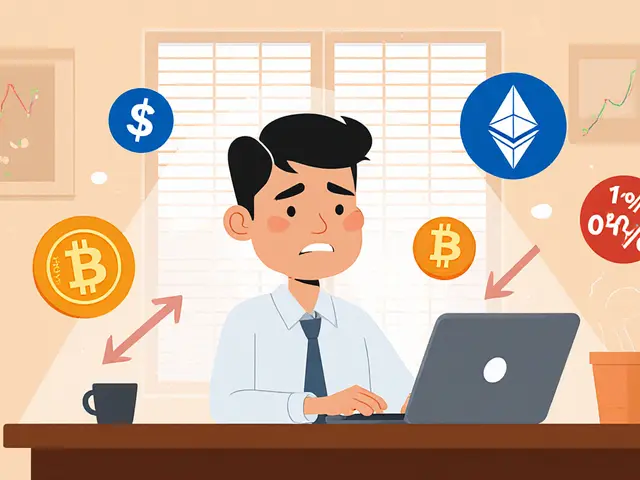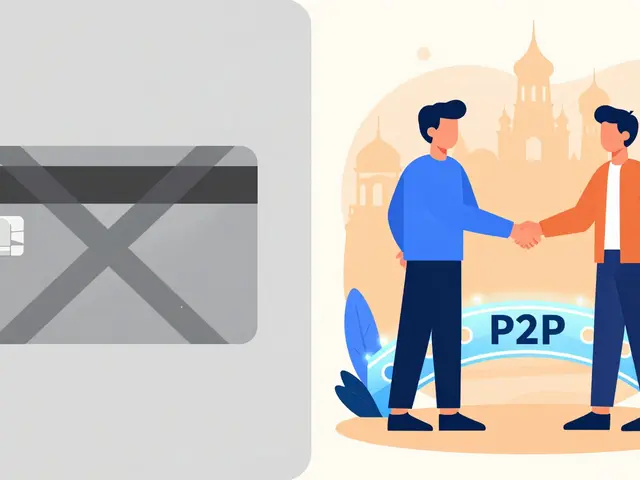
Imagine trying to save money for your child's education but having no bank account. Or wanting to send cash to a relative across the border but facing fees that eat up half your wage. For over 1.7 billion people worldwide, this is daily reality. The World Bank Group reports that these individuals remain unbanked, largely due to high costs, distant branches, and strict identity requirements. But there is a shift happening right now. Blockchain technology is a distributed ledger system that enables secure, transparent, and decentralized transactions without central intermediaries. It is moving from tech labs into the pockets of people in Kenya, India, and Peru, offering a direct path to financial services.
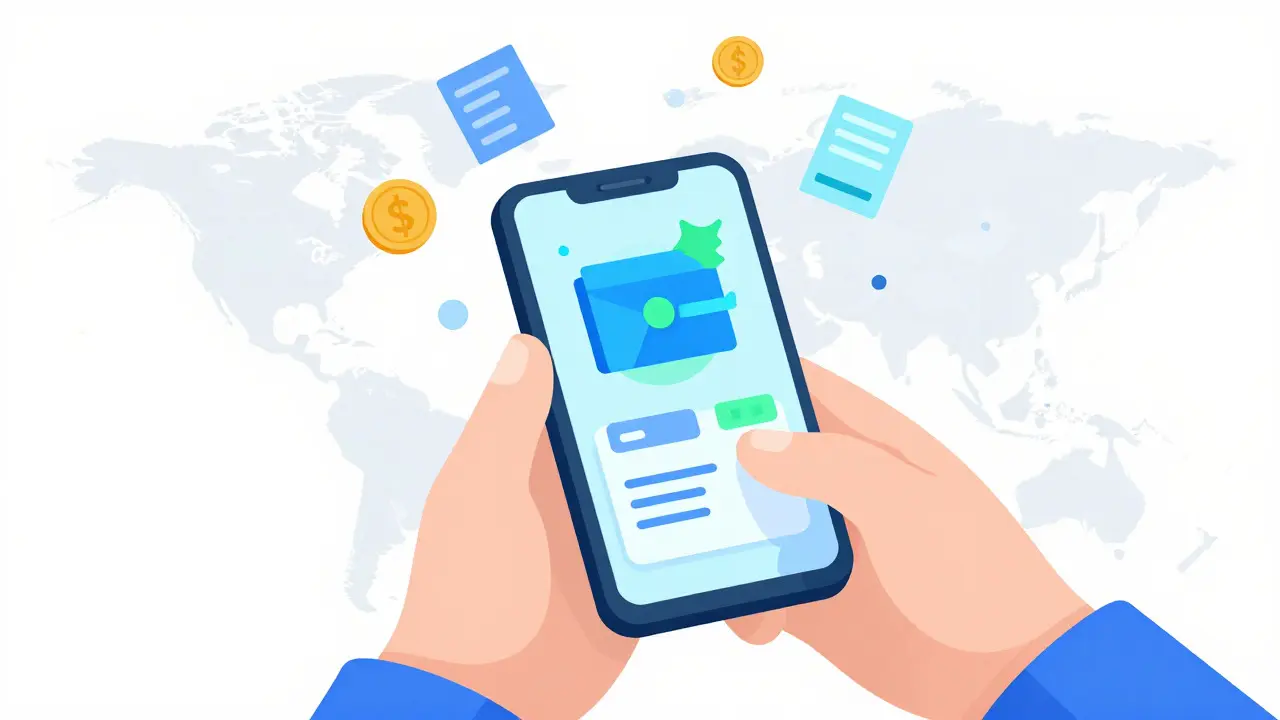
You don't need a physical branch or a credit score to use it. You just need an internet connection and a smartphone. This article breaks down how blockchain works to include the excluded, the specific tools making this possible, and the real-world hurdles we still face in 2026.
The Core Problem: Why Traditional Banks Leave People Behind
Traditional banking was built for economies with stable infrastructure and high average incomes. It relies on physical presence, paper documentation, and centralized trust. For someone living in a rural area with limited connectivity, opening an account can be impossible. Even if they manage to open one, the monthly maintenance fees or minimum balance requirements can make holding money in a bank more expensive than keeping it under a mattress.
According to PwC analysis, approximately 1.4 billion people lack adequate access to essential financial services. These gaps aren't just about convenience; they are barriers to economic participation. Without a transaction account, people cannot easily receive wages digitally, build a credit history, or invest in assets. They are locked out of the modern economy. This is where blockchain steps in, not as a replacement for all banking, but as a parallel infrastructure that lowers the barrier to entry significantly.
How Blockchain Solves the Access Gap
At its core, blockchain removes the need for a middleman. In traditional finance, banks verify every transaction, charge fees for that verification, and store records centrally. On a blockchain, the network itself verifies transactions through consensus mechanisms. This creates three key benefits for the unbanked:
- Lower Costs: Peer-to-peer (P2P) transfers on blockchain networks often cost fractions of a cent, compared to the 5-10% fees common in remittance corridors via traditional agents.
- Speed and Availability: Transactions settle almost instantly and are available 24/7, unlike bank wires which can take days and only process during business hours.
- Transparency and Security: Every transaction is recorded on an immutable ledger. This reduces fraud and provides a verifiable history of financial activity, which can serve as a proxy for credit scores.
Consider the case of M-Pesa, a mobile money service in Kenya that pioneered digital payments for the unbanked. While M-Pesa used proprietary mobile tech, its success proved the demand. Now, blockchain-based solutions like Humaniq are building similar ecosystems using open-source code. Alex Fork, CEO of Humaniq, notes that these tools provide liquidity for entrepreneurial ventures via loans and crypto-financing, helping people move out of poverty by giving them access to capital they previously couldn't reach.
Key Tools Driving Financial Inclusion
It isn't just "crypto" in the abstract sense. Several specific technologies within the blockchain ecosystem are doing the heavy lifting for financial inclusion.
Smart Contracts
Smart contracts are self-executing agreements with rules written directly into code. They automate processes that traditionally require lawyers, notaries, or bank officers. For example, a smart contract can automatically release funds to a farmer once a delivery is confirmed by a sensor, eliminating the need for a bank to approve the loan disbursement. This automation drastically reduces administrative costs and speeds up access to credit.
Tokenization and Fractional Ownership
One of the biggest exclusions in finance is asset ownership. Real estate, art, and stocks often have high minimum investment thresholds. Tokenization solves this by splitting assets into digital tokens on a blockchain. You can buy a fraction of a property in London or a share of a coffee farm in Ethiopia for as little as $10. This allows low-income investors to participate in wealth-building opportunities that were previously reserved for the wealthy. Platforms pioneering this approach are expanding the investor base for asset managers, increasing assets under management while democratizing access.
Decentralized Finance (DeFi)
Decentralized Finance (DeFi) is a financial system built on blockchain that operates without central institutions like banks or exchanges. Protocols like Uniswap allow users to swap tokens, lend, and borrow directly from each other. What started as a technical niche has evolved into user-friendly, mobile-first apps. Today, a user in Nairobi can access lending markets on their phone, earning interest on idle savings or borrowing against collateral without visiting a bank branch.
| Feature | Traditional Banking | Blockchain Solutions |
|---|---|---|
| Access Requirement | Physical ID, proof of address, branch visit | Internet connection, digital wallet |
| Transaction Fees | High for cross-border/remittances (5-10%) | Low for P2P transfers (often <$1) |
| Availability | Business hours, Mon-Fri | 24/7/365 |
| Credit Assessment | Based on formal income history | Can use on-chain activity/history |
| Asset Investment Minimums | High (thousands of dollars) | Low (fractional ownership possible) |
Real-World Impact: From Theory to Practice
The potential of blockchain for financial inclusion is backed by systematic literature reviews published in journals like Frontiers in Blockchain. These studies highlight four main areas where blockchain makes a tangible difference:
- Payments: Instant, low-cost global transfers.
- Savings: Digital vaults with programmable features (e.g., auto-saving).
- Credit: Decentralized lending pools accessible to those without credit scores.
- Insurance: Parametric insurance triggered by smart contracts (e.g., automatic payout when rainfall drops below a certain level for farmers).
A notable example is the evolution of Uniswap, a blockchain-based protocol. Initially restricted to tech-savvy users, it has transformed into a mobile-first application accessible to anyone with an internet-connected device. This shift mirrors the broader trend: blockchain is moving from the periphery of the internet to the mainstream, serving as a catalyst for unlocking new types of services for people who were previously left behind.
Challenges That Remain in 2026
While the promise is strong, the road to full adoption isn't smooth. If you are looking at blockchain for financial inclusion, you need to understand the current limitations.
Scalability and Infrastructure Blockchain networks must handle massive volumes of transactions efficiently. While improvements in Layer-2 solutions have helped, complex infrastructure requirements remain a barrier in regions with limited technical capacity. Users need reliable internet, and devices must be capable enough to run wallets securely.
Regulatory Uncertainty Governments are still catching up. Regulatory frameworks are underdeveloped in many countries, creating uncertainty for both users and providers. However, recent developments show movement toward balanced legislation that protects consumers while allowing innovation. For governments in developing countries, prioritizing blockchain investment is becoming a strategic necessity to increase citizen access to financial services.
User Education Technology alone doesn't solve inclusion. People need to understand how to use digital wallets, manage private keys, and avoid scams. Establishing inclusive finance requires education alongside infrastructure. The Aspen Institute emphasizes that sustained progress requires collaboration between developers, governments, entrepreneurs, and funders.
The Future: Sustainability and Mainstream Adoption
As we look toward the next decade, two factors will define the success of blockchain in financial inclusion: sustainability and integration. Organizations are increasingly using frameworks like PwC's blockchain sustainability framework to ensure that digital expansion doesn't come at an environmental cost. Decarbonizing the tech stack is now part of the social mission.
The trajectory is clear. We are seeing a shift from meme-driven projects and speculative trading toward genuine utility. Internet-based financial services are maturing, offering gamified yet functional interfaces that appeal to younger generations. For financial institutions, the incentive is clear: tokenization allows them to tap into retail investors with smaller account sizes, diversifying their base and growing new markets.
Whether you are a developer, a policy maker, or simply someone interested in a fairer financial system, the message is consistent. Blockchain offers surprising promise in expanding financial inclusion. It is not a magic bullet, but it is a powerful tool that, when combined with proper regulation and education, can help close the gap for billions of people.
Do I need a lot of money to start using blockchain for financial services?
No. One of the main advantages of blockchain is fractional ownership and low transaction fees. You can start with very small amounts, sometimes less than $10, to buy tokens or participate in DeFi protocols. This contrasts sharply with traditional investing, which often requires thousands of dollars to get started.
Is blockchain safer than traditional banking for the unbanked?
Blockchain offers high security through cryptography and decentralization, meaning no single point of failure like a bank server outage. However, it shifts responsibility to the user. You must manage your own digital keys. If you lose your password or seed phrase, recovery can be difficult. Traditional banks offer customer support for lost credentials, so user education is critical for safety in both systems.
What role do governments play in blockchain financial inclusion?
Governments play a crucial role in creating stable regulatory frameworks that protect consumers without stifling innovation. They also need to invest in basic infrastructure like internet connectivity. Recent analysis suggests that for developing countries, prioritizing blockchain investment is essential to modernize financial infrastructure and reduce costs for citizens.
How does tokenization help people who can't afford real estate?
Tokenization splits a high-value asset, like a house or a piece of art, into many small digital shares. Instead of needing hundreds of thousands of dollars to buy a property, you can buy a few tokens representing a tiny fraction of the ownership. This allows lower-income individuals to benefit from asset appreciation and rental income, which was previously inaccessible.
Are blockchain financial services available in remote areas?
Yes, provided there is internet access. Unlike traditional banks that require physical branches, blockchain services operate online. This makes them ideal for remote or rural areas where building a bank branch is economically unviable. Mobile-first applications designed for low-bandwidth environments are specifically targeting these demographics.