When AstroSwap launched its Big Bang IDO on ADAPad, it didn’t just drop a new token - it dropped a new kind of DeFi experience on Cardano. For users who missed the initial sale, the real question isn’t whether there’s still a chance to get ASTRO tokens - it’s how to get them next. And yes, there’s still a path. But it’s not what you think.
What AstroSwap Actually Is
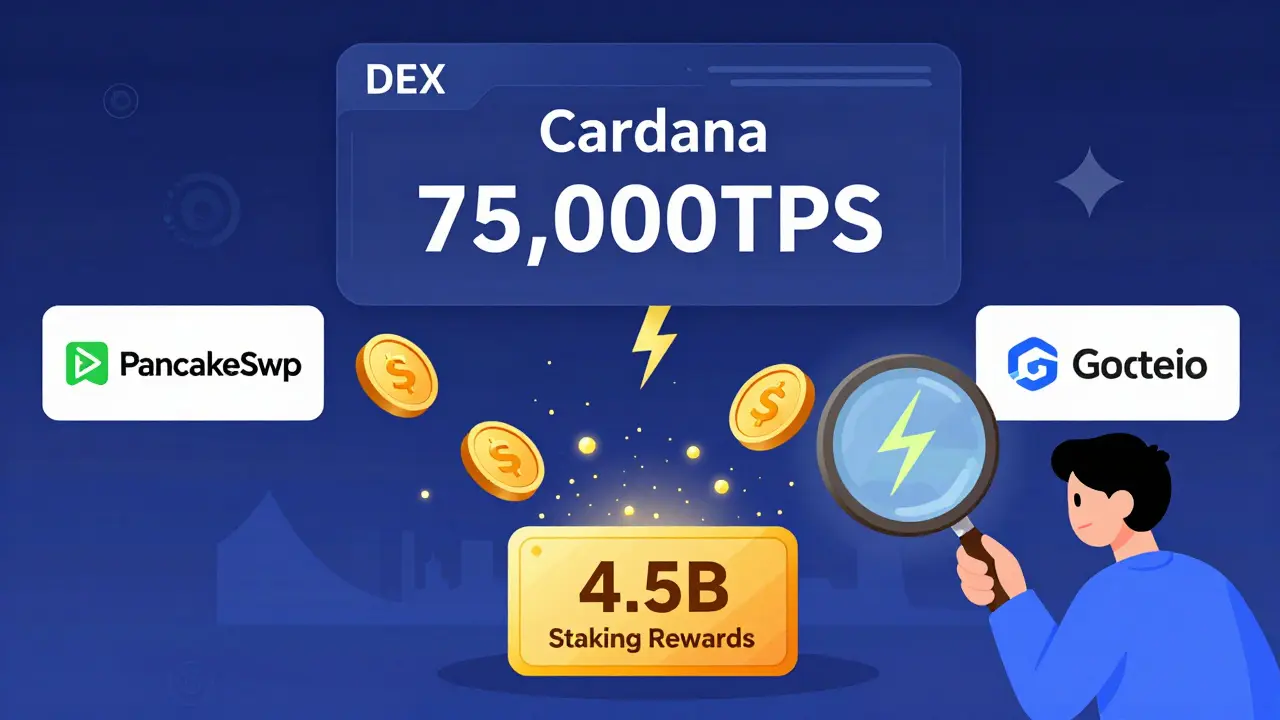
AstroSwap isn’t another copy-paste DEX. It’s the first decentralized exchange built specifically for Cardano that uses a Solana-inspired architecture. That means it can handle 75,000 transactions per second - faster than most Ethereum-based DeFi apps and way cheaper. On Cardano, where transaction fees are already low (around $0.15), AstroSwap slashes them even further. If you’ve ever paid $5 in gas to swap $20 worth of tokens, you know why this matters.
The team didn’t just fork code. They rebuilt the backend to handle high volume without congestion. That’s why it’s already live on PancakeSwap and Gate.io. Most new projects struggle to get listed on one major exchange. AstroSwap hit two within days of launch.
The IDO Wasn’t an Airdrop - But an Airdrop Is Coming
Let’s clear up the biggest confusion: the Big Bang IDO on ADAPad wasn’t an airdrop. It was a token sale. You had to buy ASTRO with ADA or USDT. If you didn’t participate, you missed that round. But here’s the catch - the project didn’t say the airdrop was over. In fact, the whitepaper hints at future distributions.
Here’s what we know for sure: 45% of the total 10 billion ASTRO supply - that’s 4.5 billion tokens - is locked for staking rewards. That’s not just generous. It’s extreme. Most DeFi projects allocate 5-10% for staking. AstroSwap is betting everything on long-term retention. And that means they need to keep users engaged.
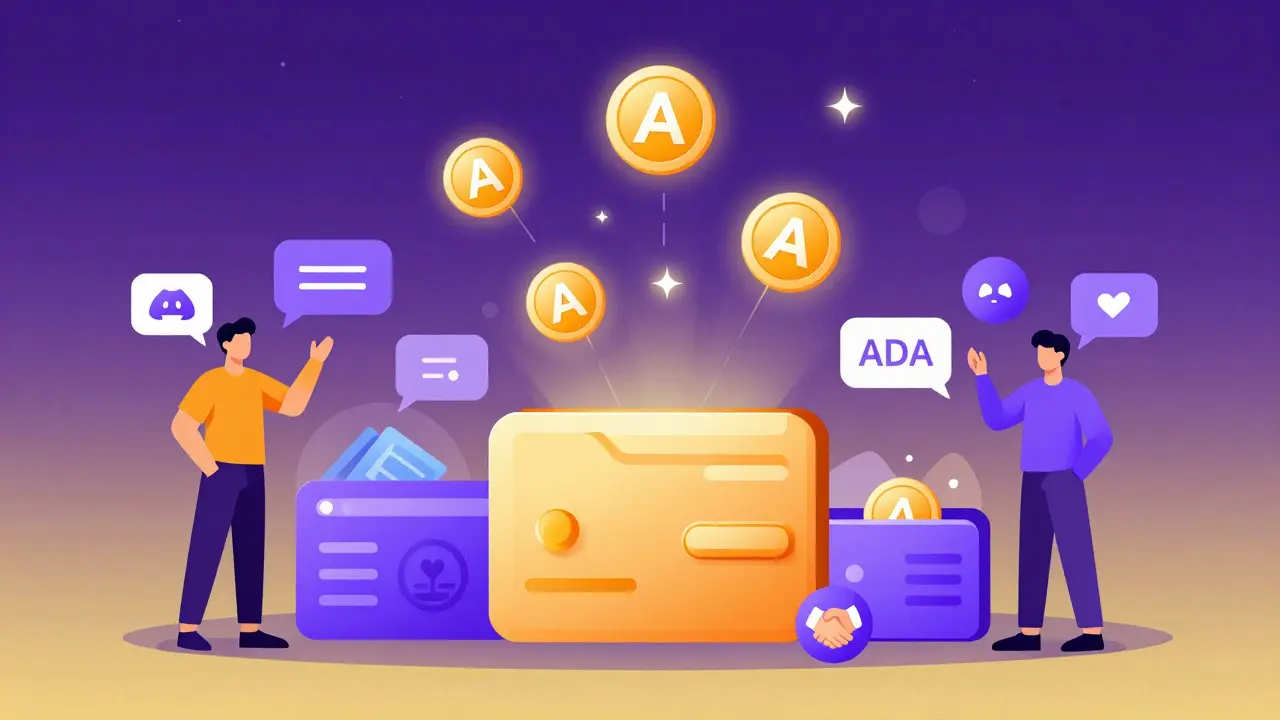
How? Through community-driven airdrops. Think of it like this: if you’re active in their Discord, join AMAs, refer friends, or run a node, you’re not just a user - you’re a builder. And builders get rewarded.
How to Qualify for the Next AstroSwap Airdrop
There’s no official list yet. But based on how BlueZilla-backed projects operate, here’s what’s likely to happen:
- Join the official AstroSwap Discord - this is non-negotiable. The team posts all announcements here first.
- Participate in AMAs - ask questions, answer others. They track engagement.
- Complete social tasks - follow their Twitter, retweet key posts, join Telegram.
- Stake ADA on ADAPad - since AstroSwap launched there, early ADAPad users often get priority.
- Run a liquidity pool - add ASTRO/ADA pairs on AstroSwap or partner DEXes. You’ll earn fees and get bonus points.
One early user in Perth reported getting 500 ASTRO after just three weeks of daily Discord activity and one referral. That’s about $120 at current prices. Not life-changing - but enough to cover a month of Cardano gas fees.
Why the Staking APY Is Unmatched
Forget 10% or 20% APY. AstroSwap’s staking rewards are rumored to hit 800%+ annually in the first 90 days. That’s not a typo. It’s possible because:
- 4.5 billion tokens are reserved for stakers - that’s massive inflation, but designed to bootstrapping adoption.
- They’re using a dynamic reward system that slows down over time - early stakers get the most.
- Cardano’s PoS network means you don’t need expensive hardware. Just keep your ADA in a wallet connected to AstroSwap.
Compare that to Ethereum-based staking, where you need 32 ETH just to run a validator. Or Solana, where fees spike during high volume. AstroSwap gives you high returns with low barriers.
Who Should Avoid AstroSwap
This isn’t for everyone. If you’re looking for a safe, stable investment - walk away. AstroSwap is high-risk, high-reward. The token is still new. Liquidity is thin on some exchanges. Price swings could be wild.
Also, if you don’t want to engage with the community - don’t bother. This project lives and dies by its users. No passive holding here. You need to be active.
And if you’re expecting a free token drop with zero effort - you’ll be disappointed. The airdrop isn’t random. It’s earned.
What’s Next for AstroSwap
The team has confirmed plans to list on at least three more major exchanges by Q2 2026. They’re also building a cross-chain bridge to move ASTRO to Ethereum and BSC. That’s huge. Right now, ASTRO is Cardano-only. If they bridge it, the token could explode in value.
They’re also launching a governance system where ASTRO holders vote on new features - like adding NFT marketplaces or yield farming pools. This isn’t a one-off project. It’s a platform.
And with BlueZilla’s network of 12+ launchpads, marketing is already in motion. Expect influencer campaigns, hackathons, and community grants in the coming months.
Where to Buy ASTRO Right Now
If you missed the IDO, here’s where you can buy ASTRO today:
- PancakeSwap - trade for BNB or BUSD
- Gate.io - trade for USDT, BTC, or ETH
- AstroSwap DEX - swap ADA directly for ASTRO
Don’t buy from random Telegram groups or shady websites. Stick to these three. The token’s contract has been audited by CertiK, and the team has published the code on GitHub.
Final Thoughts: Is It Worth It?
Cardano has been waiting for a real DeFi killer. AstroSwap might be it. It’s not perfect. The team is young. The roadmap is ambitious. But the numbers add up: insane staking rewards, low fees, fast transactions, and a well-connected launch team.
If you’re willing to put in the work - join the community, stake early, and keep an eye on announcements - you could be holding ASTRO when it hits $0.10 or higher. That’s 10x from today’s price.
But if you’re just waiting for a free handout? You’ll miss it again.
Was there an AstroSwap airdrop during the IDO?
No, the Big Bang IDO on ADAPad was a token sale, not an airdrop. You had to purchase ASTRO using ADA or USDT. However, the project has hinted at future community airdrops for active participants, such as those who join AMAs, refer others, or stake tokens.
How many ASTRO tokens are there in total?
AstroSwap has a fixed total supply of 10 billion ASTRO tokens. Of that, 45% (4.5 billion) is reserved for staking rewards, 20% for ecosystem development, 15% for team and advisors (vested over 2 years), and the remaining 20% for exchange listings and liquidity.
Can I stake ASTRO on Cardano wallets like Nami or Flint?
Yes, but not directly. You need to connect your Nami or Flint wallet to the AstroSwap staking portal via their official website. Once connected, you can delegate your ASTRO tokens to earn rewards. The process is similar to staking ADA, but rewards are paid in ASTRO, not ADA.
Is AstroSwap safe to use?
The smart contract has been audited by CertiK, and the code is publicly available on GitHub. The team is anonymous, which is common in DeFi, but their partnerships with ADAPad, WagyuSwap, and BlueZilla add credibility. Always use official links - never click on ads or DMs claiming to offer free ASTRO.
What’s the difference between AstroSwap and Cardano’s native DEXes?
Cardano’s native DEXes like Minswap or SundaeSwap run on the Cardano blockchain, which limits them to around 250 TPS. AstroSwap uses a Solana-style architecture, allowing 75,000 TPS. This means faster swaps, lower fees, and no network congestion - even during high-volume periods. It’s Cardano’s infrastructure with Solana’s speed.
Will AstroSwap list on centralized exchanges like Binance or Coinbase?
The team has not confirmed listings on Binance or Coinbase yet. However, they’ve stated they’re in talks with Tier-1 exchanges. The current listings on Gate.io and PancakeSwap are stepping stones. If trading volume stays high and liquidity grows, a Binance listing could happen in 2026.
How do I track my staking rewards?
Log in to the AstroSwap staking dashboard using your wallet. Your rewards are displayed in real-time and auto-claimable every 24 hours. You can also view your staking history and projected APY. There’s no need to manually claim - the system does it automatically.