Imagine waking up to find that your savings have lost 20% of their purchasing power overnight. For millions of Argentines, this isn't a hypothetical nightmare; it's a weekly reality. The Argentine peso is the official currency of Argentina, which has suffered from chronic hyperinflation and severe devaluation, forcing citizens to look outside traditional banking for survival. This economic pressure has turned Argentina into one of the world's most interesting laboratories for cryptocurrency use. It’s not about getting rich quick with Bitcoin memes here; it’s about keeping your money from evaporating.
The numbers tell a stark story. In recent years, inflation in Argentina surged past 200%, creating a financial environment where holding local currency feels like holding an ice cube in the sun. Consequently, the country has become the second-largest cryptocurrency market in Latin America, trailing only Brazil. With a population just one-fifth the size of its northern neighbor, Argentina processed $93.9 billion in crypto transactions recently. That’s a massive volume driven by necessity, not speculation. If you’re wondering why so many people are turning to digital assets, the answer lies in the broken promises of the traditional financial system.
The Peso Crisis and Capital Controls
To understand the crypto boom, you first need to grasp the mess with the peso. The government imposes strict capital controls to stop dollars from leaving the country. You can officially buy only $200 worth of US dollars per month from banks at the official exchange rate. But let’s be real-$200 doesn’t cover rent, groceries, or a decent vacation. So, what do people do? They turn to the "blue dollar," the black market exchange rate, which often trades significantly higher than the official rate. Or, increasingly, they turn to crypto.
This restriction creates a two-tier economy. On one side, you have the official rate used for imports and government transactions. On the other, you have the blue dollar and crypto rates, which reflect the true market value. The central bank spends billions trying to defend the peso’s value within a managed band, currently fluctuating between 948 and 1,475 pesos per dollar. Despite these efforts, trust in the peso remains low. When political uncertainty hits, such as during election periods, the rush to convert pesos into harder assets spikes dramatically. Cryptocurrency offers a way out of this trap without needing to physically hold cash or navigate the murky waters of the black market.
Stablecoins: The Real Winner in Argentina
While global headlines focus on Bitcoin’s price swings, the real hero in Argentina is the stablecoin. Approximately 89% of all Argentine peso activity on centralized exchanges goes toward buying stablecoins. This makes Argentina the second-highest percentage globally, right behind Colombia. Why? Because stablecoins like USDT (Tether) and USDC (USD Coin) are pegged 1-to-1 with the US dollar. They offer the stability of the dollar with the ease of digital transfer.
For an Argentine, converting pesos to USDT is faster and often cheaper than going through a bank. There are no monthly limits. You don’t need to wait for approval. You just open an app, send your pesos, and receive digital dollars instantly. Platforms like Lemon have seen record daily volumes of stablecoin purchases, particularly when political news breaks. It’s a direct correlation: uncertainty rises, and stablecoin sales spike. People aren’t betting on crypto tech; they’re betting on the US dollar staying strong while their local currency fails them.
| Feature | Official Bank USD | Blue Dollar (Black Market) | Stablecoins (USDT/USDC) |
|---|---|---|---|
| Limits | $200/month | Unlimited (cash based) | Unlimited |
| Convenience | Low (paperwork, queues) | Medium (find a dealer, risk) | High (instant app access) |
| Exchange Rate | Official (often undervalued) | Market rate (high spread) | Market rate (competitive) |
| Risk | Regulatory freeze | Physical theft, fraud | Platform risk, regulatory change |

Beyond Savings: Payments and Business
It’s not just about saving money; it’s about using it. As inflation erodes prices daily, businesses struggle to set prices. A coffee might cost 1,000 pesos in the morning and 1,200 by evening. Stablecoins help stabilize this chaos. Some merchants accept crypto payments directly, bypassing the volatile peso entirely. This is especially useful for cross-border transactions. Brazilian tourists, for example, can use fintech apps linked to PIX payment systems to pay Argentine merchants via crypto rails, avoiding costly foreign exchange fees.
Freelancers working for international clients also benefit. Receiving payment in USD via wire transfer can take days and incur high fees. With stablecoins, a freelancer in Buenos Aires can receive funds in seconds. This efficiency is driving adoption among the younger, tech-savvy demographic. It’s becoming essential infrastructure rather than a speculative investment. For many, crypto is simply the plumbing that allows commerce to function when the national currency fails.
Bitcoin vs. Stablecoins: Different Roles
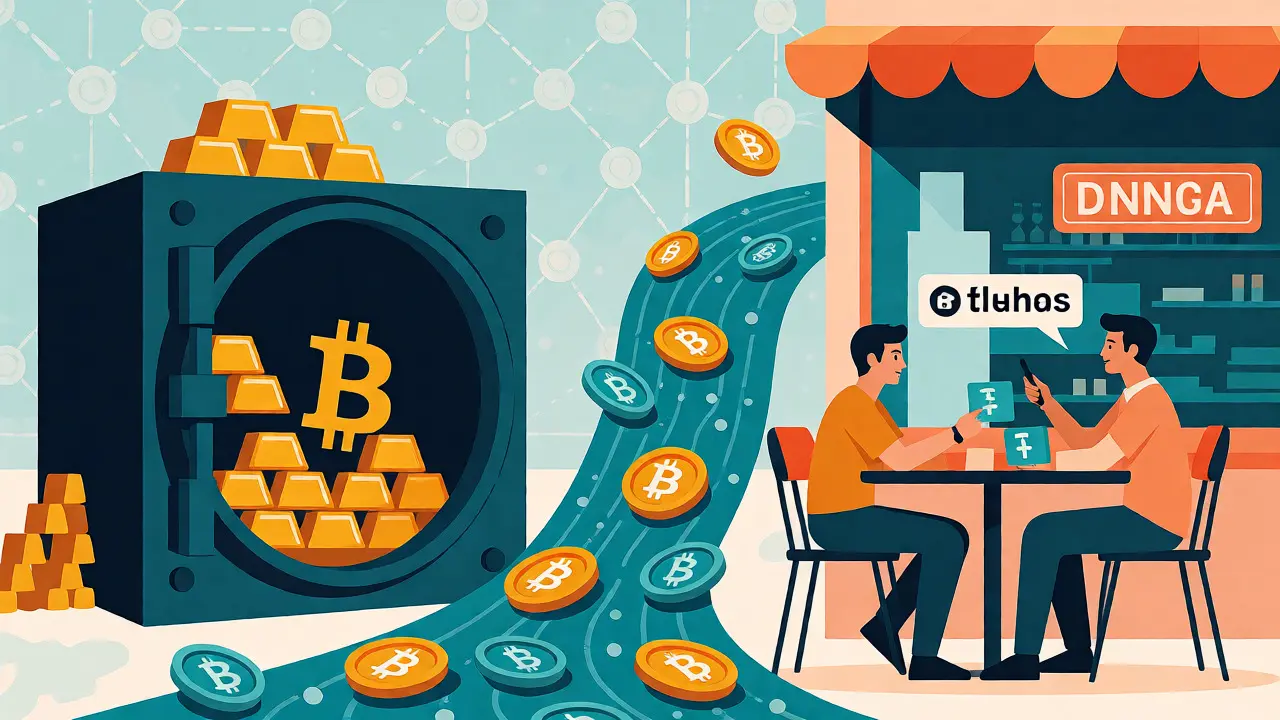
Don’t confuse the roles of Bitcoin and stablecoins. While stablecoins are for daily liquidity and preserving purchasing power against inflation, Bitcoin plays a different game. Data from platforms like Lemon suggests that more Argentines hold Bitcoin than stablecoins on their platforms, but this reflects long-term storage rather than daily usage. Bitcoin is viewed as "digital gold"-a store of value that cannot be printed away by the central bank. However, its volatility makes it less practical for buying groceries today.
Most users keep a small portion of their wealth in Bitcoin for long-term growth potential while keeping the bulk in stablecoins for immediate needs. This dual strategy protects against both currency devaluation and platform-specific risks. It’s a sophisticated approach born out of economic desperation. Users learn quickly that diversification across asset classes-even within the crypto ecosystem-is vital for survival.
Regulation and the Future Outlook
Is the government fighting this trend? Not exactly. Argentina has implemented a regulatory sandbox and issued licenses for Virtual Asset Service Providers (VASPs). This legal clarity helps legitimate exchanges operate and gives users some peace of mind. Unlike El Salvador, which made Bitcoin legal tender, Argentina takes a more pragmatic stance: if it works, regulate it. This approach has fostered innovation, with Buenos Aires hosting major events like Devconnect, cementing its status as a Web3 hub.
Looking ahead, the trajectory depends on macroeconomic stability. If the peso stabilizes, crypto adoption might slow down. But given the history of inflation, most experts believe the shift is permanent. Once people experience the freedom of moving money without government permission, they rarely go back. The intersection of economic necessity and technological accessibility has created a resilient user base that views crypto not as a bubble, but as a lifeline.
Why do Argentines prefer stablecoins over Bitcoin?
Argentines primarily prefer stablecoins like USDT and USDC because they are pegged to the US dollar. This provides immediate protection against the rapid devaluation of the Argentine peso without the high price volatility associated with Bitcoin. Stablecoins serve as a practical tool for daily savings and transactions, whereas Bitcoin is often held for longer-term wealth preservation.
What are the capital control restrictions on buying dollars in Argentina?
The Argentine government restricts citizens to purchasing only $200 worth of US dollars per month through official banking channels at the official exchange rate. To access more dollars or get better rates, people often turn to the "blue dollar" (black market) or use cryptocurrencies to bypass these limits entirely.
Is cryptocurrency legal in Argentina?
Yes, cryptocurrency is legal in Argentina. The country has established a regulatory framework that includes licensing for Virtual Asset Service Providers (VASPs) and a regulatory sandbox for innovation. While it is not legal tender like the peso, it is recognized and regulated, allowing individuals and businesses to trade and hold digital assets legally.
How does inflation affect crypto adoption in Argentina?
High inflation drives crypto adoption by reducing the purchasing power of the local currency. When annual inflation exceeds 100-200%, citizens seek alternative stores of value. Cryptocurrencies, particularly stablecoins, offer a way to preserve wealth in a stable currency (USD) without facing the physical risks or limits of holding cash dollars.
Which cryptocurrency exchanges are popular in Argentina?
Local platforms like Lemon, Ripio, and Buenbit are very popular due to their integration with local banking methods and Spanish-language support. Global exchanges like Binance also have a significant presence, offering a wider range of trading pairs and features for advanced users.