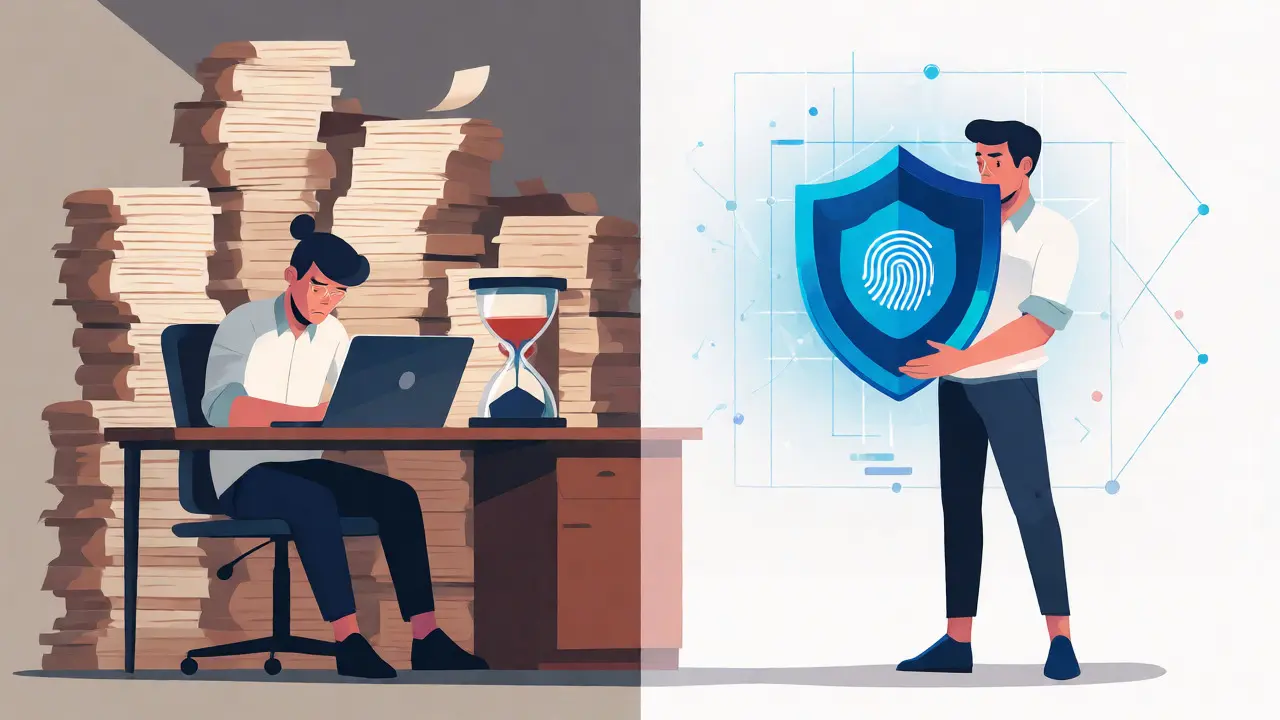
Imagine you spend weeks crafting a digital illustration. You post it online, and within hours, someone else claims they made it first. In the old world, you’d be stuck in a months-long legal battle with expensive lawyers just to prove your date of creation. But what if you could timestamp that work instantly, permanently, and publicly for less than the cost of a coffee? That’s the promise of blockchain proof of ownership. It isn’t just about buying JPEGs; it’s about giving creators a tamper-proof receipt for their intellectual property.
This technology has moved beyond hype into practical utility. As of early 2026, major platforms are processing billions in transactions, and courts are starting to listen. If you’re a writer, musician, coder, or artist, understanding how to anchor your work on a decentralized ledger is no longer optional-it’s a competitive advantage. Here’s how it works, why it matters, and where it might trip you up.
The Core Concept: Why Traditional Copyright Fails Creators
Traditional copyright registration is slow and bureaucratic. In the United States, for example, the U.S. Copyright Office takes anywhere from three to nine months to process standard registrations. The cost ranges from $45 to $125 per application. For a freelance graphic designer producing ten pieces a month, this is financially and temporally impossible.
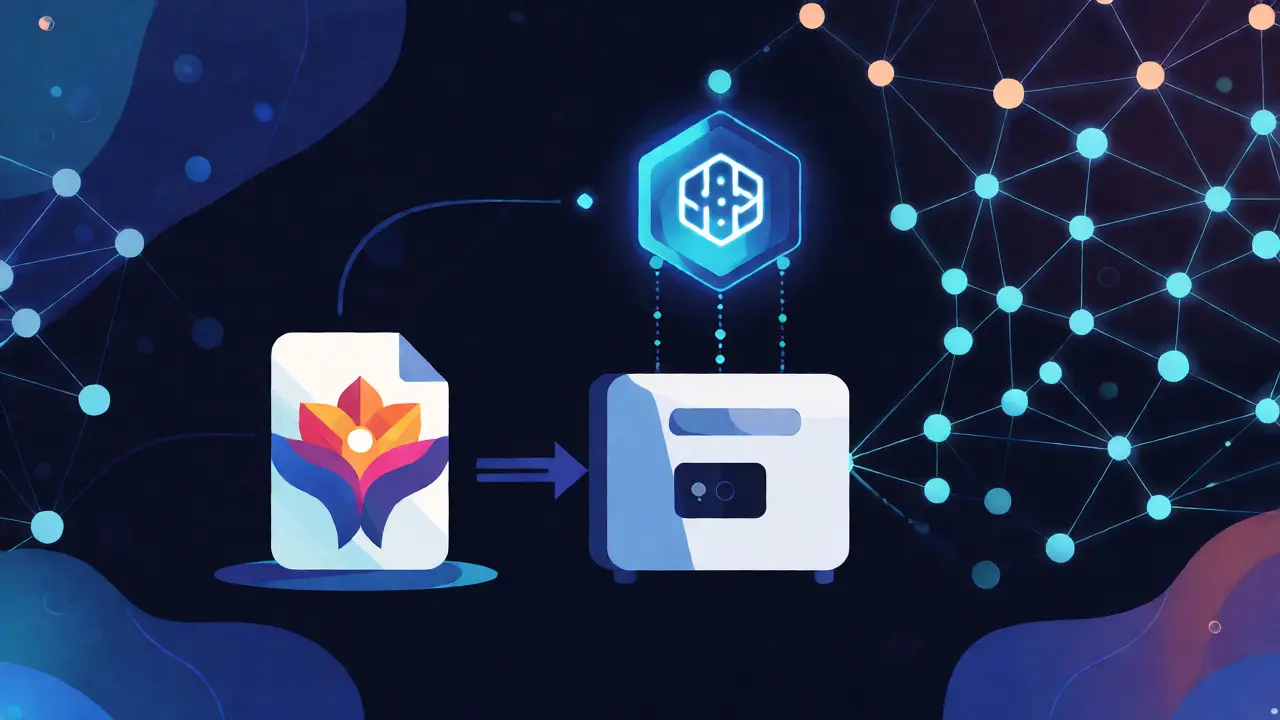
Blockchain solves the speed problem by using cryptographic hashing to create a unique digital fingerprint of your file. When you upload your work to a certification platform, the system generates a SHA-256 hash. This hash is like a DNA strand for your file-if you change even one pixel, the hash changes completely. This hash is then recorded on a public ledger. Because blockchains are append-only, that entry cannot be deleted or altered. You now have mathematical proof that your specific file existed at a specific time.
Unlike centralized databases (like those run by private copyright agencies), blockchain records live across thousands of nodes. Ethereum alone maintains roughly 8,000 active nodes. If one server goes down, your proof remains intact. This decentralization eliminates the single point of failure that plagues traditional systems.
How It Actually Works: From File to Ledger
You don’t need to be a coder to use this. The process is surprisingly simple, though understanding the mechanics helps you trust the result.
- Create a Digital Wallet: This is your identity on the blockchain. Tools like MetaMask or Coinbase Wallet let you generate a public address (your username) and a private key (your password). Never share your private key.
- Choose a Certification Platform: Services like ScoreDetect, Verisart, or Adobe’s integrated tools connect your wallet to the blockchain.
- Upload Your Content: You upload the file. The platform does not store the whole file on the blockchain (that would be too expensive). Instead, it stores the hash.
- Mint the Token (Optional): Some platforms wrap this hash in an NFT (Non-Fungible Token) using standards like ERC-721. This token acts as a certificate of authenticity.
- Pay the Gas Fee: You pay a small transaction fee to record the data. On Layer 2 networks like Polygon or Base, this often costs under $1.
The result is a transaction hash-a string of characters-that links your wallet address to your content’s fingerprint. Anyone can look up this hash on a block explorer and verify that you claimed ownership at that exact timestamp.
Blockchain vs. Traditional Registration: The Trade-Offs
Is blockchain better than the government registry? Not always. It depends on what you need. Blockchain offers speed and low cost, but traditional registration offers stronger legal presumptions in some jurisdictions.
| Feature | Blockchain Proof | Traditional Copyright |
|---|---|---|
| Time to Register | Minutes | 3-9 Months |
| Cost | $0.01 - $2.50 | $45 - $125+ |
| Accessibility | Global, 24/7 | Jurisdiction-specific |
| Legal Weight | Evidentiary support (growing) | Statutory presumption |
| Immutability | Cannot be changed once written | Can be amended/corrected |
A critical nuance here: Blockchain proves you registered the hash at a certain time. It doesn’t automatically prove you created the original art. If someone steals your image and registers the hash before you do, the blockchain will show them as the first registrant. This is why many experts recommend combining blockchain timestamps with traditional registration for high-value works.
Real-World Impact: Successes and Pitfalls
Let’s look at actual scenarios. In late 2025, a digital artist named Amy used her Ethereum registration to resolve a dispute with an Instagram influencer who copied her work. She presented the transaction hash showing her registration predated the influencer’s post. The influencer retracted the claim within 72 hours. No lawsuit, no lawyers.
However, it’s not all smooth sailing. Another user, a music producer, spent $850 in legal fees because a corporation argued his blockchain record lacked sufficient standing in their specific local court. While 37 U.S. jurisdictions have accepted blockchain metadata as evidence since 2021, not every judge is tech-savvy. The European Union’s Digital Copyright Act, effective January 2026, formally recognizes these registrations as presumptive evidence, setting a strong precedent for other regions.
Another pitfall is storage. Since the blockchain only holds the hash, you must keep the original file safe. If you lose the file, the hash is useless. Always back up your originals off-chain.

Getting Started: Practical Steps for Creators
If you want to start protecting your work today, follow this checklist. It minimizes technical friction and maximizes security.
- Secure Your Keys: Write down your wallet’s seed phrase on paper. Store it offline. If you lose this, you lose access to your proofs.
- Use Layer 2 Networks: Avoid the main Ethereum network for small files due to high gas fees. Use Polygon, Arbitrum, or Solana for faster, cheaper transactions.
- Integrate Early: Don’t wait until you sell. Register your work as soon as it’s finalized. Adobe Creative Cloud users can now do this with one click via version 25.1+.
- Document Context: Keep sketches, drafts, and source files. These support your blockchain claim if a dispute arises.
Platforms like ScoreDetect report that 89% of new users complete their first registration in under eight minutes. The barrier to entry is virtually gone.
The Future: AI and Legal Harmonization
We are entering an era where AI complicates ownership. Who owns an image generated by Midjourney? Blockchain can help track the prompt history and human edits, creating a chain of custody. Adobe’s upcoming Project Primrose aims to integrate AI verification directly into blockchain registries to prevent duplicate claims.
Legally, the tide is turning. The U.S. Copyright Office launched a Blockchain Integration Pilot Program in September 2025. Industry analysts predict that by 2028, 75% of professional creators will use some form of blockchain verification. It’s becoming standard practice, much like having a website or a social media presence.
Does blockchain replace copyright law?
No, it supplements it. Copyright gives you exclusive rights; blockchain provides immutable proof of when you claimed those rights. Think of blockchain as a notary service that never sleeps and charges pennies.
What happens if I make a mistake in my registration?
Blockchain entries are immutable. You cannot delete or edit a past transaction. If you register the wrong file, you simply register the correct one later. The older, incorrect record remains visible but can be explained with additional context or newer registrations.
Do I need to buy an NFT to prove ownership?
Not necessarily. Many services allow "timestamping" without minting a tradable NFT. This is cheaper and simpler if you only care about proof, not selling the asset as a collectible.
Which blockchain is best for creators?
For low-cost, high-volume needs, Polygon and Solana are popular. For maximum prestige and legal recognition, Ethereum remains the gold standard. Choose based on your budget and audience.
Can anyone steal my work and register it first?
Yes, theoretically. If a thief downloads your public image and hashes it before you, they appear first on the chain. This is why keeping your work private until launch, or registering immediately upon completion, is crucial.