You’ve probably seen the ticker SLF popping up on your watchlist or heard whispers about the "Frontier" rebrand. If you’re scratching your head wondering what exactly Self Chain is doing in a crowded market, you aren’t alone. The crypto space moves fast, and projects pivoting from one identity to another can be confusing. Self Chain isn’t just another Layer 1 trying to out-hash Bitcoin; it’s betting everything on a specific problem: making Web3 actually usable for people who don’t want to manage private keys.
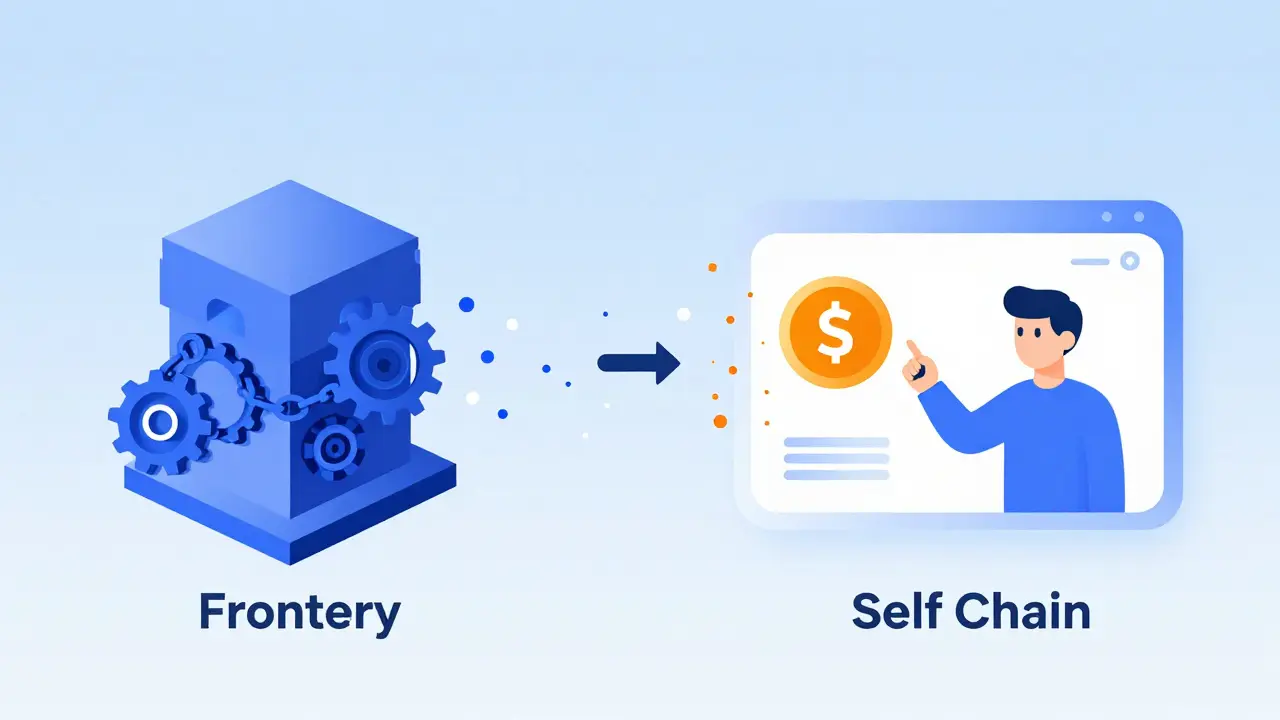
Here is the short version: Self Chain is the new name for the Frontier (FRONT) network. It launched its native token, SLF, in August 2024 through a 1:1 swap. But the rebrand wasn’t just cosmetic. It signaled a shift toward an "intent-centric" architecture powered by AI and multi-party computation. Before you buy or sell, you need to understand what that tech actually means for your security, the token’s supply dynamics, and why price data looks so messy right now.
The Frontier to Self Chain Pivot
To understand where Self Chain is going, you have to look at where it came from. The project originally operated under the name Frontier, trading with the ticker FRONT. In August 2024, the team executed a strategic rebrand. They didn’t abandon the network; they evolved it. On major exchanges like Binance, holders were able to swap their FRONT tokens for SLF tokens at a strict 1:1 ratio.
Why the change? The original Frontier model focused heavily on cross-chain interoperability-connecting different blockchains together. While useful, the narrative shifted. The team realized that connecting chains was only half the battle. The bigger issue was user experience. Most people still find Web3 wallets terrifyingly complex. You lose your seed phrase, you lose your money. Self Chain decided to tackle this head-on by moving beyond simple connectivity to an infrastructure that understands what you *want* to do, rather than forcing you to code how to do it.
Intent-Centric Architecture Explained
This is the core of the Self Chain value proposition. Traditional blockchains are "action-centric." You tell the network exactly which contract to call, what parameters to use, and which chain to route the transaction through. If you miss a step, the transaction fails. Self Chain calls itself a "Modular Intent-Centric Access Layer 1." That’s a mouthful, so let’s break it down.
An "intent" is simply what you want to achieve. For example, "I want to swap 1 ETH for USDC on Arbitrum, but only if the slippage is less than 0.5%." Instead of you manually navigating bridges, DEXs, and gas fees, the Self Chain network uses Large Language Models (LLM) to interpret this natural language request. The system then automatically discovers the optimal path across multiple chains to execute that trade securely and efficiently.
This approach lowers the barrier to entry significantly. It transforms blockchain interaction from a technical chore into a conversational experience. However, it also introduces complexity behind the scenes. The network must verify that the AI-suggested path is secure and economically viable before execution, which requires robust consensus mechanisms and solver networks.
Keyless Wallets and MPC-TSS Security
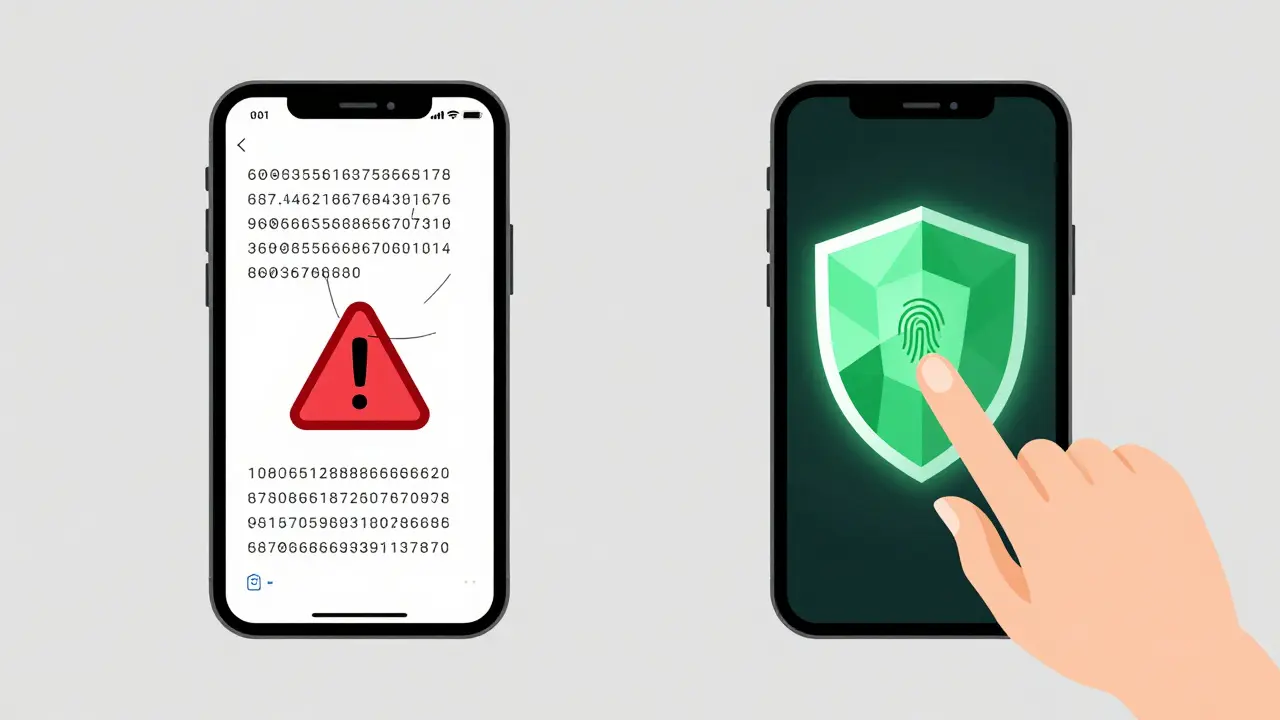
If intents make transactions easier, keyless wallets make access safer. Self Chain integrates Multi-Party Computation Threshold Signature Scheme (MPC-TSS) combined with Account Abstraction (AA). This technology stack removes the single point of failure: the private key stored on your device.
In a traditional setup, your private key is a string of characters that lives on your phone or computer. If that device is hacked, or you write the key down and lose it, your funds are gone. With MPC-TSS, the private key is never generated as a single entity. Instead, it is split into shards distributed among multiple parties (servers). To sign a transaction, a threshold number of these parties must collaborate mathematically to produce a valid signature. No single party ever holds the full key.
Account Abstraction takes this further by allowing social recovery methods. Imagine forgetting your password but being able to recover your wallet through trusted contacts or biometric verification, similar to how you reset a banking app password today. This combination aims to bring institutional-grade security to retail users without requiring them to understand cryptography.
Tokenomics: Supply and Distribution Risks
When evaluating any altcoin, tokenomics are often more important than the hype. Self Chain’s token structure reveals significant potential for future dilution, which you need to factor into your investment thesis.
| Metric | Value | Note |
|---|---|---|
| Total Supply | 360 Million | Hard cap defined in protocol |
| Circulating Supply | ~97 - 167 Million | Varies by exchange data source |
| Unissued Tokens | ~193 - 263 Million | Potential future inflation/dilution |
There is a notable discrepancy in circulating supply data depending on the source. Some reports cite around 97 million SLF in circulation, while others, including Coinbase data, suggest closer to 167 million. Regardless of which figure is accurate, the total supply remains fixed at 360 million. This means roughly 50% to 70% of all SLF tokens are yet to enter circulation.
Why does this matter? As these remaining tokens are released-whether for team incentives, ecosystem grants, or liquidity provision-the available supply increases. If demand doesn’t grow proportionally, the price per token will face downward pressure. This is a classic dilution risk common in early-stage crypto projects. Investors should monitor the vesting schedules and release timelines closely to anticipate when large batches of tokens might hit the market.
Price Volatility and Market Data Confusion
If you look up the price of SLF right now, you might get conflicting answers. This is not necessarily a scam, but it is a symptom of fragmented liquidity and reporting errors in smaller-cap altcoins.
Data sources show wild variations. Some aggregators list SLF near $0.08, reflecting earlier peaks or specific high-volume pairs. Others show prices hovering between $0.0003 and $0.0005. This represents a difference of nearly 200x. What’s happening here?
First, check the date. The all-time high for SLF was recorded around $0.83 in mid-2025, but the token has since corrected significantly. Second, check the exchange. Prices on Binance may differ from those on smaller decentralized exchanges due to varying liquidity depths. Third, beware of stale data. Some aggregators cache prices and fail to update during low-volume periods.
For traders, this means you cannot rely on a single chart. Always verify the current order book on the exchange where you intend to trade. The 24-hour trading volume also varies wildly, from tens of thousands to millions of dollars, indicating that liquidity can dry up quickly. High volatility is expected, but extreme discrepancies suggest you should exercise caution and perhaps wait for more consistent market data before committing significant capital.
Ecosystem Integration and Utility
A token needs utility to survive long-term. Self Chain has integrated into several key areas of the crypto ecosystem to drive demand for SLF.
- Binance Simple Earn: SLF is available for yield generation, allowing holders to earn passive returns. This locks up supply temporarily and incentivizes holding over selling.
- Trading Pairs: Beyond the standard SLF/USDT pair, there are listings against BTC and TRY (Turkish Lira), expanding accessibility for non-US investors.
- Wallet Support: Integration with non-custodial wallets like NOW Wallet ensures users can self-custody their assets securely outside of exchange environments.
These integrations provide immediate utility, but the long-term value hinges on the adoption of the intent-centric layer. If developers begin building dApps that leverage Self Chain’s AI-driven transaction routing, the demand for SLF (used for gas and staking) could increase organically. Until then, the token remains largely speculative, driven by macro crypto trends and community sentiment.
Risks and Considerations
No investment is without risk, and Self Chain carries several specific red flags worth noting.
First, the reliance on AI for transaction routing introduces "black box" risks. If the LLM makes an error or is manipulated by malicious actors, users could suffer losses. The transparency of how these intents are processed and verified is critical. Second, the competition is fierce. Projects like LayerZero and various account abstraction standards (ERC-4337) are already solving parts of this puzzle. Self Chain must prove its modular approach offers a distinct advantage over existing solutions.
Finally, the token’s performance is highly correlated with broader market sentiment. With a market cap ranging from $13 million to $30 million depending on the data source, SLF is considered a small-cap asset. These tokens are prone to sharp swings based on whale activity or news cycles. The lack of widespread mainstream discussion (ranked #1,215 in social mentions) suggests the project is still niche. This isn’t inherently bad-it offers growth potential-but it means lower liquidity and higher risk.
Is Self Chain (SLF) the same as Frontier (FRONT)?
Yes, effectively. Self Chain is the rebranded version of the Frontier network. In August 2024, the project underwent a 1:1 token swap where every FRONT token was converted to one SLF token. The underlying technology has evolved to focus on intent-centric architecture, but the lineage is direct.
What is the maximum supply of SLF?
The total maximum supply of Self Chain is capped at 360 million tokens. Currently, only a portion of these are in circulation (estimates range from 97 million to 167 million), meaning a significant amount of tokens remain to be issued, which could impact price dilution.
How does the keyless wallet work?
Self Chain uses Multi-Party Computation Threshold Signature Scheme (MPC-TSS). Instead of storing a single private key on your device, the key is split into shards across multiple servers. To authorize a transaction, multiple servers must collaborate to create a signature. This eliminates the risk of losing a single seed phrase while maintaining security.
Why are SLF prices different on different exchanges?
Discrepancies arise from fragmented liquidity, stale data aggregation, and differing trading pairs. Some platforms may report older highs or low-volume spot prices, while others reflect real-time order books. Always check the live order book on the specific exchange you plan to trade on.
Can I earn yield on SLF?
Yes, SLF is integrated into Binance Simple Earn, allowing holders to generate passive income through various yield strategies. Additionally, holding SLF may be required for staking within the Self Chain ecosystem to secure the network.