You might have stumbled upon the ticker LUN while digging through old crypto lists or checking a dusty wallet. The name sounds familiar if you remember the ICO boom of 2017, but what exactly is it today? Lunyr was pitched as the "blockchain-based Wikipedia," a project aiming to replace centralized knowledge bases with a decentralized, peer-reviewed encyclopedia where users earn tokens for contributing content.
Fast forward to mid-2026, and Lunyr exists in a very different reality. It remains an active ERC-20 token on the Ethereum network, but its market presence has shrunk dramatically from its peak. To understand whether this coin is worth your attention, we need to look past the hype of 2018 and examine the actual technology, the current state of the token, and the harsh lessons of its price history.
The Core Concept: An Incentivized Knowledge Base
At its heart, Lunyr is a decentralized crowdsourced encyclopedia built on the Ethereum blockchain. The founders, led by Arnold Pham, Andrew Tran, and Christopher Smith, identified a major flaw in traditional platforms like Wikipedia: reliance on unpaid volunteers and centralized control that can lead to censorship or bias.
Their solution was economic incentives. Instead of relying purely on altruism, Lunyr designed a system where contributors and peer reviewers earn LUN tokens for creating high-quality articles and verifying facts. This creates a self-correcting loop. If someone writes nonsense, reviewers reject it, and no one gets paid. If someone writes valuable content, they are rewarded.
This model also includes an advertising component. Businesses can buy ad space on the platform using LUN tokens. The revenue from these ads flows back into the ecosystem to reward the people maintaining the knowledge base. The long-term vision included a robust API that would allow other decentralized applications (dApps), particularly in AI, VR, and AR, to pull verified data directly from Lunyr’s database.
Technical Architecture: How It Works
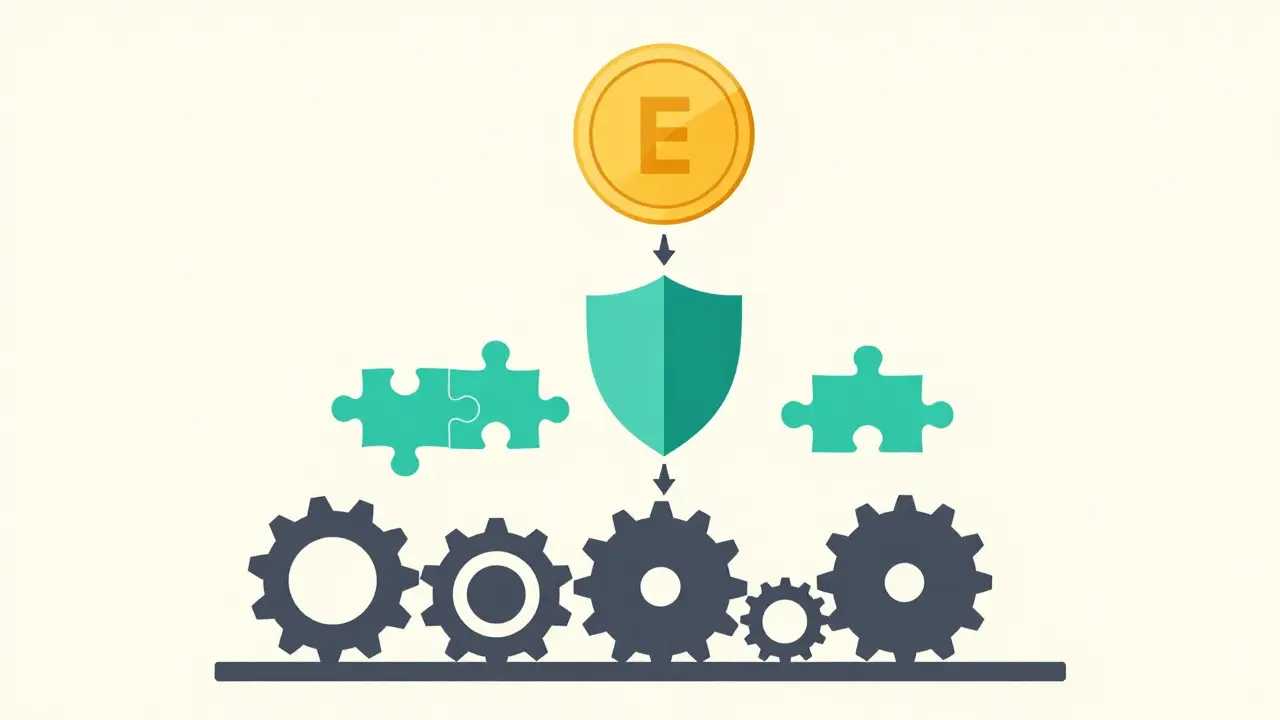
To function as a truly decentralized application (dApp), Lunyr relies on specific technologies that remove central servers from the equation. Understanding this stack helps explain both its strengths and its limitations.
- Ethereum Smart Contracts: These handle the logic of the platform. They manage user accounts, track contributions, process peer reviews, and distribute rewards automatically without human intervention.
- IPFS (InterPlanetary File System): Unlike traditional websites that store images and text on a single server, Lunyr uses IPFS to store content across a distributed network. This makes the data censorship-resistant and harder to delete or alter maliciously.
- ERC-20 Standard: The LUN token follows the standard protocol for Ethereum tokens. This means it works with any standard Ethereum wallet (like MetaMask or Trust Wallet) and can be traded on exchanges that support ERC-20 assets.
The architecture is technically sound for its time. However, the complexity of managing a global knowledge base via smart contracts presents significant challenges in user experience and scalability compared to centralized alternatives.
Tokenomics and Supply Details
When evaluating any cryptocurrency, the supply dynamics are crucial. Lunyr has a fixed, relatively small total supply, which distinguishes it from many inflationary tokens.
| Metric | Value |
|---|---|
| Total Supply | ~2,703,356 LUN |
| Circulating Supply | ~2.3M - 2.7M LUN (varies by source) |
| Token Type | ERC-20 Utility Token |
| Primary Use Case | Content rewards, peer review payments, ad purchases |
| Blockchain | Ethereum |
The low total supply means that even small amounts of buying pressure can theoretically move the price significantly. However, liquidity is the counterweight here. With such a small float, the token is highly susceptible to volatility and manipulation, especially when trading volume is thin.
Price History: From Hype to Micro-Cap
The story of Lunyr’s price is a classic example of the boom-and-bust cycle that defined the 2017 ICO era. Investors who bought early saw massive gains, only to watch those gains evaporate as the broader market cooled and adoption stalled.
In January 2018, during the height of the bull run, LUN reached an all-time high (ATH) of approximately $75.88. At that point, the project was seen as a unique pioneer in decentralized social media and knowledge sharing. The market capitalization briefly touched tens of millions of dollars.
Since then, the trajectory has been downward. By 2024 and 2025, the price had collapsed by over 99%. As of July 2026, LUN trades in the fractions of a cent, often hovering between $0.002 and $0.005 depending on the exchange. The market cap has shrunk to roughly $35,000-$40,000, placing it in the micro-cap category with a ranking below #5,000 among cryptocurrencies.
This drastic decline reflects not just market sentiment, but a lack of sustained user activity. Without a growing base of contributors and advertisers, the fundamental utility of the token diminishes, leading to reduced demand.
Current Market Status and Liquidity Risks
If you are considering buying LUN today, the most critical factor to understand is liquidity. Liquidity refers to how easily you can buy or sell an asset without affecting its price. For Lunyr, liquidity is extremely poor.
Data from major trackers like CoinMarketCap, Bitget, and Coinbase shows frequent days with zero trading volume. This means that even if you see a listed price, there may be no actual buyers or sellers at that moment. Attempting to sell a large amount of LUN could result in significant slippage, where the execution price is much lower than the displayed price due to the thin order book.
Furthermore, the number of exchanges listing LUN has dwindled. While it may still appear on some platforms, the absence of deep markets makes it difficult to enter or exit positions smoothly. This illiquidity poses a higher risk than typical price volatility; you might find yourself holding a token that you cannot sell when you want to.

Challenges and Criticisms
Lunyr faced skepticism from the start, and many of these criticisms proved prescient. Critics pointed out that the founding team lacked expertise in education and publishing, raising questions about their ability to build a credible knowledge base. Additionally, the assumption that academic peer reviewers would require monetary payment was debated; many experts argue that reputation and community standing are stronger motivators than small token rewards.
Another challenge is competition. Wikipedia benefits from decades of brand trust, a massive volunteer base, and a simple, fast user interface. Newer blockchain projects have also emerged in the decentralized content space, offering more modern interfaces and better incentive structures. Lunyr’s technical architecture, while innovative for 2017, now feels dated compared to newer Layer-2 solutions and cross-chain protocols.
The lack of recent major updates or partnerships further suggests dormancy. While the codebase remains on the Ethereum mainnet, the momentum needed to drive organic growth seems absent. For a knowledge platform to succeed, it needs constant content creation and curation, which requires an active community-something Lunyr struggles to maintain.
Is Lunyr Worth Your Attention?
For the average investor or user, Lunyr serves more as a historical case study than a practical tool or investment opportunity. Its core idea-a decentralized, incentivized encyclopedia-is fascinating and aligns with the broader ethos of Web3. However, execution has lagged behind vision.
If you hold LUN from the ICO days, you are likely looking at a deeply underwater position. Selling now yields minimal returns due to low prices and liquidity issues. Holding in hopes of a revival is speculative, given the lack of development activity. For new investors, the risks outweigh the potential rewards. There are numerous other projects in the decentralized data and content sectors that offer better liquidity, active communities, and clearer roadmaps.
That said, Lunyr remains an important part of crypto history. It demonstrated the potential of using tokens to align incentives in collaborative systems. As blockchain technology matures, we may see successors that refine Lunyr’s model with better UX, stronger governance, and real-world adoption. Until then, LUN stands as a reminder of the gap between ambitious whitepapers and sustainable products.
What is the primary use case for the LUN token?
The LUN token is primarily used within the Lunyr ecosystem to reward users who contribute articles and peer-review content. It is also used by businesses to purchase advertising space on the platform, creating a circular economy that funds content creation.
Is Lunyr still active in 2026?
Technically, yes. The Lunyr dApp remains deployed on the Ethereum blockchain, and the LUN token is still tradable on some exchanges. However, user activity, trading volume, and development updates are minimal, indicating a dormant state rather than active growth.
How does Lunyr compare to Wikipedia?
Lunyr aims to be a decentralized alternative to Wikipedia, using blockchain to prevent censorship and reward contributors financially. However, Wikipedia currently dominates due to its established brand, massive content library, and superior user experience. Lunyr lacks the scale and traffic to compete directly.
Where can I buy LUN tokens?
LUN may be available on select cryptocurrency exchanges that list low-cap ERC-20 tokens. However, liquidity is extremely low, meaning you may face difficulties executing trades or finding buyers. Always check current listings on major aggregators before attempting to trade.
What happened to Lunyr's price since 2018?
Lunyr experienced a massive crash after reaching its all-time high of ~$75.88 in January 2018. By 2026, the price had fallen by over 99%, trading in the fractions of a cent. This decline reflects decreased interest, lack of adoption, and the general cooling of the ICO market.
Is LUN a safe investment?
LUN is considered a high-risk asset due to its micro-cap status, extreme illiquidity, and lack of recent development activity. Investors should exercise caution, as the token may lose value rapidly or become impossible to sell.