You see the ticker GME and think you're buying a piece of the video game retailer that made Wall Street sweat in 2021. But when you click through to buy the "GameStop" cryptocurrency at gamestop-coin.vip, you might be shocked to find it trades for fractions of a cent, not dollars. Here is the hard truth: this token has almost nothing to do with the actual GameStop Corporation stock. It is a community-created meme coin riding on the coattails of a brand name. If you are confused about what you are actually buying, or if you are worried about losing money on a fake asset, this guide breaks down exactly what the GameStop (GME) crypto coin is, how it differs from the real stock, and whether it holds any value beyond hype.
The Big Misconception: Stock vs. Token
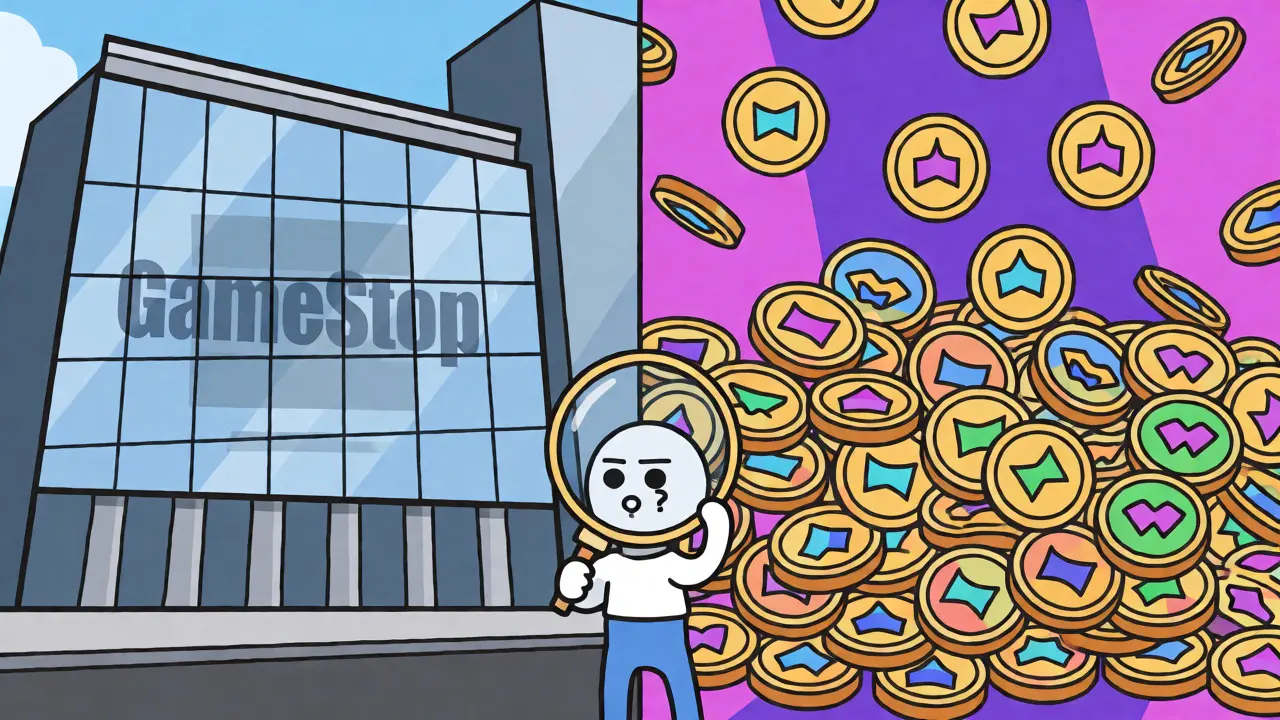
Let's clear up the biggest source of confusion immediately. When people talk about GameStop in financial news, they usually mean GameStop Corp., a publicly traded company listed on the New York Stock Exchange under the ticker GME. This is a traditional equity investment. You own a share of the company's revenue and assets.
In contrast, the GameStop Coin found on decentralized exchanges is an ERC-20 token built on the Ethereum blockchain. It was created by third-party developers, not by GameStop Corporation itself. While GameStop Corp. did launch an NFT marketplace and recently added Bitcoin to its treasury reserves, they did not issue this specific "GME" cryptocurrency. The token capitalizes on the cultural memory of the 2021 retail investor uprising, but it lacks official endorsement from the corporate entity. Buying one does not give you ownership rights in the other.
Technical Specs and Supply Metrics
Understanding the mechanics of the token helps explain why its price behaves the way it does. The GameStop Coin operates as a standard ERC-20 token, meaning it uses the same infrastructure as major tokens like USDT or LINK. However, its supply structure is massive, which keeps individual unit prices incredibly low.
As of late 2026 data, the token features a circulating supply of approximately 411.3 billion tokens. The maximum supply is capped slightly higher at 420.69 billion. Because there are hundreds of billions of these tokens in existence, each individual coin costs very little-often trading between $0.000019 and $0.000064 depending on the exchange and market volatility. This high supply is typical for meme coins, designed to make investors feel like they are owning a large quantity of something cheap, rather than a small fraction of something expensive.
| Metric | GameStop Coin (GME) | Context |
|---|---|---|
| Ticker Symbol | GME | Shares symbol with NYSE stock, causing confusion. |
| Blockchain | Ethereum (ERC-20) | High gas fees possible; compatible with MetaMask. |
| Circulating Supply | ~411.3 Billion | Extremely high supply drives low per-unit price. |
| Market Cap Range | $7M - $26M | Small-cap asset; highly volatile compared to top 50 coins. |
| Holder Count | ~11,500 | Niche community; susceptible to whale manipulation. |
Why Do Prices Vary So Much Across Exchanges?
If you check WEEX, CoinMarketCap, and Investing.com simultaneously, you might see wildly different prices for the same token. For instance, one platform might list GME at $0.000064 while another shows $0.000019. This isn't necessarily a bug; it reflects liquidity fragmentation.
Because GameStop Coin is not listed on major centralized exchanges like Coinbase or Binance, it trades primarily on smaller platforms like WEEX and MEXC, as well as decentralized exchanges (DEXs). These markets have lower volume. A single large sell order can crash the price on one exchange without affecting others significantly. The 24-hour trading volume often hovers around $100K-$200K, which is tiny compared to established cryptocurrencies. Low liquidity means wide bid-ask spreads-you might pay more to buy than you receive when selling immediately after.
Is There Any Real Utility?
This is the critical question for any investor. Does the GameStop Coin do anything useful? Currently, the answer is mostly no. Unlike utility tokens that power decentralized applications or governance tokens that let you vote on protocol changes, GME functions primarily as a speculative asset.
Some community members speculate that the token could integrate with future GameStop-related projects, but there are no official partnerships confirming this. The token's value derives entirely from sentiment, social media hype, and the nostalgia of the 2021 meme stock era. It does not grant access to GameStop stores, discounts, or exclusive content. If the hype dies, the utility remains near zero. This makes it a high-risk play compared to coins like Shiba Inu (SHIB) or Dogecoin (DOGE), which have developed broader ecosystems and merchant adoption over time.

Risks and Red Flags to Watch
Investing in meme coins like GameStop Coin requires a strong stomach. Here are the specific risks tied to this asset:
- Impersonation Risk: Since the token is not issued by GameStop Corp., there is always a risk of further copycat tokens appearing with similar names.
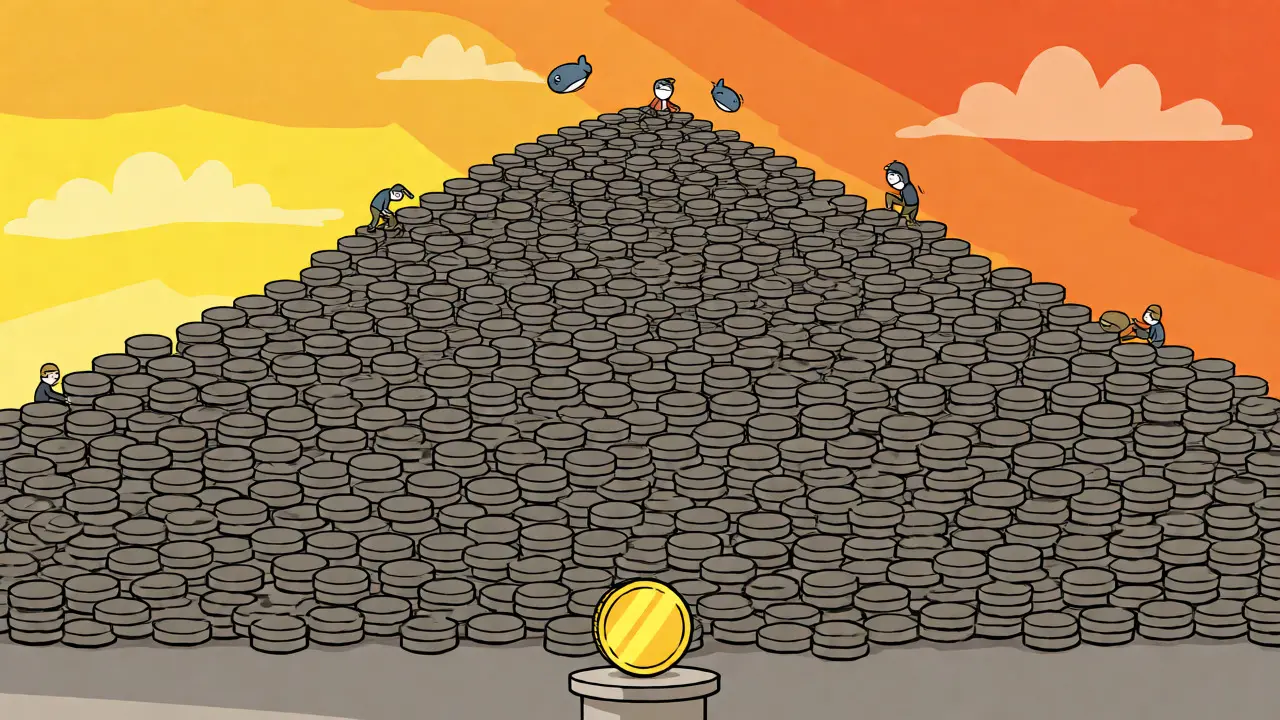
- Concentration Risk: With only ~11,500 holders, a few large wallets (whales) can manipulate the price. If one whale sells their entire position, the price could drop 50% in minutes.
- Regulatory Ambiguity: While GameStop Corp. faces regulatory scrutiny regarding its own crypto ventures, the GME token exists in a gray area. It is not classified as a security by the SEC explicitly, but it also lacks the decentralization arguments used by Bitcoin advocates.
- Zero Technical Indicators: Recent technical analysis shows neutral signals with RSI at 0, indicating oversold conditions but no confirmed upward momentum. Without new catalysts, the price may stagnate.
How to Buy and Store Safely
If you decide to take the gamble, you need to know where to go. You cannot buy GameStop Coin directly with a credit card on most major apps. You typically need to convert your fiat currency into Ethereum (ETH) first, then swap ETH for GME on a decentralized exchange like Uniswap or via a supported centralized exchange like WEEX.
For storage, use a self-custody wallet like MetaMask or Trust Wallet. This gives you control over your private keys. Never leave significant amounts on an exchange unless you are actively trading. Remember that because it is an ERC-20 token, you will pay Ethereum network gas fees for every transaction. During times of network congestion, these fees can exceed the value of your trade if you are investing small amounts.
Is GameStop Coin owned by GameStop Corporation?
No. The GameStop Coin (GME) cryptocurrency available on crypto exchanges is a community-created token. It is not issued, controlled, or endorsed by GameStop Corporation (NYSE: GME). The corporation has its own separate blockchain initiatives, such as its NFT marketplace and Bitcoin treasury holdings, but these are distinct from this specific meme coin.
Why is the price of GameStop Coin so low?
The price is low because of the massive supply. There are over 411 billion GME tokens in circulation. When you divide a relatively small market cap (around $7 million to $26 million) by hundreds of billions of tokens, the result is a fraction of a cent per token. This is common for meme coins, which prioritize high supply counts to encourage retail participation.
Can I lose all my money investing in GME crypto?
Yes, it is possible. As a meme coin with low liquidity and no intrinsic utility tied to a business, its value relies entirely on community sentiment. If interest fades or a major holder dumps their position, the price can plummet rapidly. It is considered a high-risk speculative asset, not a safe store of value.
Where can I buy GameStop Coin?
You can typically find GameStop Coin on decentralized exchanges (DEXs) like Uniswap, as well as some smaller centralized exchanges such as WEEX and MEXC. It is generally not listed on major tier-1 exchanges like Coinbase or Kraken. Always verify the contract address before purchasing to ensure you are buying the correct token.
Does GameStop Coin pay dividends?
No, GameStop Coin does not pay dividends. Unlike GameStop Corporation stocks, which may offer shareholder returns, the crypto token does not distribute profits from the company. Its value appreciation depends solely on market demand and price increases.