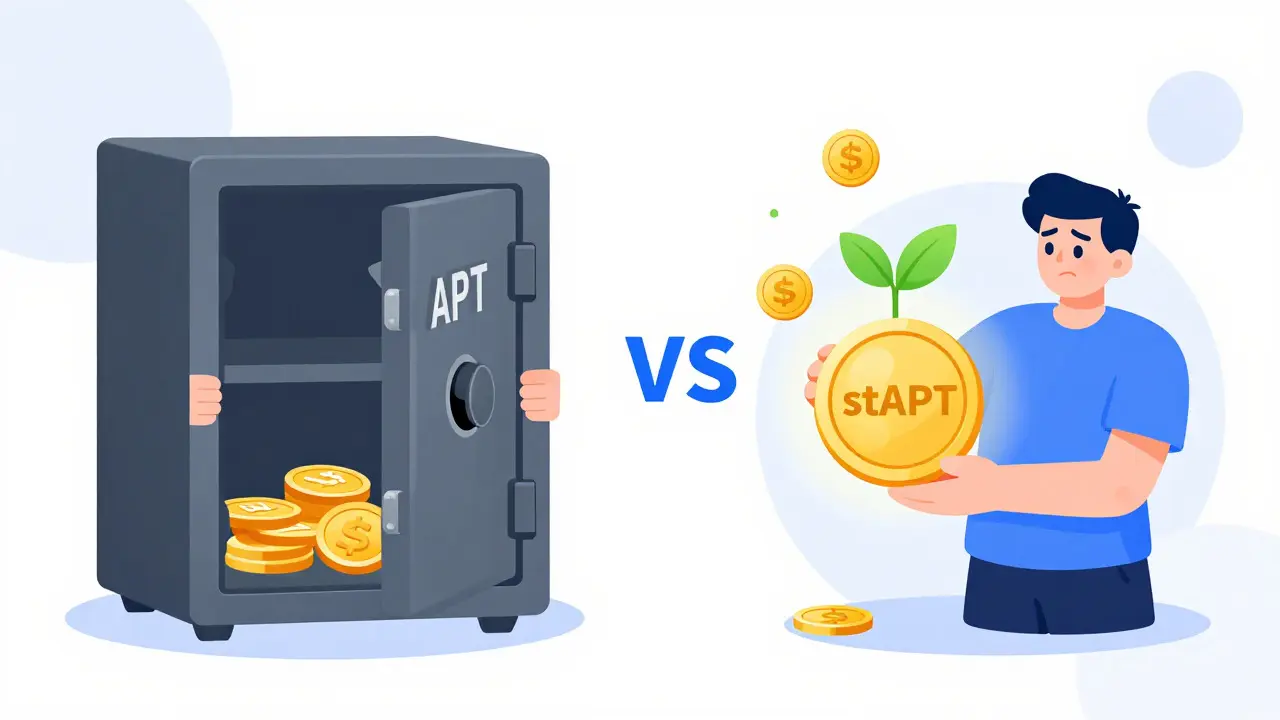
Imagine you have a sum of money sitting in your pocket. It’s safe, but it isn’t earning anything. Now imagine putting that same money into a savings account where the interest compounds automatically, yet you can still take cash out whenever you need it for dinner or an emergency. That is essentially what Ditto Staked Aptos (stAPT) is designed to do for your crypto holdings.
If you hold Aptos (APT), you probably know about staking. It’s how you earn rewards by helping secure the network. But traditional staking has a catch: your coins get locked up. You can’t trade them, use them as collateral, or spend them while they’re working for you. This creates a dilemma. Do you lock up your assets to earn passive income, or keep them liquid so you can react to market changes?
Ditto Finance solves this problem with stAPT. It is a liquid staking derivative. In plain English, when you stake your APT through Ditto, you receive stAPT tokens in return. These tokens represent your share of the staked pool and grow in value over time as staking rewards are added. Meanwhile, you still hold a tradable token that you can use elsewhere in the decentralized finance (DeFi) ecosystem.
How Does stAPT Actually Work?
To understand stAPT, you need to look at the mechanics behind the scenes. When you deposit APT into the Ditto protocol, the system doesn't just sit on those coins. It delegates them to validators on the Aptos blockchain. Validators are the nodes that process transactions and produce blocks. In exchange for this work, they earn block production rewards.
Here is the key part: those rewards don't go directly to your wallet every few seconds. Instead, they are automatically compounded into the total pool of staked APT. Your stAPT token acts as an index or a receipt for your portion of that growing pool.
- Initial Ratio: When you first stake, 1 stAPT equals 1 APT.
- Growth Mechanism: As the validators earn rewards, the total amount of APT in the pool increases.
- Value Increase: Because the pool grows but the number of stAPT tokens stays the same, the ratio shifts. Soon, 1 stAPT might equal 1.05 APT, then 1.1 APT, and so on.
This means you don't need to manually claim rewards and restake them. The appreciation happens automatically within the token itself. If you hold stAPT long enough, redeeming it for APT will give you more APT than you started with.
The Benefits of Using Liquid Staking
Why would you choose stAPT over simply staking your APT directly with a validator? The answer lies in flexibility and opportunity cost.
With direct staking, your funds are illiquid. If the price of APT spikes suddenly, you miss out because your coins are locked. With stAPT, you retain liquidity. You can sell your stAPT on a decentralized exchange if you need cash quickly. More importantly, you can use stAPT as capital in other DeFi applications.
For example, you could supply stAPT as collateral to borrow another asset, or provide it to a liquidity pool to earn trading fees. Since stAPT continues to accrue staking rewards while sitting in these other protocols, you are effectively earning two streams of income simultaneously. This is often called "yield stacking."
Ditto Finance positions stAPT as a core primitive for the Aptos ecosystem. By making stAPT widely accepted across different platforms, they aim to ensure that your staked assets remain useful no matter where you deploy them.
Yield Potential and Rewards
Let's talk numbers. What kind of returns can you expect? The base yield comes from the Aptos network's validation rewards. Historically, during the early days of the protocol in 2022 and 2023, users reported annual percentage rates (APR) around 7% for the base staking yield. This rate fluctuates based on network activity and the performance of the validators Ditto partners with.
However, the total return picture often includes more than just the base APR. Ditto introduced a governance token called DTO. During certain phases, such as pre-mining campaigns, users who staked their stAPT in specific pools could earn additional DTO rewards. At one point, this boosted the effective APY to over 25% when combining the base staking yield with the farming incentives.
It is important to note that high farming yields like the 22% DTO bonus mentioned in earlier guides were often temporary incentives designed to bootstrap the ecosystem. The sustainable, long-term yield relies primarily on the underlying APT staking rewards. Always check the current dashboard at stake.dittofinance.io for real-time data, as incentive programs change frequently.
| Feature | Direct Validator Staking | Ditto stAPT |
|---|---|---|
| Liquidity | Low (Locked until unbonding) | High (Tradable token) |
| Reward Claiming | Manual (Claim & Restake) | Automatic (Compounded into token) |
| DeFi Utility | None (Asset is stuck) | High (Collateral, LPs, Borrowing) |
| Complexity | Medium (Manage multiple validators) | Low (One-click interface) |
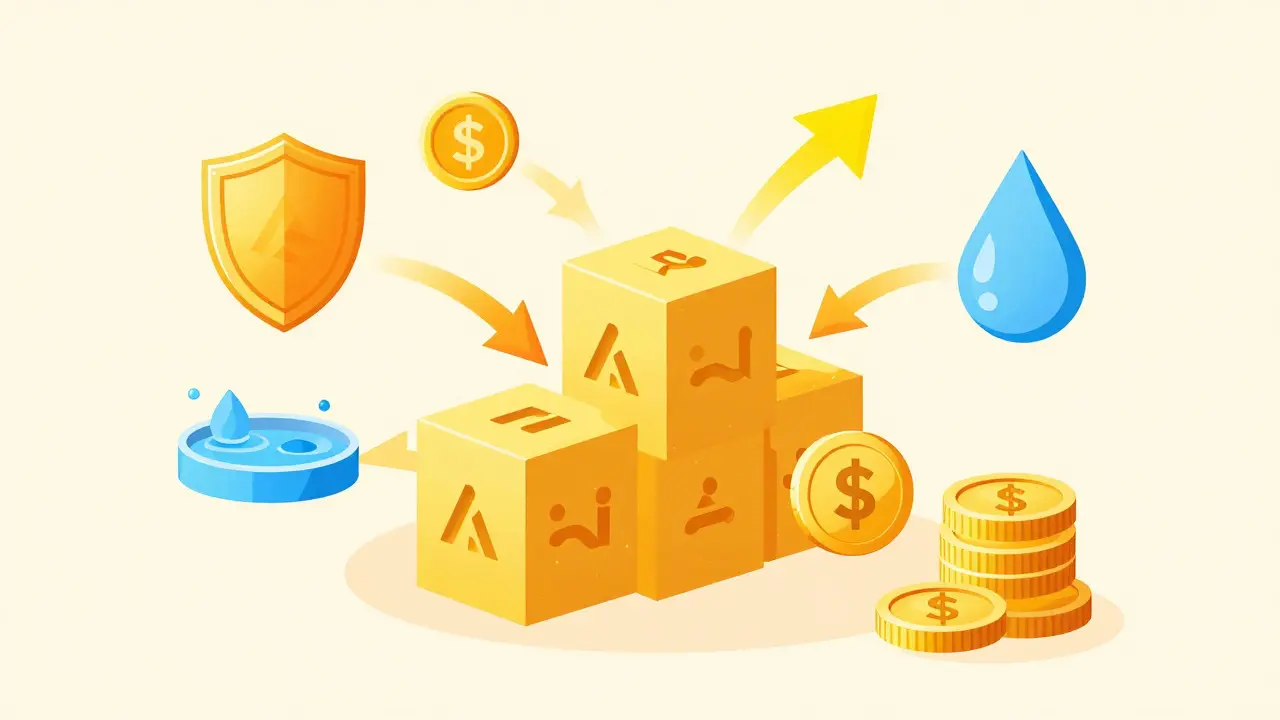
How to Stake APT for stAPT
Getting started is straightforward if you already have an Aptos-compatible wallet. Here is the step-by-step process:
- Prepare Your Wallet: Ensure you have a wallet like Petra or Nightly installed and funded with some APT for gas fees.
- Visit the Platform: Go to the official Ditto staking interface at stake.dittofinance.io.
- Connect: Click the "Connect" button and approve the connection request in your wallet.
- Stake: Enter the amount of APT you wish to stake. Click "Stake APT" and confirm the transaction in your wallet.
- Receive stAPT: Once the transaction is processed, you will see stAPT appear in your wallet balance. You now own a yield-bearing asset.
From here, you can leave the stAPT in your wallet to let it compound, or move it to other DeFi apps to maximize utility.
Risks and Considerations
No financial product is without risk. While liquid staking offers convenience, you should be aware of potential downsides before committing significant capital.
Smart Contract Risk: Like any DeFi protocol, Ditto relies on code. If there is a bug or vulnerability in the smart contracts managing the stAPT pool, funds could theoretically be at risk. Ditto aims to build "the safest" derivative, but audits and security reviews are ongoing processes.
Unbonding Periods: This is a crucial detail. While stAPT is liquid in the sense that you can trade it on exchanges, converting it back to native APT through the protocol's native unstaking mechanism is not always instant. Some guides indicate that a full, lossless conversion via the protocol may take up to 30 days due to the underlying Aptos unbonding period. If you need immediate access to native APT, you might have to sell stAPT on a secondary market, which could involve slippage depending on liquidity depth.
Validator Performance: Your rewards depend on the validators Ditto delegates to. If these validators get slashed (penalized for downtime or malicious behavior), the value of the pool-and thus your stAPT-could decrease relative to the broader market.

Market Status and Availability
As of mid-2026, stAPT remains an active asset within the Aptos ecosystem. Market data from sources like CoinMarketCap lists it as a tradable asset with a circulating supply reflecting the aggregate amount of APT staked through the protocol. The price of stAPT typically tracks slightly above the price of APT due to the accrued rewards embedded in the token.
The project launched shortly after the Aptos mainnet went live in late 2022, positioning itself as a primary liquid staking solution. It draws inspiration from successful models on Ethereum, such as Lido Finance (which issues stETH), adapting that architecture specifically for the Move language used by Aptos.
While it may not have the massive market cap of top-tier Ethereum liquid staking tokens, stAPT serves a vital role for Aptos holders who want to participate in network security without sacrificing the flexibility required for active DeFi strategies.
Final Thoughts
Ditto Staked Aptos (stAPT) bridges the gap between earning passive income and maintaining asset utility. By transforming locked stakes into a liquid, yield-bearing token, it allows you to put your APT to work in multiple ways simultaneously. Whether you are looking to stack yields through governance farming or simply want a hassle-free way to earn staking rewards without manual claiming, stAPT provides a streamlined solution.
Just remember to manage your risks. Understand the difference between selling stAPT on a market versus unstaking through the protocol, and keep an eye on the current reward structures. In the fast-moving world of DeFi, staying informed is your best tool for success.
What is the difference between APT and stAPT?
APT is the native cryptocurrency of the Aptos blockchain. stAPT is a derivative token issued by Ditto Finance that represents staked APT. While APT sits idle unless you actively stake it with a validator, stAPT automatically earns staking rewards over time, increasing its value relative to APT. Additionally, stAPT is a liquid asset that can be traded or used in DeFi, whereas directly staked APT is usually locked.
Is stAPT safe to use?
Like all DeFi protocols, stAPT carries smart contract risk. However, Ditto Finance has operated since 2022 and aims to provide a robust, audited environment. The safety also depends on the validators backing the pool. While generally considered safer than holding unsecured assets, you should always diversify and only invest what you can afford to lose.
How do I convert stAPT back to APT?
You have two main options. First, you can use the "Unstake" feature on the Ditto interface, which redeems your stAPT for native APT. Note that this process may take up to 30 days to complete fully due to network unbonding periods. Second, you can sell your stAPT on a decentralized exchange (DEX) for APT instantly, though this depends on available liquidity and may involve trading fees or slippage.
Does stAPT earn rewards automatically?
Yes. stAPT is a yield-bearing index token. You do not need to manually claim rewards. As the validators earn block production rewards, these are compounded into the total pool. Consequently, the amount of APT you receive per 1 stAPT increases over time.
What is the DTO token?
DTO is the governance token of the Ditto Finance protocol. In the past, users could earn DTO by providing liquidity or staking stAPT in specific incentive pools. Holding DTO may grant voting rights on protocol decisions and access to future fee discounts or revenue sharing, depending on the evolving governance model.