Imagine walking into a bank where you can’t see the vault. You have to guess how much money is inside based on rumors and vibes. That’s what investing in decentralized finance (DeFi) felt like before Total Value Locked became the industry standard. Today, TVL represents the aggregate value of cryptocurrency assets deposited into smart contracts across various blockchain networks, acting as the primary thermometer for investor confidence and protocol health. But here’s the twist: knowing the total number isn’t enough. The real story lies in where that money sits. As of late 2025 and early 2026, the distribution of this capital tells us more about the future of crypto than any price chart ever could.
You might ask, why should you care about which chain holds the cash? Because liquidity equals security, and security equals survival. JPMorgan’s research team noted in February 2025 that TVL correlates at 0.87 with protocol survival rates during market downturns. In plain English: chains with deep, stable pools of locked assets tend to weather storms better than those relying on fleeting hype. So, who actually holds the keys to the kingdom right now?
The Big Three and the Rise of the Challengers
Ethereum remains the heavyweight champion, but its grip is loosening. According to data from DefiLlama and CoinGecko, Ethereum controls roughly 41% of the global DeFi TVL, sitting comfortably around the $42 billion mark. It’s still the safest place to park large sums, largely because its developer ecosystem is unmatched. However, it’s no longer the only game in town. Solana has carved out a massive slice of the pie, holding approximately 18% of the market with nearly $19 billion locked up. Why? Speed and cost. While Ethereum transactions can cost over $1.85 during peak congestion, Solana processes them for fractions of a cent ($0.00025).
BNB Smart Chain holds the third spot with about 12% share, offering a middle ground between Ethereum’s compatibility and faster finality times. Then there’s TRON, which punches above its weight in specific niches. Despite having a smaller overall footprint, TRON dominates stablecoin transfers, processing 58% of all USDT transactions globally. This specialization keeps its TVL steady at around $6.3 billion, proving you don’t need to be everything to everyone to stay relevant.
| Network | Approx. TVL (USD) | Market Share | Primary Strength |
|---|---|---|---|
| Ethereum | $42.5 Billion | 41.2% | Security & Developer Ecosystem |
| Solana | $18.7 Billion | 18.2% | High Throughput & Low Fees |
| BNB Smart Chain | $12.3 Billion | 12.0% | Compatibility & Retail Adoption |
| Layer-2 Solutions* | $20.5 Billion+ | ~20% | Scalability & Cost Efficiency |
| TRON | $6.3 Billion | 6.1% | Stablecoin Settlement |
Layer-2 Networks Are Eating Ethereum’s Lunch
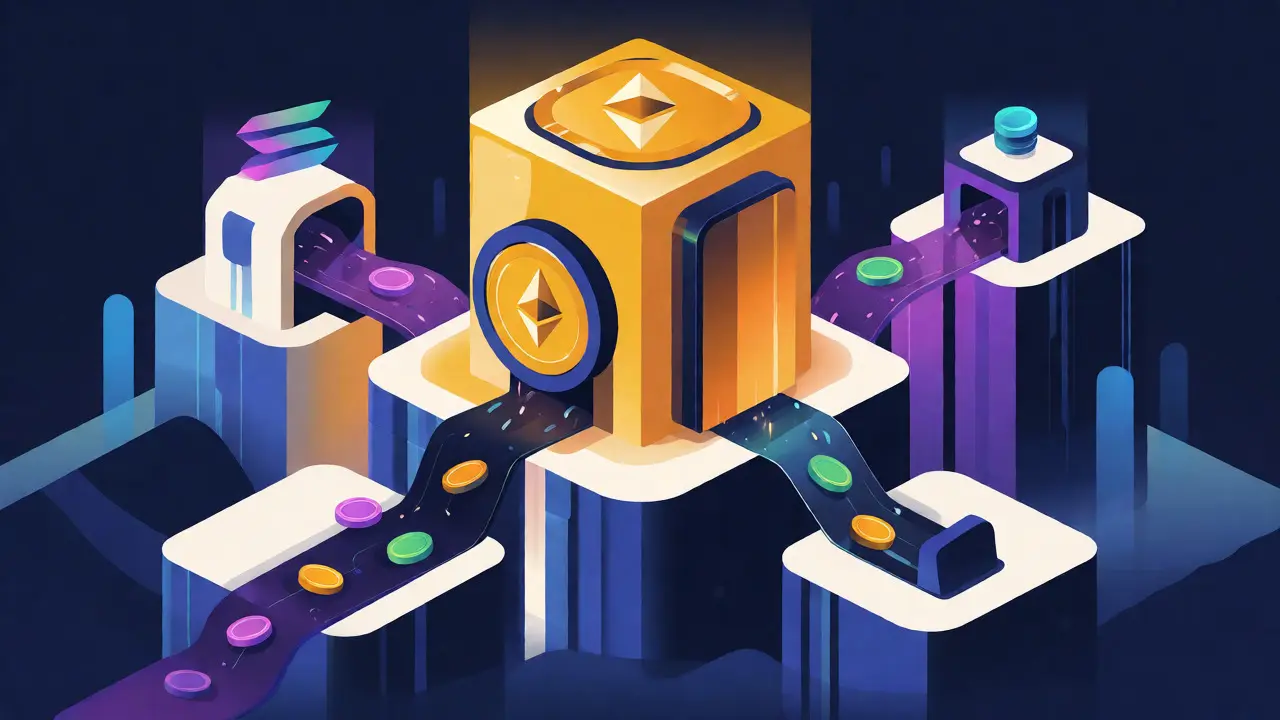
If you look closely at the numbers, you’ll notice a silent revolution happening on top of Ethereum. Layer-2 solutions-networks that process transactions off the main chain to save costs-are capturing significant market share. Collectively, they now account for over 22% of Ethereum’s ecosystem value. Arbitrum leads this pack with over $12 billion locked, followed closely by Optimism and Base.
Base, Coinbase’s dedicated Ethereum scaling solution, deserves special mention. It grew its TVL by over 12% in just one quarter, reaching $5.45 billion. Why the sudden surge? Ease of use. A survey by DeFi Safety found that 63% of users prioritize network familiarity over technical specs. For millions of Coinbase users, moving funds to Base feels like staying home, just cheaper. This convenience factor is driving organic growth that pure speculation can’t match.

Is TVL Still a Reliable Metric?
Here’s where things get tricky. Not all TVL is created equal. Nic Carter from Castle Island Ventures argues that TVL is becoming misleading because protocols use tricks to inflate the numbers. He points to "double-counting," where the same asset is counted multiple times across different layers or protocols. Chainalysis audited 15 major protocols and found that up to 37% of reported TVL was illusory-money that wasn’t really adding value to the system.
On the flip side, Georgios Konstantopoulos from Paradigm defends the metric. He believes that if you filter out non-circulating supplies and incentivized liquidity (money that leaves as soon as rewards stop), TVL remains the best tool we have. His research shows a 0.92 correlation between "clean" TVL and sustainable revenue. So, when you’re evaluating a project, don’t just look at the headline number. Ask: Is this sticky capital, or is it mercenary money chasing yield?
Emerging Chains and Niche Dominance
While the giants fight for dominance, smaller chains are finding their lanes. Provenance Network saw a 44% surge in TVL recently, driven by institutional interest in compliant asset tracking. XDC Network exploded in popularity for trade finance, with Curve Finance growing over 1,000% on that chain. These aren’t general-purpose blockchains; they are specialized tools solving specific problems.
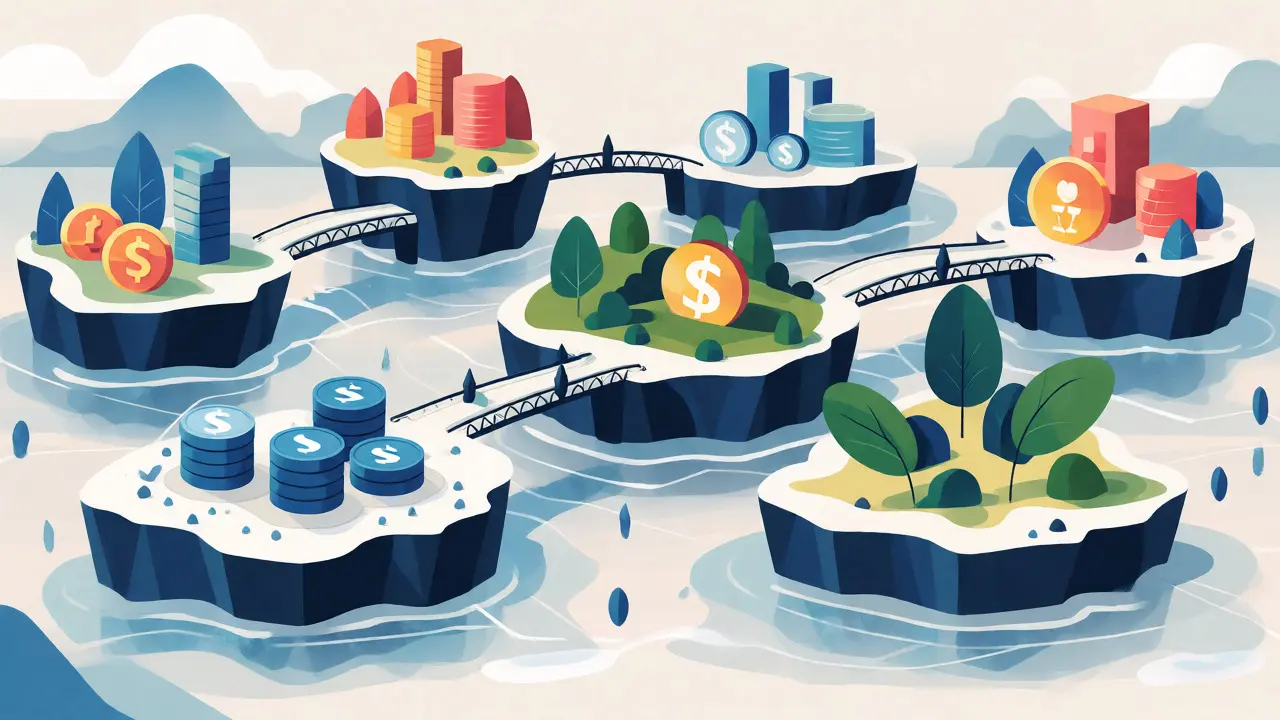
Mantle is another interesting case study. By integrating EigenLayer restaking mechanisms and offering aggressive incentives, it achieved 287% TVL growth in Q4 2025. However, its $412 million base is tiny compared to Ethereum’s billions. This highlights a key trend: fragmentation. We are moving away from a winner-takes-all world toward a multi-chain landscape where different networks serve different needs.
What This Means for Your Portfolio
So, how do you navigate this fragmented landscape? First, recognize that concentration risk is real. 83% of DeFi market value sits on chains with over $1 billion TVL. If you’re conservative, sticking to Ethereum and its top Layer-2s offers the highest security buffer. If you’re chasing yield, Solana and emerging chains offer higher returns but come with higher volatility and smart contract risks.
Second, watch the stablecoins. TRON’s strength shows that utility drives TVL. If a chain becomes the default settlement layer for USD or EUR stablecoins, its TVL will remain resilient regardless of crypto market cycles. Finally, keep an eye on Real-World Assets (RWAs). Protocols like MakerDAO have locked over $8 billion in traditional financial assets, bridging the gap between Wall Street and Web3. This sector is projected to capture a growing portion of TVL through 2027, according to Bernstein analysts.
The era of single-chain dominance is fading. The future belongs to interoperability and specialization. Whether you’re a developer choosing where to build or an investor deciding where to stake, understanding the nuances of TVL distribution is no longer optional-it’s essential for survival in the modern DeFi economy.
Why is Total Value Locked important for investors?
TVL indicates the amount of trust and capital committed to a protocol. High TVL generally suggests deeper liquidity, lower slippage for trades, and greater resilience against market shocks. It serves as a proxy for user adoption and security budget.
Can TVL be manipulated by projects?
Yes. Projects often use inflationary token rewards to attract temporary liquidity, inflating TVL without long-term commitment. Additionally, double-counting assets across multiple protocols or layers can artificially boost reported figures. Always check for organic growth versus incentive-driven spikes.
Which blockchain currently has the highest TVL?
Ethereum consistently holds the highest TVL, accounting for over 40% of the total DeFi market. However, Layer-2 solutions built on Ethereum collectively hold a significant and growing portion of this value.
How does gas fee impact TVL distribution?
High gas fees on mainnet chains like Ethereum discourage small-value interactions, pushing retail users toward cheaper alternatives like Solana, BNB Chain, or Ethereum Layer-2s. This shifts TVL volume to networks where transaction costs don't eat into yields.
What is the role of stablecoins in TVL?
Stablecoins make up a large percentage of TVL on many chains, particularly TRON and BNB Chain. They provide the base currency for lending, borrowing, and trading pairs. Chains with high stablecoin circulation often see more consistent TVL activity.