Imagine waking up to find your favorite trading platform suddenly inaccessible. No warning email, no gradual phase-out-just a digital wall blocking access to the global markets you relied on. This isn't a hypothetical scenario; it was the reality for thousands of Thai traders when the government cracked down on unlicensed foreign peer-to-peer (P2P) cryptocurrency platforms. If you trade crypto in or with Thailand, understanding why this happened and what rules apply now is crucial for keeping your assets safe.
The Core Issue: Why Did Thailand Block Foreign Platforms?
At the heart of this regulatory storm lies a simple goal: control. The Thai Securities and Exchange Commission (SEC) is the primary regulator responsible for overseeing capital markets and digital asset businesses in Thailand. In 2025, they decided that the wild west era of allowing any global exchange to operate without local oversight had to end. The main driver wasn't anti-technology sentiment; it was anti-crime. Officials argued that unlicensed platforms were becoming havens for money laundering and online fraud, making it nearly impossible for authorities to track illicit flows of funds.
This move marked a decisive shift in Southeast Asia’s digital asset landscape. While countries like Singapore focus on being open hubs, Thailand chose a path of strict localization. The logic? If you want to sell to Thai people, you must follow Thai rules, pay Thai taxes, and submit to Thai audits. Anything less is considered an illegal operation.
The Legal Framework Behind the Ban
You might wonder how a government can just shut down major international companies. They used specific legal tools designed for emergencies. Two key Royal Decrees passed in April 2025 formed the backbone of this crackdown:
- Royal Decree on Digital Asset Businesses (No. 2), B.E. 2568: This law explicitly stated that any foreign platform targeting Thai users must hold a license from the Thai SEC. Without it, operating is illegal.
- Royal Decree on Measures to Prevent Technology Crimes (No. 2), B.E. 2568: This gave the Ministry of Digital Economy and Society (MDES) the power to block websites and apps without needing a court order first.
This second decree is particularly powerful. Previously, blocking a site required lengthy legal battles. Now, if the MDES suspects a platform is facilitating scams or lacks licensing, they can pull the plug almost instantly. It streamlined enforcement but raised eyebrows among legal experts regarding due process.
Who Got Blocked and When?
The ban wasn't vague. It targeted specific names that dominated the Asian market. On June 28, 2025, five major exchanges vanished from the Thai internet landscape overnight:
| Platform Name | Status | Primary Reason for Ban |
|---|---|---|
| Bybit | Blocked | Unlicensed operation |
| OKX | Blocked | Unlicensed operation |
| CoinEx | Blocked | Unlicensed operation |
| XT.COM | Blocked | Unlicensed operation |
| 1000X | Blocked | Unlicensed operation |
These weren't small players. Bybit and OKX are giants in the derivatives market. Their removal left a significant gap in liquidity for Thai traders who preferred high-leverage futures trading. The SEC gave investors roughly one month’s notice starting May 29, 2025, to withdraw their funds. For many, that felt like a sprint rather than a marathon, especially if they held complex positions or illiquid tokens.

Penalties and Enforcement Risks
If you think this was just a slap on the wrist, think again. The penalties for violating these new rules are severe. Operators caught running unlicensed foreign P2P services face:
- Up to three years in prison.
- Fines of up to 300,000 baht (approximately $8,700 USD).
- Both imprisonment and fines simultaneously.
But the risk isn't just for the CEOs sitting in offices abroad. The framework also holds banks, telecom providers, and even social media platforms jointly liable. If a bank fails to implement preventive measures against cybercrime linked to crypto transfers, they could be sued for damages. This creates a ripple effect where financial institutions become gatekeepers, often freezing accounts that show suspicious activity related to blocked platforms.
Impact on Cross-Border Payments and Business
For regular traders, the inconvenience is annoying. For businesses, it’s a headache. The requirement that all digital asset transactions occur on locally licensed platforms means international companies can’t simply send crypto directly to Thai partners. They must use a regulated domestic intermediary. This adds layers of compliance overhead, including navigating multiple sets of Anti-Money Laundering (AML) and Know Your Customer (KYC) rules.
Consider a freelancer in Bangkok receiving payment from a client in India. Before the ban, they might have used a global P2P network for lower fees. Now, that transaction likely needs to route through a licensed Thai exchange, potentially increasing costs and slowing down settlement times. Delays and blocked payments have become common complaints among cross-border operators dealing with Thai counterparts.
Is Crypto Still Legal in Thailand?
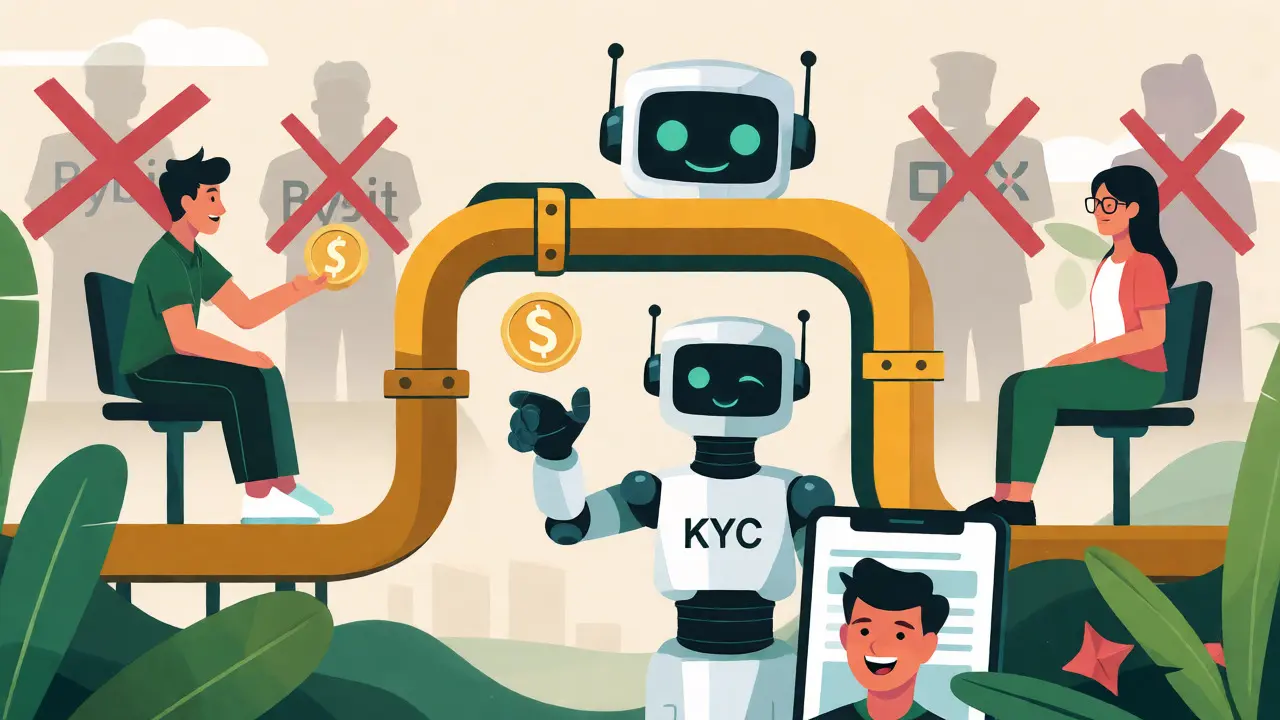
Yes, absolutely. Don't confuse the ban on foreign unlicensed platforms with a ban on crypto itself. Trading Bitcoin, Ethereum, and other digital assets remains perfectly legal. However, you must do it through exchanges licensed by the Thai SEC. Think of it like alcohol: drinking is legal, but buying it from an unlicensed street vendor might get you into trouble.
Thailand is actually doubling down on blockchain innovation domestically. The government has announced plans for 'G Tokens,' digital asset tokens worth about 5 billion baht ($150 million), issued as part of public debt. There are also moves toward a stablecoin backed by government bonds. The message is clear: we love blockchain technology, but we want it under our roof, not in someone else’s cloud.
What Should You Do Now?
If you are active in the Thai crypto scene, here is your checklist:
- Audit Your Holdings: Ensure none of your assets are stuck on blocked platforms like Bybit or OKX. If they are, contact support immediately, though withdrawal processes may be slower.
- Switch to Licensed Exchanges: Move your trading activity to SEC-approved local exchanges such as Bitkub or Satang Pro.
- Check Bank Compliance: Be prepared for stricter scrutiny from your bank if you transfer large sums to or from crypto exchanges. Keep records of your source of funds ready.
- Stay Updated: Regulations in this space change fast. Follow official SEC announcements rather than relying solely on social media rumors.
Future Outlook: Will Other Countries Follow?
Thailand’s approach is one of the most restrictive in Southeast Asia, yet it coexists with aggressive promotion of domestic tech. As of late 2026, the model seems to be holding. The reduction in reported crypto-related frauds suggests the crackdown achieved its primary goal. However, critics argue it stifles competition and limits consumer choice.
Regional neighbors are watching closely. Vietnam and Indonesia are debating similar frameworks. If Thailand’s method successfully reduces crime without killing innovation, we might see a wave of "localized-first" policies across Asia. For now, if you want to trade freely with global peers while staying compliant, you’ll need to navigate the local gateway carefully.
Is it illegal to own Bitcoin in Thailand?
No, owning Bitcoin is legal. However, you cannot use it as legal tender for everyday purchases. It is classified as a digital asset and must be traded through licensed platforms.
Can I still use Binance in Thailand?
Binance operates differently because it partnered with a local entity (Bitkub) to form a joint venture that complies with Thai licensing requirements. So, yes, you can use the Binance service available in Thailand, but it is distinct from the global version.
Why were Bybit and OKX blocked specifically?
They were blocked because they operated in Thailand without obtaining the necessary licenses from the Thai SEC. The government deemed them non-compliant with the Digital Asset Business Act.
What happens if I don't withdraw my funds from a blocked platform?
You risk losing access to your funds. While the platforms are technically supposed to allow withdrawals, connectivity issues and banking restrictions make retrieving assets difficult after the block date. Always prioritize moving funds to a compliant wallet or exchange.
Are there fines for individuals using banned platforms?
The heavy fines and prison sentences primarily target the operators of the unlicensed platforms. However, individuals engaging in illegal money laundering activities via these platforms could face legal consequences under broader criminal laws.