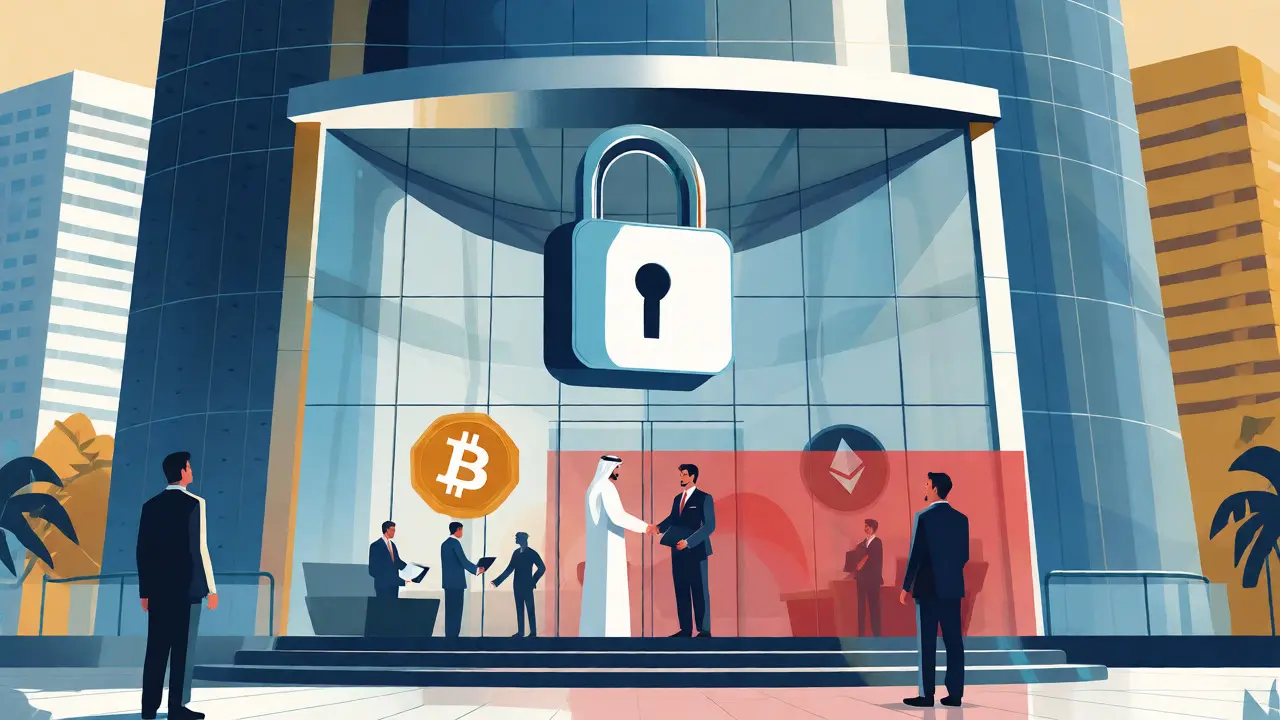
If you run a bank or an investment firm in Doha, you probably don't lose sleep over Bitcoin price swings. You worry about compliance fines. While the UAE and Bahrain have rolled out the red carpet for crypto exchanges, Qatar has kept its financial doors firmly shut to virtual currencies. As of October 2026, this isn't just a rumor or a temporary pause; it is a hard-coded regulatory reality. The Qatar Central Bank (QCB) maintains a strict prohibition on institutional involvement in cryptocurrencies, creating one of the most conservative financial environments in the Gulf Cooperation Council (GCC).
This stance often confuses international investors. How can a country so eager to modernize its economy say "no" to blockchain? The answer lies in a crucial distinction: Qatar bans cryptocurrencies as currency substitutes but welcomes tokenized traditional assets. If you are trying to understand whether your fintech startup can operate in Doha, or why your local bank won't let you buy Ethereum, you need to look past the headlines and into the specific circulars that govern this space.
The Core Prohibition: Why Banks Can't Touch Bitcoin
The foundation of Qatar's crypto policy rests on Circular No. (6), issued by the Qatar Central Bank in February 2018. This document explicitly prohibited all financial institutions in Qatar from facilitating bitcoin transactions and any cryptocurrency-related activities. Think of it as a firewall. A licensed bank in Qatar cannot open a trading account for you, hold your private keys, or offer you a fund that tracks the S&P 500 via a stablecoin.
In December 2019, the Qatar Financial Centre Regulatory Authority (QFCRA) reinforced this with a strict alert banning virtual asset services within the Qatar Financial Centre (QFC). The definition used here is precise. They define virtual assets as digital substitutes for currency used for trading, transfer, or payment. Crucially, they exclude fiat currencies. This means if a token acts like money, it is banned for institutions. If it acts like a share certificate, it might be allowed under different rules we will discuss later.
The scope of this ban is comprehensive. It covers:
- Exchanging virtual assets for fiat currencies (like converting Qatari Riyal to USDT).
- Transferring and safekeeping virtual assets on behalf of clients.
- Offering financial services related to initial coin offerings (ICOs) or token issuances.
This applies to everything from Bitcoin and Ethereum to stablecoins like USDC and even central bank digital currencies (CBDCs) if they are classified as "Excluded Tokens." For a banker in Doha, offering these services isn't just risky; it's a license-revoking offense.
The Nuance: Tokenization Is Not Cryptocurrency
Here is where many people get tripped up. Just because Qatar bans crypto doesn't mean it hates blockchain. In September 2024, the QFC introduced the QFC Digital Assets Regulations. This framework allows for the tokenization of traditional assets such as shares, bonds, sukuk, commodities, and real estate.
Why the difference? Control. When you tokenize a bond, you are digitizing an existing legal claim. The underlying asset exists in the physical or traditional financial world. There is a clear issuer, a clear regulator, and a clear legal recourse if things go wrong. With native cryptocurrencies like Bitcoin, there is no central issuer. The value fluctuates wildly, and the regulatory hook is slippery. Qatar prefers the former because it aligns with their goal of maintaining sovereign control over monetary policy.
The 2024 regulations provide provisions for validation, registration, and custody of approved tokens. This creates a sandbox where innovation can happen without destabilizing the banking sector. However, the QFCRA confirmed that virtual assets subject to the 2019 alert remain "Excluded Tokens." So, you can trade a tokenized gold bar through a licensed QFC entity, but you cannot trade a memecoin.
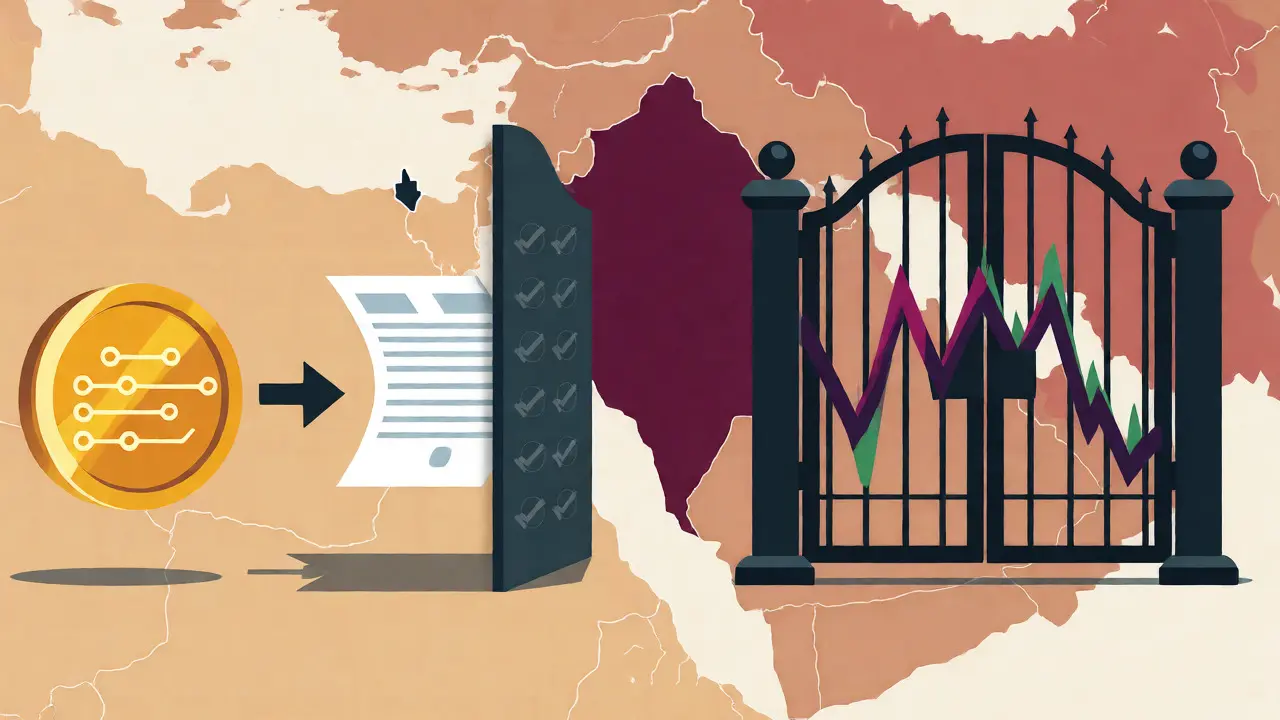
Regional Context: Qatar vs. Its Neighbors
To understand Qatar's position, you have to look at the map. The GCC is not a monolith when it comes to crypto regulation. Countries like Kuwait and Saudi Arabia occupy different spaces, while the UAE and Bahrain have aggressively courted crypto businesses.
| Country | Institutional Crypto Status | Key Regulator | Notable Features |
|---|---|---|---|
| Qatar | Banned for banks/institutions | Qatar Central Bank (QCB), QFCRA | Strict separation of crypto and finance; allows tokenized securities only. |
| UAE | Regulated & Permissive | VARA (Dubai), ADGM (Abu Dhabi) | Licensing frameworks for exchanges; active retail market. |
| Bahrain | Regulated & Permissive | Central Bank of Bahrain (CBB) | Early adopter of crypto licensing; progressive stance. |
| Kuwait | Banned | Central Bank of Kuwait | Absolute prohibition on payments, investments, and mining. |
| Saudi Arabia | Restricted Retail / Pilot Wholesale | SAMA | Focused on wholesale CBDC pilots; cautious on retail crypto. |
Qatar sits at the conservative end of this spectrum, alongside Kuwait. While Dubai hosts major crypto conferences and Abu Dhabi attracts Web3 talent, Doha remains focused on traditional financial stability. This isn't necessarily bad for business; it just means the business model is different. International firms operating across the GCC must maintain separate operational frameworks. Your team in Dubai might be trading derivatives on a regulated exchange, while your colleagues in Doha are strictly forbidden from doing the same.

Impact on Financial Institutions and Investors
For local banks, the ban simplifies compliance but limits product offerings. They don't have to worry about the volatility of holding Bitcoin on their balance sheets. However, they miss out on fee revenue from crypto trading and custody services. For high-net-worth individuals in Qatar, this creates a workaround culture. Many wealthy Qataris still invest in crypto, but they do so through offshore entities or personal wallets, bypassing the local institutional infrastructure entirely.
Compliance challenges are significant for multinational firms. Legal teams must navigate a complex web of restrictions. If a global bank wants to offer a "digital wealth" product in Qatar, it cannot include Bitcoin exposure unless it structures it carefully-perhaps as a derivative linked to an index, though even that faces scrutiny under the broad definition of "facilitating transactions."
Enforcement is rigorous. The Qatar Central Bank monitors licensed institutions closely. Violations can lead to heavy fines or the revocation of banking licenses. This risk aversion keeps the local financial system insulated from the boom-and-bust cycles seen in more permissive jurisdictions. During the 2022 crypto crash, while other markets bled, Qatar's regulated sector remained largely unaffected because it had zero exposure to the collapsing assets.
Future Outlook: Will the Ban Ever Lift?
As we move through 2026, experts predict the core ban will persist. Qatar National Vision 2030 emphasizes economic diversification, but it also prioritizes financial stability. The government seems content to let the UAE and Bahrain compete for the speculative crypto capital while Qatar focuses on institutional-grade blockchain applications.
We might see an expansion of the approved list for tokenized assets. Real estate tokenization is a prime candidate, given Qatar's massive property market. But don't expect a sudden reversal allowing banks to sell Bitcoin ETFs anytime soon. The regulatory culture is deeply rooted in caution. Unless neighboring countries demonstrate undeniable long-term benefits without systemic risks, Qatar is likely to stick to its guns.
For now, if you are looking to enter the Qatari market, ignore the hype around decentralized finance (DeFi). Focus on how you can bring traditional assets onto the blockchain. That is the door that is open. The crypto door? It is locked tight.
Can I buy cryptocurrency in Qatar using my bank card?
Direct purchases via local bank cards are difficult because banks prohibit facilitating these transactions. Most residents use peer-to-peer platforms or international exchanges that accept transfers from accounts not flagged for crypto activity, though this carries compliance risks.
Is Bitcoin legal tender in Qatar?
No, Bitcoin is not legal tender in Qatar. The Qatar Central Bank does not recognize it as currency, and financial institutions are barred from treating it as such.
What is the difference between the crypto ban and the new digital asset regulations?
The ban prohibits native cryptocurrencies (like Bitcoin) and stablecoins used as currency substitutes. The new regulations allow for the tokenization of traditional assets (like stocks or real estate) which are backed by tangible value and regulated entities.
Are foreign crypto exchanges blocked in Qatar?
While there is no technical internet block on websites, the ban prevents local banks from processing payments to them. This makes funding accounts difficult, effectively blocking institutional participation rather than individual access.
How does Qatar's approach compare to Dubai's?
Dubai (UAE) has established specific regulators like VARA to license and supervise crypto exchanges, encouraging growth. Qatar takes a restrictive approach, banning institutional involvement in crypto to prioritize traditional financial stability.