Imagine wanting to move your assets from Polkadot to Ethereum without dealing with the headache of wrapped tokens or trusting a middleman. That is exactly the problem PolkaBridge is a decentralized application platform designed to enable cross-chain token swaps between different blockchain networks. Launched in 2021, it aims to break down the walls between isolated blockchains. But while the idea is great, the reality of using it in 2026 is a bit more complicated. If you are looking for a high-liquidity trading hub, you might find this platform a bit ghost-townish.
Quick Take: Should You Use PolkaBridge?
Before we get into the weeds, here is the bottom line: PolkaBridge is a technical marvel but a liquidity nightmare. It does exactly what it says-swapping tokens across chains-but the actual trading volume is incredibly low. For someone moving tiny amounts of crypto for the sake of experimentation, it is an interesting tool. For a serious trader, the slippage would likely eat your profits before you even hit the "swap" button.
| Feature | Detail |
|---|---|
| Native Token | PBR |
| Supported Chains | Ethereum, Polkadot, BSC, Polygon, Solana |
| Trading Model | Automated Market Maker (AMM) |
| Transaction Fee | 0.5% |
| Wallet Requirements | MetaMask, Polkadot.js |
How the Cross-Chain Magic Works
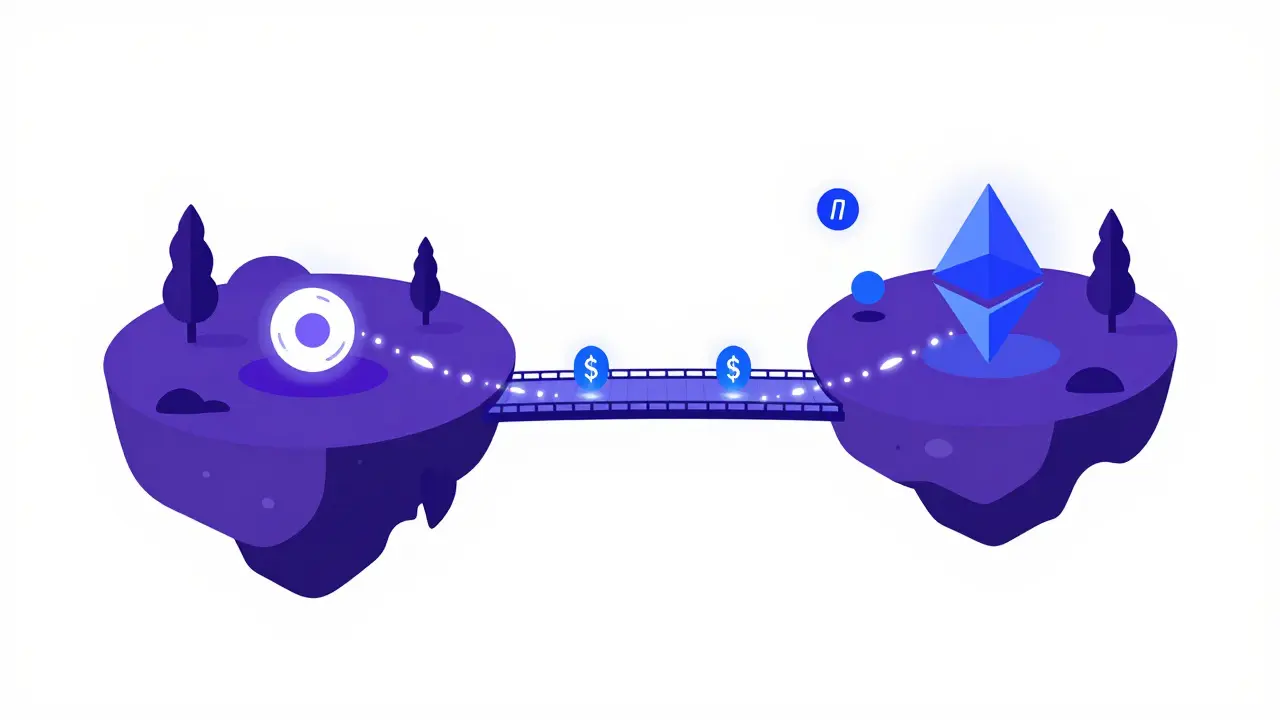
Most decentralized exchanges (DEXs) only work on one chain. If you want to trade an Ethereum token on the Binance Smart Chain, you usually have to "wrap" it-essentially trading your real coin for a voucher that represents it on another network. PolkaBridge tries to skip that step. It allows for "simultaneous execute swaps," meaning you trade the native asset on one chain for the native asset on another.
The platform operates as a dApp (decentralized application). To get started, you don't create an account with an email and password; instead, you connect a compatible wallet. This puts you in total control of your private keys, which is the gold standard for security in crypto, but it also means if you lose your seed phrase, your funds are gone forever.
The PBR Token and Deflationary Economics
The heartbeat of the ecosystem is the PBR token. Unlike many tokens that just exist for speculation, PBR has a specific role in the platform's economy. It uses a deflationary farming model. Every time someone makes a trade, a 0.5% fee is charged. Here is where it gets interesting: 90% of that fee goes back to the liquidity providers (the people who put up their own money to make trades possible), and the other 10% is burned.
Burning tokens means they are removed from the supply forever. In theory, if the platform grows, the supply of PBR shrinks while demand increases, pushing the price up. However, this only works if people are actually trading. With recent data showing 24-hour volumes as low as $18.37, the "burn" is barely a flicker. The circulating supply sits at around 72 million tokens, but the market cap remains tiny compared to the giants of the industry.

The Liquidity Trap: A Warning for Traders
Here is the part where we need to be honest. A PolkaBridge review wouldn't be complete without talking about liquidity. In the crypto world, liquidity is everything. It is the difference between a smooth trade and losing 10% of your money to "slippage" (when the price changes between the time you submit a trade and when it's executed).
Compare PolkaBridge to Uniswap. While Uniswap handles billions of dollars in daily volume, PolkaBridge's activity is negligible. If you try to swap a large amount of PBR or any other asset on this platform, you will likely experience massive slippage. It is essentially a shallow pool; if you jump in with a large amount of capital, you're going to hit the bottom very quickly.
Comparing PolkaBridge to the Competition
When you look at the broader market, PolkaBridge is fighting an uphill battle. It competes in the same space as Thorchain and other cross-chain protocols. While PolkaBridge has the advantage of deep integration with the Polkadot ecosystem, that niche is smaller than the massive Ethereum or Solana communities.
The main draw is that it doesn't require wrapped assets. For a power user who hates the complexity of bridges and wrappers, this is a huge win. But for the average person, the lack of liquidity makes that technical advantage almost irrelevant. You can't enjoy a feature if the trade won't actually execute at a fair price.

Practical Steps: How to Use PolkaBridge
If you still want to give it a go-perhaps for a small amount of PBR-here is the workflow you'll need to follow. It is not as simple as using a centralized exchange like Coinbase.
- Get your base currency: Buy ETH or USDT on a major exchange.
- Move to a wallet: Transfer those funds to a wallet like MetaMask or Polkadot.js.
- Connect to the dApp: Visit the PolkaBridge web interface and link your wallet.
- Set your parameters: Choose the tokens you want to swap and carefully check the slippage settings.
- Execute and sign: Confirm the transaction in your wallet and wait for the blockchain to confirm the swap.
Final Verdict: High Risk, Niche Reward
PolkaBridge is a tool for the curious and the brave. Technically, it solves a real problem by enabling direct cross-chain swaps. However, the market has largely moved past it or chosen more liquid alternatives. The PBR token has seen a massive drop from its all-time high of $3.28, and the bearish sentiment from analysts is hard to ignore.
Is it a scam? No. Is it an efficient way to trade large sums of money? Definitely not. Use it if you want to support the Polkadot ecosystem or experiment with cross-chain tech, but keep your expectations low and your transaction amounts even lower.
What is the main advantage of PolkaBridge?
The primary advantage is its ability to perform cross-chain swaps without needing wrapped assets. This simplifies the process of moving value between blockchains like Polkadot and Ethereum.
Is PBR a good investment?
PBR is considered high-risk. Due to extremely low trading volumes and a significant price drop from its peak, most analysts suggest extreme caution. Only invest what you are willing to lose entirely.
Which wallets work with PolkaBridge?
The platform is compatible with major cryptocurrency wallets, most notably MetaMask for EVM-compatible chains and Polkadot.js for the Polkadot network.
What are the fees on PolkaBridge?
The platform charges a 0.5% transaction fee. A portion of this is distributed to liquidity providers and a small percentage is burned to reduce the total supply of PBR.
Can I use PolkaBridge on my phone?
Yes, PolkaBridge is accessible via a web interface that is compatible with both iOS and Android devices, provided you have a mobile-compatible wallet installed.