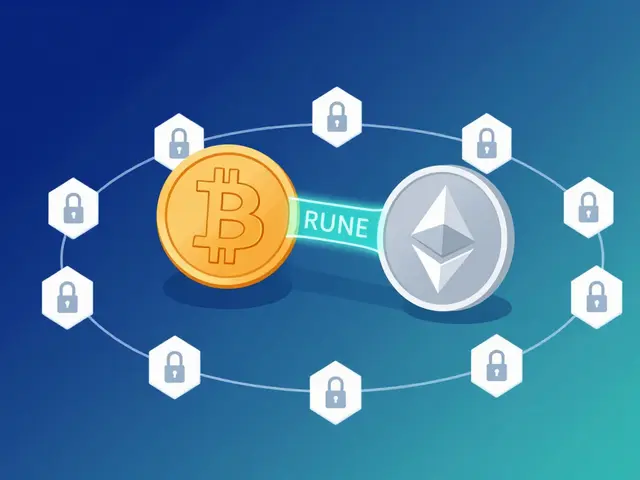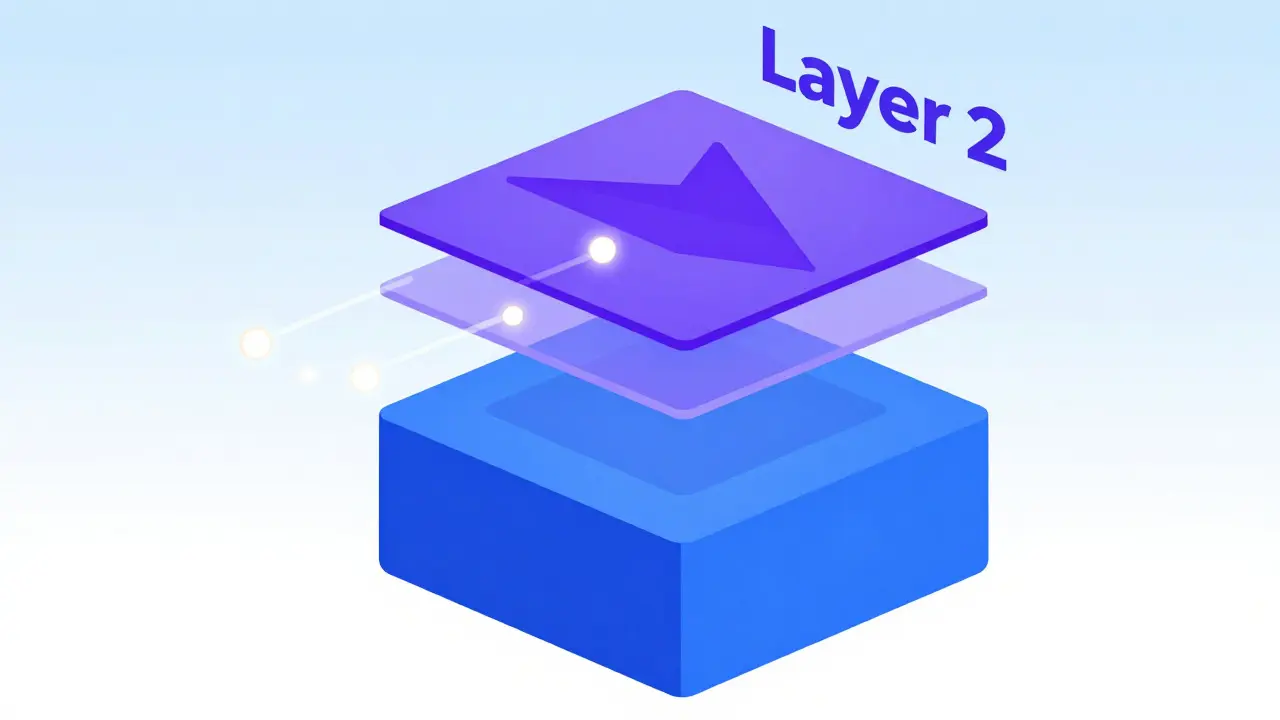
Imagine a blockchain that fixes Ethereum's slow speeds and high fees while letting you earn interest on your assets automatically. That is the core promise of OpenZK Network, a Layer 2 scaling solution built on zero-knowledge proofs that integrates ETH staking and stablecoin yields directly into its protocol. The native currency, OZK, serves as the governance and utility token for this ecosystem.
If you are seeing OZK pop up in your feed or on tracking sites, you might be wondering if it is just another speculative meme coin or a legitimate infrastructure play. The short answer? It is a technical project with a specific job to do, but it is still very early in its lifecycle. Let’s break down what OpenZK actually does, how the OZK token works, and whether it fits into your portfolio strategy.
Quick Summary / Key Takeaways
- What it is: A Layer 2 blockchain for Ethereum using zk-SNARKs technology.
- Main Feature: Automatically stakes ETH and stablecoins to generate rewards without manual intervention.
- OZK Token Role: Used for governance, network fees, and staking; non-inflationary model.
- Current Status: Early-stage project with low market cap and limited liquidity compared to giants like Arbitrum.
- Risk Level: High volatility due to low trading volume and nascent user base.
How OpenZK Network Works Under the Hood
To understand OZK, you first need to grasp the problem it solves. Ethereum is secure but expensive. Every transaction costs gas, and during busy periods, those fees spike. Layer 2 solutions sit "on top" of Ethereum to handle transactions faster and cheaper, then bundle them back to the main chain for security. OpenZK uses zk-SNARKs, a type of cryptographic proof that allows one party to prove they know something without revealing the information itself. This makes transactions private and efficient.
But here is where OpenZK differs from other Layer 2s like Arbitrum or Optimism. Most Layer 2s focus solely on speed. OpenZK adds a financial layer. It automates ETH staking and restaking. When you bridge ETH onto the OpenZK network, you don't just get a faster version of your asset; you get ozETH. This is a liquid token representing your staked position plus the rewards you've earned. You can use ozETH in DeFi protocols while still earning yield. It’s like having a savings account that pays interest, but you can spend the balance whenever you want.
The same logic applies to stablecoins. If you hold USDC or other supported stablecoins, you can stake them on OpenZK to receive ozUSD. This creates a yield source for risk-averse investors who want to avoid crypto price swings but still benefit from the network's efficiency.
OZK Tokenomics: Supply, Utility, and Value
Now, let’s talk about the coin itself. The OZK token is the fuel for the engine. Here are the key numbers based on recent data:
- Total Supply: Approximately 13.5 billion to 15 billion tokens (sources vary slightly).
- Circulating Supply: Around 3.4 billion to 3.6 billion tokens.
- Max Supply: Capped at 15 billion, meaning no new tokens will be created beyond this limit.
- Inflation Model: Non-inflationary/Deflationary. Rewards come from network activity, not endless minting.
The primary use cases for OZK include:
- Governance: Holders vote on protocol upgrades, fee structures, and treasury spending.
- Network Fees: Paying for transactions and smart contract interactions on the network.
- Staking: Locking OZK to help secure the network and earn additional rewards.
Because the supply is capped and the model is non-inflationary, the value proposition relies heavily on adoption. If more people use the network to stake ETH or trade stablecoins, demand for OZK (for fees and governance) increases. However, since only about 25% of the total supply is currently circulating, there is potential for future unlocks to impact the price.

Market Position and Price Volatility
Let’s be real: OZK is a small-cap asset. As of mid-2026, its market capitalization hovers between $200,000 and $1.5 million, depending on which tracker you look at. For context, Bitcoin’s market cap is over $1 trillion. This tiny size means two things: massive upside potential if it succeeds, and extreme volatility if it doesn’t.
Price data varies wildly across exchanges. Some platforms show OZK trading at $0.0001, while others list it at $0.0003. This discrepancy happens because liquidity is thin. There aren’t many buyers and sellers at any given moment, so a single large trade can swing the price significantly. In one week, OZK jumped 37%, outperforming the broader crypto market which was down 8%. In another period, it dropped 15% in 24 hours. This is typical for emerging Layer 2 projects before they gain mainstream traction.
You should also note the trading volume. On some days, the total volume is less than $1,000. This makes it hard for large investors to enter or exit positions without moving the price against themselves. If you are considering buying OZK, keep this liquidity constraint in mind.
OpenZK vs. Other Layer 2 Solutions
How does OpenZK stack up against the established players? Let’s compare it with major competitors like Arbitrum and zkSync.
| Feature | OpenZK Network | Arbitrum | zkSync Era |
|---|---|---|---|
| Technology | ZK-Rollup (zk-SNARKs) | Optimistic Rollup | ZK-Rollup (zk-STARKs) |
| Native Staking Integration | Yes (Automated ETH & Stablecoin staking) | No (Requires external protocols) | No (Requires external protocols) |
| Market Cap (Approx.) | $200K - $1.5M | >$1B | >$500M |
| User Base | ~2,000 holders | Millions of users | Hundreds of thousands |
| Primary Use Case | Yield + Scaling | General Purpose Scaling | General Purpose Scaling |
The table highlights OpenZK’s unique angle. While Arbitrum and zkSync focus on being general-purpose operating systems for dApps, OpenZK bets on combining scaling with passive income. If you are an investor who wants to leave their ETH alone but still earn yield, OpenZK offers a one-stop shop. However, if you are a developer looking for a robust ecosystem with thousands of existing apps, you will likely stick with Arbitrum or zkSync for now.

Risks and Considerations Before Buying
Every investment carries risk, and OZK has specific ones you should weigh:
- Liquidity Risk: Low trading volume means you might struggle to sell large amounts quickly without crashing the price.
- Adoption Risk: With only ~2,000 token holders, the network needs significant growth to justify its valuation. If users prefer existing staking platforms, OZK could stagnate.
- Technical Risk: Zero-knowledge proofs are complex. Bugs in the code could lead to exploits, though audits mitigate this.
- Regulatory Risk: Like all crypto assets, OZK faces uncertain regulatory environments globally. Derivatives like ozETH may attract extra scrutiny.
On the positive side, the team has a clear roadmap focusing on expanding stablecoin support and improving developer tools. The integration of liquid restaking is a genuine innovation that addresses a real pain point for ETH holders. If you believe in the long-term narrative of Ethereum scaling and yield integration, OpenZK represents a niche but promising play.
Frequently Asked Questions
Is OZK a good investment in 2026?
It depends on your risk tolerance. OZK is a high-risk, high-reward asset. It has strong technical fundamentals but low liquidity and adoption. It suits investors who believe in the specific niche of integrated staking and Layer 2 scaling, but it is not suitable for conservative portfolios.
Where can I buy OZK token?
OZK is listed on several decentralized exchanges (DEXs) and some centralized exchanges (CEXs). Due to low liquidity, it is often best traded on DEXs where you can swap directly using ETH or stablecoins. Always check the current listing status on a reliable crypto tracker before purchasing.
What is the difference between OZK and ozETH?
OZK is the native governance and utility token of the OpenZK Network. ozETH is a derivative asset you receive when you stake ETH on the network. You use OZK to pay fees and vote; you use ozETH to represent your staked ETH position and earn yield.
Does OpenZK have a maximum supply?
Yes, the maximum supply of OZK is capped at 15 billion tokens. This ensures the token is non-inflationary in the long run, as no new tokens will be created after this cap is reached.
How safe is the OpenZK Network?
The network inherits security from Ethereum’s main chain through ZK-rollup technology. Transactions are validated by zero-knowledge proofs, which are mathematically sound. However, like all smart contracts, there is a residual risk of bugs or implementation errors. Audits and community monitoring help mitigate these risks.