Remember that wild ride in late 2020 and early 2021? The moment when digital art exploded onto the mainstream stage? If you were an active NFT creator or collector back then, you might remember MurAll, a project that promised something different from the usual profile picture coins. It offered a massive, collaborative digital mural on the blockchain. But more importantly for many wallets, it offered the PAINT token airdrop.
For those who qualified, this wasn't just pocket change. We are talking about allocations worth thousands of dollars at their peak. For those who missed it, the question lingers: was it fair? Was it worth it? And what is left of it today in May 2026?
This guide breaks down exactly how the MurAll PAINT airdrop worked, who got paid, why the rules were so strict, and where the token stands now. No fluff, just the facts you need to understand this piece of crypto history.
The Core Concept: Burning Paint for Art
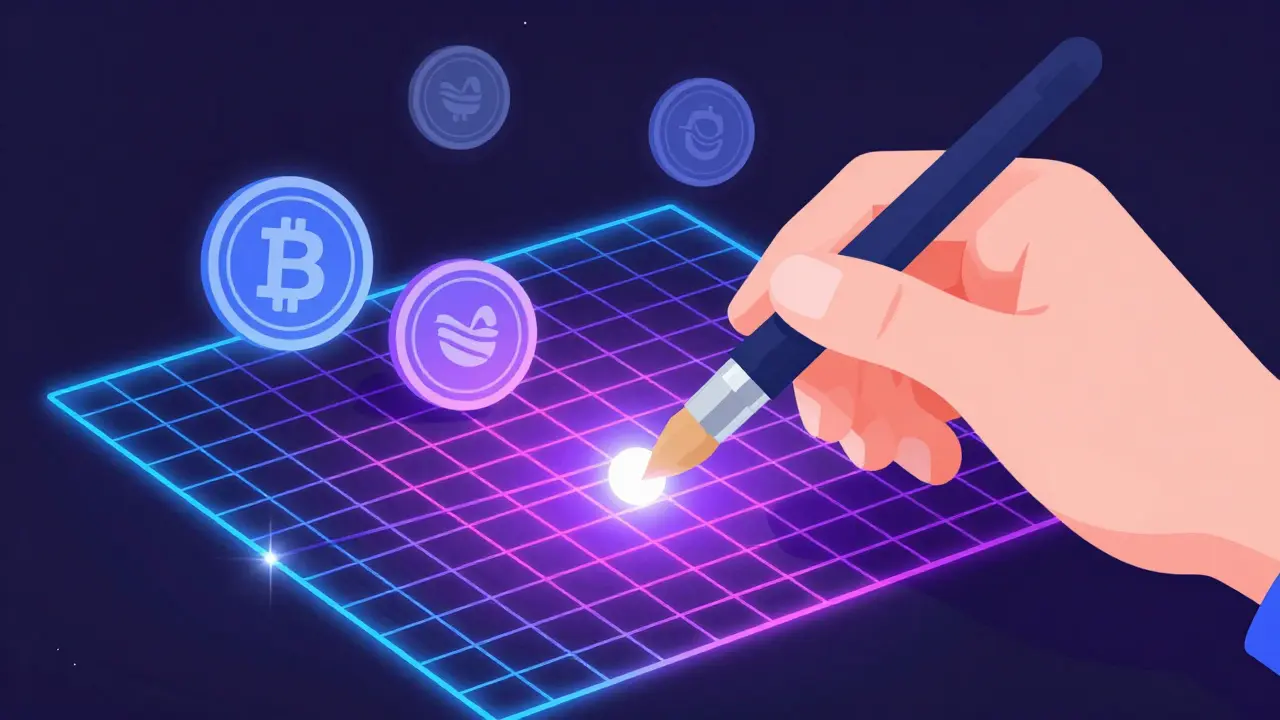
To understand the value of the airdrop, you first have to understand the product. MurAll is not just a token; it is an on-chain digital collaborative mural. Imagine a canvas that is 2048 pixels wide by 1024 pixels high. That totals over 2 million pixels. Anyone can draw on it, but there is a catch.
You cannot just click and drag. To place a pixel, you must burn PAINT tokens. These are ERC-20 tokens that act as literal paint. Once you use them to draw, they are gone forever. This creates a deflationary model. The more people use the canvas, the fewer tokens exist in circulation.
This mechanism was designed to create scarcity. Unlike inflationary meme coins, PAINT tokens were meant to gain value as the platform grew, simply because supply was shrinking with every stroke of digital art. When you drew on the canvas, you also received a unique NFT representing your specific contribution. Even if someone else drew over your work later, your original mark remained permanently recorded on the blockchain.
Who Qualified for the Airdrop?
The MurAll team didn't just give tokens to random addresses. They wanted genuine participants in the NFT ecosystem. They used two distinct snapshots to determine eligibility. If you weren't in these groups, you got nothing.
Group 1: Verified NFT Artists
If you were a verified artist on major platforms like Known Origin, Rarible, SuperRare, or Async Art, you were in the premium tier. The snapshot for this group was taken on November 15, 2020. Qualified wallets received 1,048,576 PAINT tokens. At the height of the hype, this allocation was valued between $2,100 and $3,300 per wallet.
Group 2: NFT Holders
If you held ERC-721 tokens but weren't a verified artist on those specific platforms, you could still qualify. The snapshot here was later, on December 18, 2020. You received 193,537 PAINT tokens. Crucially, the team checked your transaction history. You needed more incoming transactions than outgoing ones. This rule filtered out traders who were just flipping NFTs for profit. They wanted collectors-people who actually held assets. At peak prices, this share was worth around $400.
The claiming window stayed open until January 22, 2022. That gave people over a year to connect their MetaMask wallets and claim their rewards. Many did. Many didn't. Those unclaimed tokens likely went back into the pool or were burned, further tightening the supply.

Why the Strict Rules? The Logic Behind the Snapshots
You might wonder why the team excluded artists from other platforms or casual holders. It comes down to community building versus speculation. In late 2020, following the success of Uniswap's UNI airdrop, projects realized that giving free tokens to engaged users created loyal communities. Selling tokens via an ICO brought regulators and short-term speculators. Giving them away brought builders.
By targeting specific platforms like SuperRare and Rarible, MurAll ensured their initial user base understood the value of digital ownership. By checking transaction history for holders, they ensured recipients had "skin in the game." This strategy helped avoid the common pitfall of airdrops where bots claim tokens and dump them immediately. Instead, the goal was to distribute PAINT to people who would actually use it to draw on the canvas, thereby burning tokens and increasing scarcity for everyone else.
Current Status of PAINT Token in 2026
Fast forward to May 2026. The crypto landscape has changed dramatically. So has the PAINT token. If you are holding some PAINT from that airdrop, you need to know the current reality.
The token has seen a significant decline from its all-time highs. As of recent data, PAINT trades at approximately $0.0000067. The market capitalization sits around $77,600. While this sounds small compared to Bitcoin or Ethereum, it reflects the niche nature of the project. There are roughly 11.5 billion tokens in circulation, down from the original maximum supply of 22 billion. This confirms the deflationary model is working-billions of tokens have been burned through usage or loss.
However, liquidity is extremely low. Trading volume is minimal, often less than $10 in a 24-hour period, exclusively on Uniswap V2 against Wrapped Ether (WETH). This means if you try to sell a large amount, you will face significant slippage. The token is no longer a hot trading asset; it is a legacy token for a specific community.
| Attribute | Airdrop Era (2020-2021) | Current Status (May 2026) |
|---|---|---|
| Token Price Estimate | $0.002 - $0.003 (Peak) | ~$0.0000067 |
| Artist Allocation Value | $2,100 - $3,300 | ~$7.00 |
| Holder Allocation Value | ~$400 | ~$1.30 |
| Circulating Supply | ~8 Billion | ~11.5 Billion |
| Primary Use Case | High-demand drawing fuel | Niche community utility |
Lessons Learned from the MurAll Experiment
The MurAll airdrop serves as a case study in several key areas of crypto project management:
- Deflationary Mechanics Work, But Adoption Is Key: The burn mechanism is elegant. However, without constant new users joining to buy and burn tokens, the price pressure eventually fades. Scarcity only matters if demand exists.
- Snapshot Timing Matters: The strict cutoff dates created clear winners and losers. While this prevented gaming, it also alienated potential users who entered the NFT space after December 2020. Future projects should consider rolling snapshots or continuous eligibility criteria.
- Liquidity Risks: Many airdrop recipients forgot to sell during the peak. Today, selling large amounts of PAINT is difficult due to thin order books. Always assess exit liquidity before holding airdropped tokens long-term.
- Community Over Speculation: Projects that target genuine users (like verified artists) tend to build stronger foundations than those that target pure speculators. MurAll succeeded in creating a dedicated, albeit small, community of digital artists.
For those interested in the future of digital art, keep an eye on how MurAll integrates with emerging metaverse platforms. If the canvas becomes a landmark in a popular virtual world, the utility-and potentially the value-of PAINT could see renewed interest. Until then, it remains a fascinating artifact from the golden age of NFT experimentation.
Can I still claim the MurAll PAINT airdrop in 2026?
No. The claiming period officially ended on January 22, 2022. Any unclaimed tokens were likely returned to the treasury or burned. You cannot claim retroactively.
What happened to the value of my PAINT tokens?
Like many NFT-related tokens from the 2021 boom, PAINT experienced a significant correction. The price dropped from peaks of over $0.002 to fractions of a cent. This reflects broader market trends and reduced trading volume.
How does the PAINT token burn mechanism work?
When you use PAINT tokens to draw on the MurAll canvas, those tokens are permanently destroyed (burned). This reduces the total circulating supply, theoretically increasing the value of remaining tokens if demand stays constant or grows.
Which NFT platforms qualified for the higher artist tier?
Verified artists on Known Origin, Rarible, SuperRare, and Async Art were eligible for the larger allocation of 1,048,576 PAINT tokens based on the November 15, 2020 snapshot.
Is MurAll still active?
Yes, the MurAll canvas remains accessible on the blockchain. However, activity levels are lower than during the 2021 peak. It operates as a niche platform for collaborative digital art.