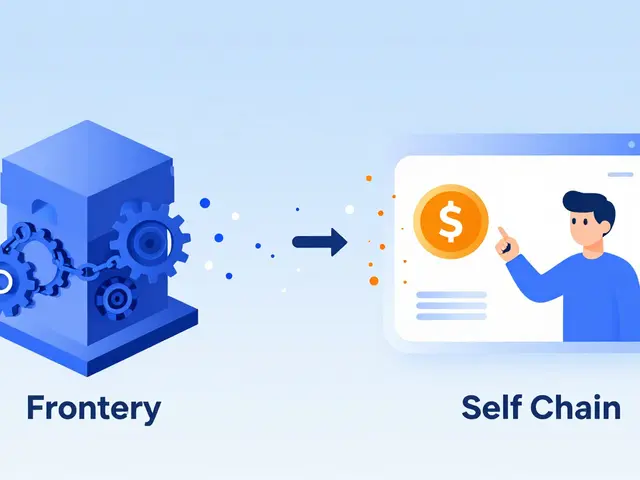
Ever typed "Koinex" into a search bar expecting to find a bustling trading platform with hundreds of coins, only to hit a wall? You aren't alone. A massive chunk of online confusion stems from mixing up Koinex, a defunct Indian pioneer, with CoinEx, a thriving global giant. This article clears the fog. We are looking at the historical Koinex crypto exchange, which dominated India’s early market before vanishing in 2018. If you’re here for current trading stats, you might be looking for CoinEx. But if you want to understand how regulatory shocks wipe out even the best tech, this is your story.
The Quick Verdict on Koinex
- Status: Defunct since July 2018. No longer operational.
- Primary Confusion: Often mistaken for CoinEx (a different, active exchange).
- Historical Peak: Held ~80% of India’s crypto volume in early 2018.
- Cause of Shutdown: Reserve Bank of India (RBI) banking ban on crypto services.
- Legacy: Proved that technical excellence cannot survive without regulatory clarity.
What Was Koinex?
Launched in January 2017 by Tushar Agarwal, Kunal Bhatia, and Sridhar Chinni under Zebpay Technologies Pvt. Ltd., Koinex was one of the first dedicated cryptocurrency exchanges in India. It wasn’t just another wallet; it was a full-fledged trading platform designed specifically for Indian Rupee (INR) deposits. At its peak, it processed about 15,000 daily transactions with an average daily volume of $15 million USD. That sounds small compared to today’s billions, but back then, it represented roughly 0.5% of all global crypto trading. For context, that meant nearly every other Indian trader was using Koinex or its direct competitors like Zebpay and Unocoin.
The platform’s architecture was surprisingly robust for its time. According to TechCrunch reports from January 2018, their custom-built matching engine handled 10,000 orders per second with a latency of just 200ms. They stored 95% of customer funds in cold storage using multisignature wallets, a security standard that many modern exchanges still struggle to implement perfectly. Yet, despite this solid tech stack, the business model had a fatal flaw: total dependence on Indian banks.
Why Did Koinex Shut Down?
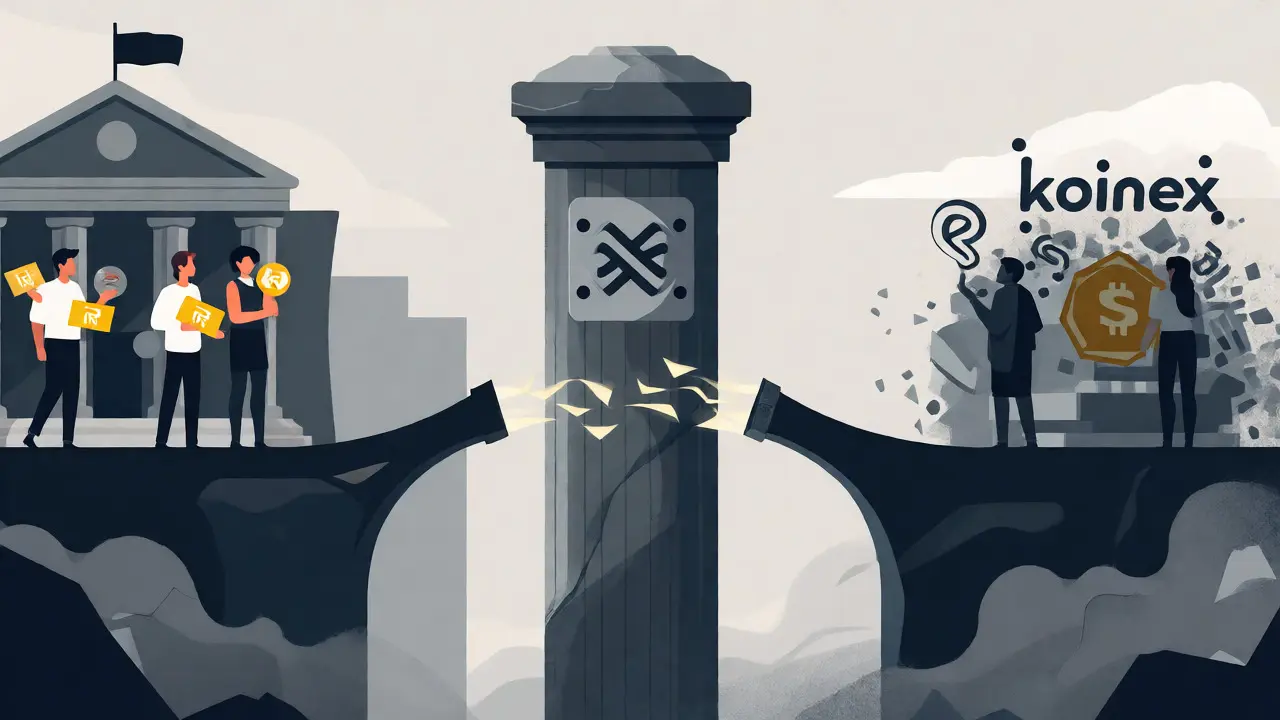
You might ask, "If the tech was good and users were happy, why did it die?" The answer lies in April 6, 2018. On this date, the Reserve Bank of India issued a circular prohibiting all regulated entities-banks included-from providing services to anyone dealing in cryptocurrencies. This wasn’t a ban on owning Bitcoin; it was a ban on the plumbing that allowed you to buy it.
Banks suddenly couldn’t process INR transfers to crypto exchanges. Without bank rails, Koinex couldn’t accept deposits or send out withdrawals. Within months, the exchange ceased operations in July 2018. Unlike Binance or Coinbase, which diversified across multiple jurisdictions, Koinex was purely domestic. When the regulator pulled the plug, there was no backup plan. The founders tried to pivot by launching UniDAX, a decentralized exchange, in August 2018, but regulatory uncertainty killed that project too by late 2019.
Koinex vs. CoinEx: Don’t Get Fooled
This is where most search results get messy. Many blogs incorrectly attribute CoinEx’s features to Koinex. Let’s set the record straight with a side-by-side look at these two completely separate entities.
| Feature | Koinex (Defunct) | CoinEx (Active) |
|---|---|---|
| Operational Status | Closed (July 2018) | Active (Global) |
| Headquarters | Mumbai, India | Hong Kong / Global |
| Cryptocurrencies Supported | 4 (BTC, ETH, XRP, LTC) | 800+ (as of 2025) |
| Trading Fees | 0.5% | 0.2% (Flat fee) |
| Daily Volume (Peak/Current) | $15 Million (2018) | $900 Million (2025) |
| Regulatory Context | Shut down by RBI Ban | Operates in multiple jurisdictions |
Notice the stark differences. Koinex never offered margin trading, futures, or anything beyond spot trading of four major coins. CoinEx, established in 2017 by Haipo Yang, built a global brand with hundreds of altcoins and advanced derivatives. If you see a review praising "low fees on 800 coins," they are talking about CoinEx, not Koinex.
User Experience: What Was It Like to Trade There?
Before the shutdown, user sentiment on platforms like Trustpilot was largely positive, holding a 4.2/5 rating based on 147 reviews. People loved the simplicity. Depositing INR was straightforward via UPI or NEFT, and the KYC process, while strict (requiring Aadhaar cards and PAN numbers), was quick-often completed within 24-48 hours.
However, cracks appeared during high volatility. Reddit threads from r/IndianCryptoCurrency in March 2018 highlighted complaints about slow withdrawal processing times, sometimes stretching to days when the market moved fast. Customer support was responsive via email (averaging 3.2-hour response times), but phone support was discontinued in March 2018 due to overwhelming demand. The community was active on Telegram, with around 15,000 members, but it fragmented rapidly once the exchange announced its closure.

The Aftermath and Founder Moves
So, what happened to the people behind Koinex? They didn’t disappear. The talent migrated to bigger opportunities, proving the team’s expertise remained valuable.
- Tushar Agarwal: Joined Coinbase’s regulatory affairs team in 2019, bringing his experience in navigating complex compliance landscapes.
- Kunal Bhatia: Founded Chainalysis India in 2020, focusing on blockchain analytics-a crucial field as governments started tracking crypto flows.
- Sridhar Chinni: Became CTO of CoinDCX in 2019, helping rebuild India’s domestic crypto infrastructure after the Supreme Court overturned the RBI ban in March 2020.
This migration pattern highlights a key lesson: the failure of the platform didn’t mean the failure of the professionals. In fact, their experience helped shape the next generation of Indian exchanges like CoinDCX and WazirX, which adopted more resilient, multi-jurisdictional strategies.
Lessons for Today’s Crypto Investors
Why should you care about a dead exchange from 2018? Because history repeats itself. Dr. Neha Singh from IIT Delhi noted in 2019 that "Koinex's failure demonstrates how even technically sound exchanges cannot survive without regulatory clarity." Here are three takeaways for anyone investing today:
- Diversify Jurisdictions: Don’t put all your eggs in one country’s basket. Exchanges that operate globally (like Binance or Kraken) can weather local bans better than purely domestic ones.
- Self-Custody Matters: During the wind-down, users faced 45-90 day delays to withdraw INR balances. Keeping large holdings in hardware wallets protects you from exchange-specific liquidity crises.
- Check Regulatory Health: Before signing up for any new exchange, research its legal standing in your country. A low fee isn’t worth much if the government shuts down your bank access overnight.
Frequently Asked Questions
Is Koinex still operating in 2026?
No, Koinex has been defunct since July 2018. The domain koinex.in currently redirects to a generic information page, and no trading activity takes place on the platform.
Is Koinex the same as CoinEx?
No, they are completely different entities. Koinex was an Indian exchange that shut down in 2018. CoinEx is a global exchange founded in 2017 by Haipo Yang that is still active and supports over 800 cryptocurrencies.
Why did Koinex shut down?
The primary reason was the Reserve Bank of India's (RBI) April 2018 circular banning banks from serving cryptocurrency businesses. Without banking partners to handle INR deposits and withdrawals, Koinex could not continue operations.
Can I still withdraw money from Koinex?
Most withdrawals were processed during the wind-down period between 2018 and 2019. However, some users reported significant delays of 45-90 days. Currently, there is no active mechanism for new withdrawals as the platform is closed.
Did Koinex have a security breach?
No, Koinex did not suffer any major security breaches during its operational period. They used cold storage for 95% of funds and underwent third-party audits, but their failure was due to regulatory pressure, not hacking.