Did you know that while headlines scream about billions in stolen funds, the actual landscape of crypto enforcement statistics tells a much more nuanced story? If you think digital asset regulation is just a chaotic free-for-all, you’re missing the massive shift happening right under our noses. We are witnessing the maturation of global oversight, where the sheer volume of illicit activity is stabilizing even as the number of jurisdictions cracking down skyrockets. This isn't just about catching bad guys; it's about defining what "compliant" actually looks like in a borderless financial system.
The Great Data Discrepancy: Why Crime Numbers Vary
Here’s the first hurdle when analyzing crypto crime data: different agencies count different things. Take the year 2024. According to TRM Labs’ 2025 Crypto Crime Report, illicit crypto activity amounted to at least USD 10.7 billion sent to fraud. That’s a 40% drop from 2023. Sounds great, right? But then Chainalysis, another heavyweight in blockchain analytics, reported that illicit addresses received $40.9 billion in the same period. Who’s lying? Neither. TRM focuses specifically on fraud-related flows, while Chainalysis casts a wider net, including darknet markets, scams, and ransomware. Plus, Chainalysis notes that their figures typically grow by 25% over time as they retroactively tag more addresses. So, if you see a report claiming crypto crime is down, check who wrote it and what they included in the basket.
Blockchain Preferences: Where Criminals Hide Their Money
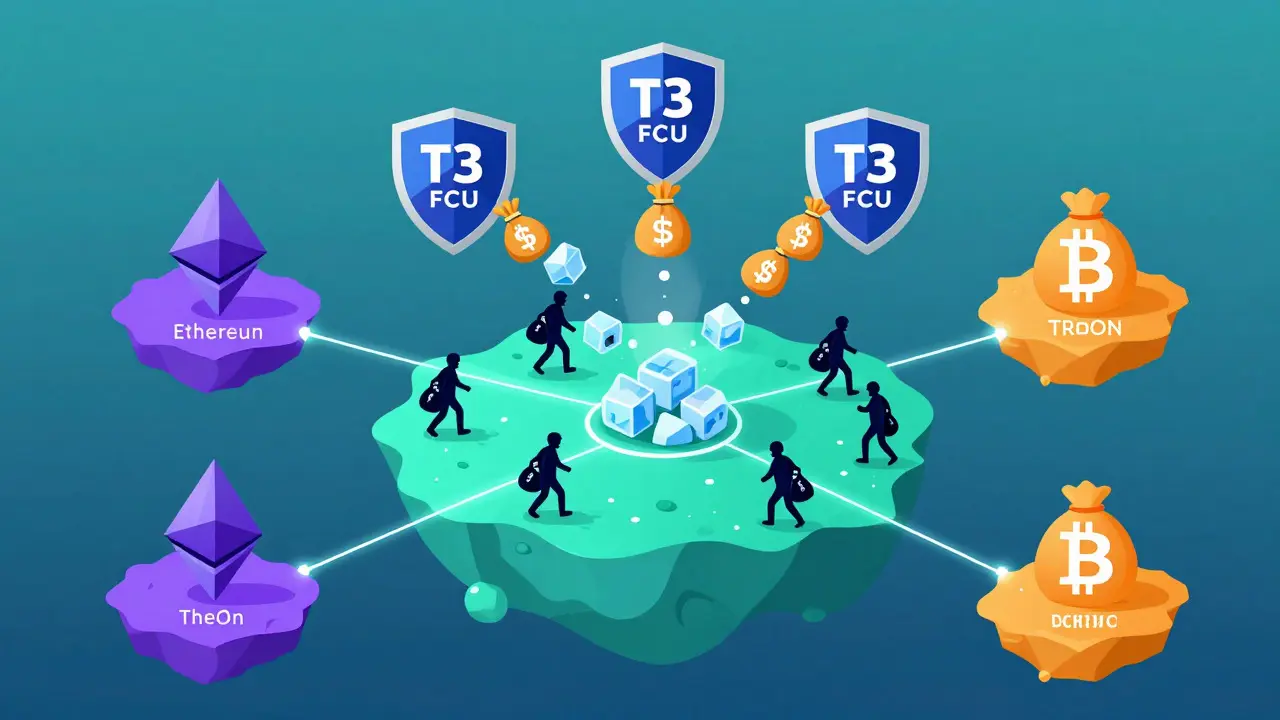
Criminals aren’t random. They choose blockchains based on fees, speed, and privacy features. In 2024, the TRON network dominated illicit volume, hosting 58% of all illegal crypto transactions. Ethereum followed with 24%, Bitcoin with 12%, and smaller shares for Binance Smart Chain and Polygon. Why TRON? Low fees and its popularity with USDT stablecoins make it attractive for moving value quickly without alerting traditional banking monitors immediately. However, this dominance is shrinking. The formation of the T3 Financial Crime Unit (T3 FCU)-a partnership between TRON, Tether, and TRM Labs-helped freeze over $130 million in illicit proceeds. This collaboration halved TRON’s proportion of total illicit activity, proving that targeted public-private partnerships work.
| Blockchain Network | Share of Illicit Volume | Key Driver |
|---|---|---|
| TRON | 58% | Low fees, USDT stability, high transaction speed |
| Ethereum | 24% | Smart contract complexity, DeFi integration |
| Bitcoin | 12% | Store of value, long-term holding, mixing services |
| Binance Smart Chain | 3% | EVM compatibility, low cost |
| Polygon | 3% | Layer 2 scaling, gaming/NFT focus |
Regulatory Implementation vs. Reality
On paper, most countries have rules. In practice, enforcement lags. The Financial Action Task Force (FATF) assessed 58 jurisdictions and found that while 91% had enacted or were implementing Anti-Money Laundering (AML) registration regimes, only 84% had implemented the Travel Rule. The Travel Rule requires exchanges to share sender and receiver information for cross-border transfers, which is crucial for tracking money flow. Yet, PwC’s Global Crypto Regulation Report 2025 reveals that nearly 30% of jurisdictions still fail to implement this rule effectively. It’s one thing to pass a law; it’s another to build the technical infrastructure to enforce it across borders. This gap creates arbitrage opportunities for criminals who hop between compliant and non-compliant jurisdictions.
Penalties: A Drop in the Ocean Compared to Traditional Finance
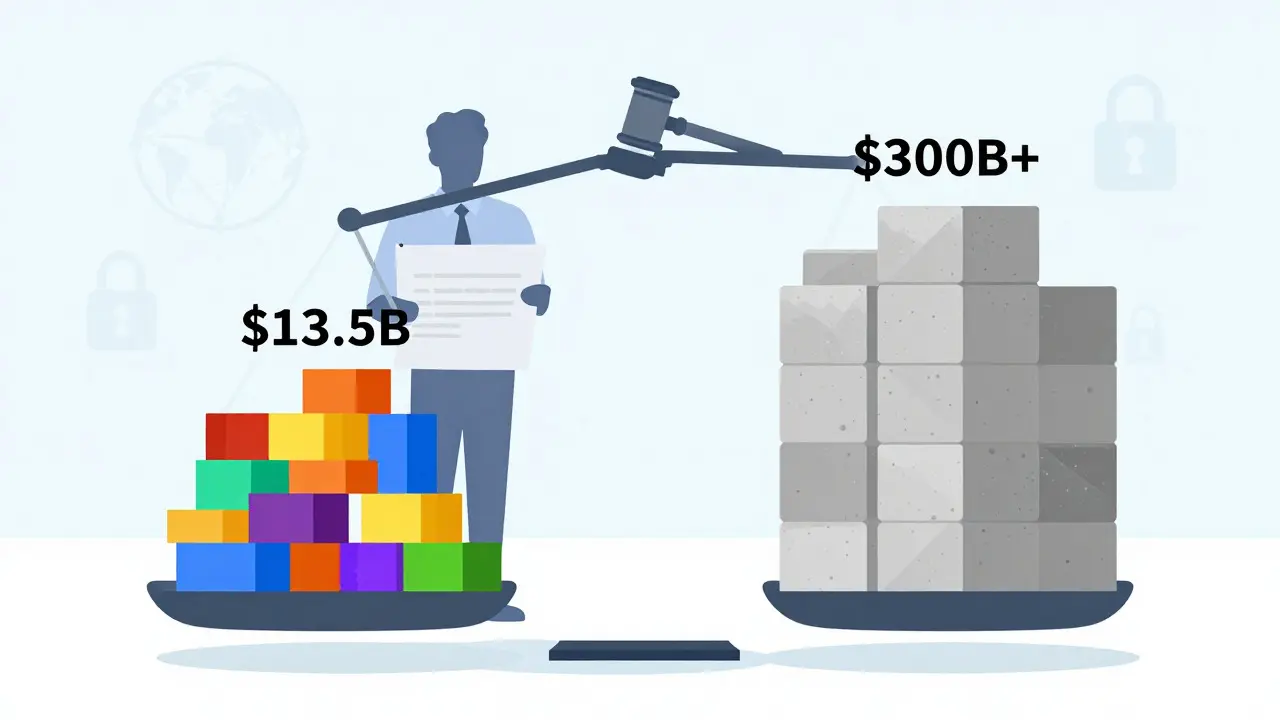
If you compare crypto fines to those in traditional finance, the difference is staggering. Between 2020 and early 2025, the crypto industry faced aggregate penalties totaling $13.5 billion. This includes sanctions, fines, and security incidents. Contrast this with traditional banks: institutions like Bank of America and JPMorgan Chase have collectively faced over $97 billion in penalties, with the broader financial sector exceeding $300 billion for issues like mortgage abuses and scandals. Why the disparity? Regulators are currently focused on establishing frameworks rather than punishing systemic fraud. About 72% of crypto enforcement actions are compliance-focused, aiming to bring exchanges into the fold rather than shutting them down for past sins. This suggests regulators prefer cooperation over punishment-at least for now.
Emerging Threats and Future Outlook
Looking ahead to late 2025, the threat landscape is evolving. Kroll Cyber Threat Intelligence noted that nearly $1.93 billion was stolen in crypto-related crimes in the first half of 2025 alone. While overall fraud trends may be decreasing in some categories, sophisticated attacks persist. Regulatory bodies are shifting focus toward DeFi protocols, stablecoins, and NFTs, with 68% planning specific guidance for these segments by Q3 2025. International cooperation is also becoming pivotal. Cross-border asset recovery mechanisms are improving, allowing authorities to chase funds through multiple jurisdictions more efficiently. With the global crypto user base projected to surpass 950 million by the end of 2025, the pressure on regulators to scale their technical capabilities will only intensify.
Frequently Asked Questions
Why do crypto crime statistics vary so much between reports?
Statistics vary because different organizations use different methodologies. For instance, TRM Labs might focus strictly on fraud-related transactions, while Chainalysis includes a broader range of illicit activities such as darknet market sales, ransomware payments, and scam proceeds. Additionally, historical data often gets revised upward as new addresses are identified and tagged as illicit over time.
Which blockchain has the highest rate of illicit activity?
In 2024, the TRON network hosted approximately 58% of global illicit crypto volume. This is largely due to its low transaction fees and widespread use of the USDT stablecoin, which makes it easy for criminals to move large amounts of value quickly. However, this percentage is declining due to increased enforcement efforts by the T3 Financial Crime Unit.
What is the Travel Rule and why is it important for crypto enforcement?
The Travel Rule is an international standard requiring financial institutions, including cryptocurrency exchanges, to collect and share customer information (such as names and account numbers) when transferring virtual assets above a certain threshold. It is critical for enforcement because it allows authorities to trace the flow of funds across borders, making it harder for criminals to launder money anonymously.
How do crypto fines compare to traditional banking fines?
Crypto fines are significantly lower than those in traditional finance. From 2020 to early 2025, the crypto industry faced about $13.5 billion in penalties, whereas traditional financial institutions have incurred over $300 billion in fines. This difference reflects the current regulatory focus on building compliance frameworks in crypto rather than imposing punitive measures for established systemic risks.
Are regulations effective in reducing crypto crime?
Yes, but effectiveness varies by jurisdiction and implementation quality. Initiatives like the T3 Financial Crime Unit have shown success, freezing millions in illicit proceeds and reducing platform-specific illicit activity by up to 50% within months. However, gaps in global implementation, particularly regarding the Travel Rule, allow criminals to exploit less regulated environments.