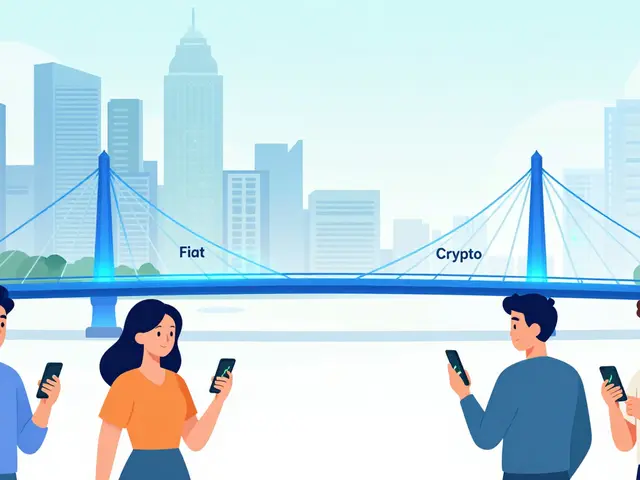
Imagine a world where your insurance claim pays out automatically the moment a flight is delayed, or where you own digital assets that work across five different gaming platforms without needing five separate accounts. This isn't science fiction; it’s the trajectory of Smart Contracts within Decentralized Applications (dApps). As we move deeper into 2026, these self-executing agreements are no longer just experimental code on Ethereum. They are becoming the backbone of a new digital economy, shifting from simple transactional tools to complex, AI-driven decision engines.
If you’ve been watching the crypto space, you know the hype cycle has cooled, but the infrastructure is heating up. The global smart contract market, valued at USD 3.69 billion in 2025, is projected to explode to nearly USD 816 billion by 2034. That’s a compound annual growth rate exceeding 50%. Why such aggressive numbers? Because businesses and individuals are realizing that trusting code is often cheaper and faster than trusting intermediaries. But what does this actually mean for developers, investors, and everyday users? Let’s break down how smart contracts are evolving, why interoperability is the current bottleneck, and where the real opportunities lie beyond the typical finance use cases.
The Evolution from Simple Code to AI-Driven Agents
Early smart contracts were rigid. If condition A happened, execute action B. Period. There was no nuance, no ability to interpret messy real-world data. Today, the integration of artificial intelligence has changed the game. We are seeing the rise of AI-driven Smart Contracts. These protocols don’t just execute logic; they analyze real-time data streams to make predictive decisions.
Consider a decentralized lending platform. In the past, liquidation triggers were fixed percentages. Now, an AI-integrated contract can assess borrower risk dynamically based on on-chain behavior, off-chain credit scores, and even social sentiment analysis. It optimizes workflows in real-time. This shift transforms dApps from static ledgers into active participants in the economy. For developers, this means writing code that interacts with machine learning models, not just other smart contracts. It’s a steeper learning curve, but the payoff is a product that feels intelligent rather than mechanical.
Solving the Fragmentation Problem with Interoperability
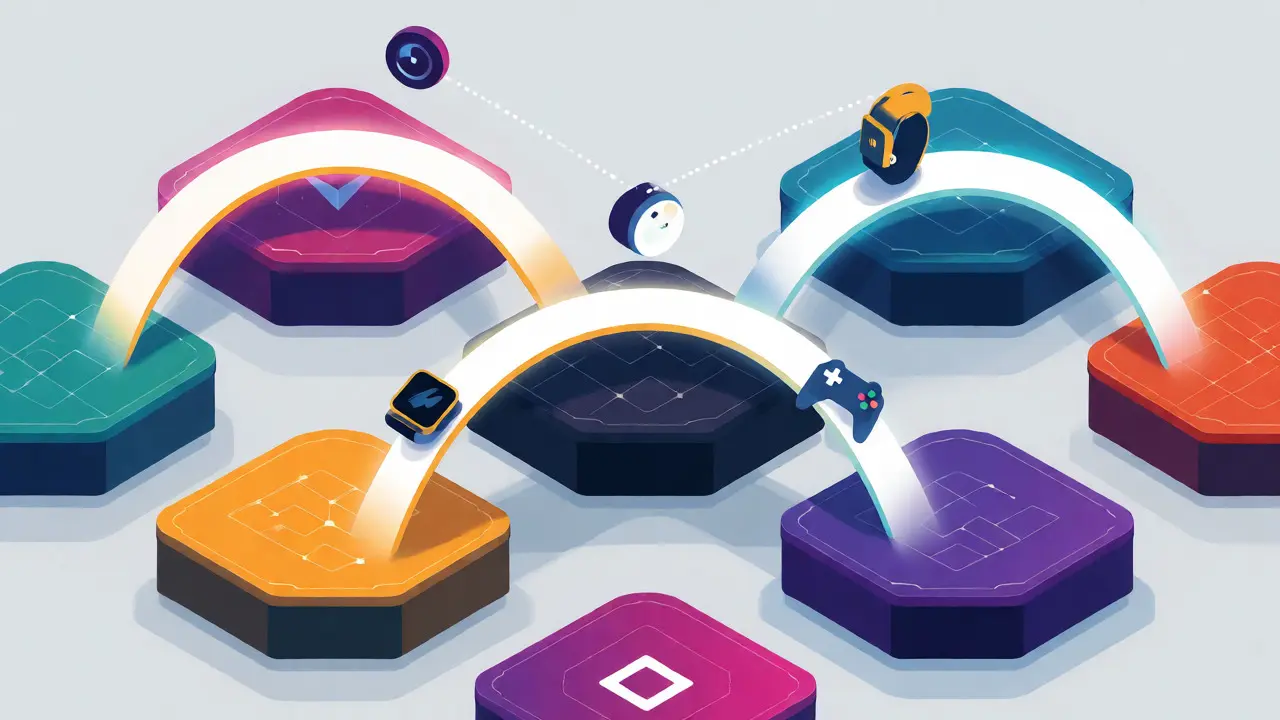
One of the biggest headaches in the blockchain space has always been silos. You have assets on Ethereum, data on Solana, and identity proofs on Polygon. Moving value between them used to be risky and slow. Enter cross-chain interoperability. Modern smart contracts are being built with native compatibility across multiple networks. This isn’t just about bridging tokens; it’s about state sharing.
Technologies like ZK-rollups and specialized virtual machines, such as AlkylVM, are enabling resource-constrained devices to talk directly to blockchain nodes. This is critical for the Internet of Things (IoT). Imagine millions of sensors logging temperature data on a private blockchain. With improved scalability and cross-chain compatibility, these devices can trigger smart contracts globally without clogging the main network. The fragmentation that limited adoption in 2020 is dissolving, replaced by a seamless user experience where the underlying chain complexity is invisible to the end-user.
The Rise of DAOs and Decentralized Governance
While DeFi grabbed the headlines, Decentralized Autonomous Organizations (DAOs) captured the leading smart contract market share in 2024. And the trend continues. Why? Because code-based governance removes the human bias and administrative bloat found in traditional corporate structures.
DAOs allow communities to manage funds and operations transparently. No CEO makes unilateral decisions; instead, token holders vote on proposals executed by smart contracts. This model drastically reduces administrative expenses. For companies, adopting a DAO structure means building organizational rules into the blockchain itself. It’s harder to embezzle when every transaction is immutable and verifiable. However, this also raises legal questions. Who is liable if a DAO’s code has a bug? Regulators are still catching up, but the efficiency gains are undeniable for tech-savvy communities.
Security, Privacy, and the Enterprise Shift
Public blockchains offer transparency, which is great for trust but terrible for privacy. Enterprises don’t want their competitors seeing every supply chain update. This has driven massive growth in the private blockchain segment. Private systems offer authorized membership, enhanced confidentiality, and faster performance. Here, smart contracts act as secure enforcers of business logic without exposing sensitive data to the public eye.
Security remains the Achilles' heel. Users report ongoing concerns about vulnerabilities. Unlike traditional software, you can’t easily patch a deployed smart contract without risking forks or losing user trust. This is why professional auditing services have become mandatory, not optional. Experts emphasize that smart contracts guarantee authentication and data integrity, but only if written correctly. One typo can drain a treasury. For IoT device managers handling billions of devices, this reliability is non-negotiable. The shift toward formal verification-using mathematical proofs to ensure code correctness-is becoming standard practice for high-stakes deployments.
Beyond Finance: Gaming, Identity, and Supply Chain
Don’t limit your view to money. The future of smart contracts in dApps is diversified. In gaming, players now truly own their items. A sword earned in one metaverse environment can potentially be verified and used in another thanks to standardized smart contract interfaces. This interoperability creates a persistent digital identity across platforms.
Digital identity is another frontier. Governments and enterprises are investing heavily in blockchain-based ID systems. The EU’s EBSI program supports eID verification across member states, while projects like Worldcoin and Polygon ID use zero-knowledge proofs to verify credentials without revealing personal data. Smart contracts handle the verification logic, ensuring that you can prove you’re over 18 without showing your birth certificate. In supply chains, smart contracts automate payments upon delivery confirmation, reducing disputes and speeding up cash flow for suppliers in developing nations.

Practical Implementation: What Developers Need to Know
If you’re looking to build or integrate, here’s the reality check. Initial implementation typically takes 3-6 months depending on complexity. You need to master languages like Solidity, but more importantly, you need to understand gas optimization. Executing a complex AI-driven contract costs more in fees. Poor coding leads to expensive failures.
- Learning Curve: Expect to spend time understanding cross-chain protocols and security auditing best practices.
- Documentation: Varies wildly. Some platforms offer comprehensive guides; others rely on community forums.
- Maintenance: The tech evolves rapidly. Ongoing updates are necessary to stay compatible with new interoperability standards.
Support ecosystems are maturing. Active developer communities and specialized consulting firms are available to help navigate deployment pitfalls. Don’t go it alone if you’re managing enterprise-scale contracts. The cost of a bug outweighs the cost of expert consultation.
Key Takeaways
- Market Growth: The smart contract market is forecasted to grow from $3.69B (2025) to $815.86B (2034).
- AI Integration: Smart contracts are evolving into AI-driven agents capable of predictive decision-making.
- Interoperability: Cross-chain compatibility is solving fragmentation, enabling seamless asset movement across networks.
- Governance: DAOs are leading market share due to reduced administrative costs and transparent operations.
- Diversification: Use cases are expanding beyond DeFi into gaming, digital identity, and supply chain logistics.
What is the primary advantage of using smart contracts over traditional automated systems?
The primary advantage is autonomy and security. Traditional systems rely on centralized control, making them vulnerable to single points of failure and data manipulation. Smart contracts run on decentralized networks, providing immutable, verifiable records that eliminate the need for trusted third-party intermediaries, thereby reducing costs and increasing trust.
How does AI enhance the functionality of modern smart contracts?
AI enables smart contracts to analyze real-time data and make predictive decisions rather than just executing static 'if-then' logic. This allows for dynamic risk assessment in finance, optimized workflows in healthcare, and adaptive responses in IoT environments, significantly enhancing utility and efficiency.
Why are DAOs gaining significant market share in the smart contract sector?
DAOs offer transparent, code-based governance that eliminates centralization bottlenecks. By automating administrative tasks and fund management through smart contracts, DAOs reduce operational expenses and increase accountability, making them attractive for both startups and established communities seeking efficient, democratic organization structures.
What are the main challenges facing widespread adoption of smart contracts?
Key challenges include security vulnerabilities (bugs in code), regulatory uncertainty, and the technical complexity of cross-chain interoperability. Additionally, the immutability of smart contracts makes error correction difficult, requiring rigorous pre-deployment auditing and formal verification processes.
How do private blockchains differ from public ones in smart contract execution?
Private blockchains restrict access to authorized members, offering higher privacy, faster transaction speeds, and better administrative control compared to public networks. They are preferred by enterprises for confidential financial operations and supply chain management where data sensitivity is paramount, whereas public chains prioritize transparency and decentralization.