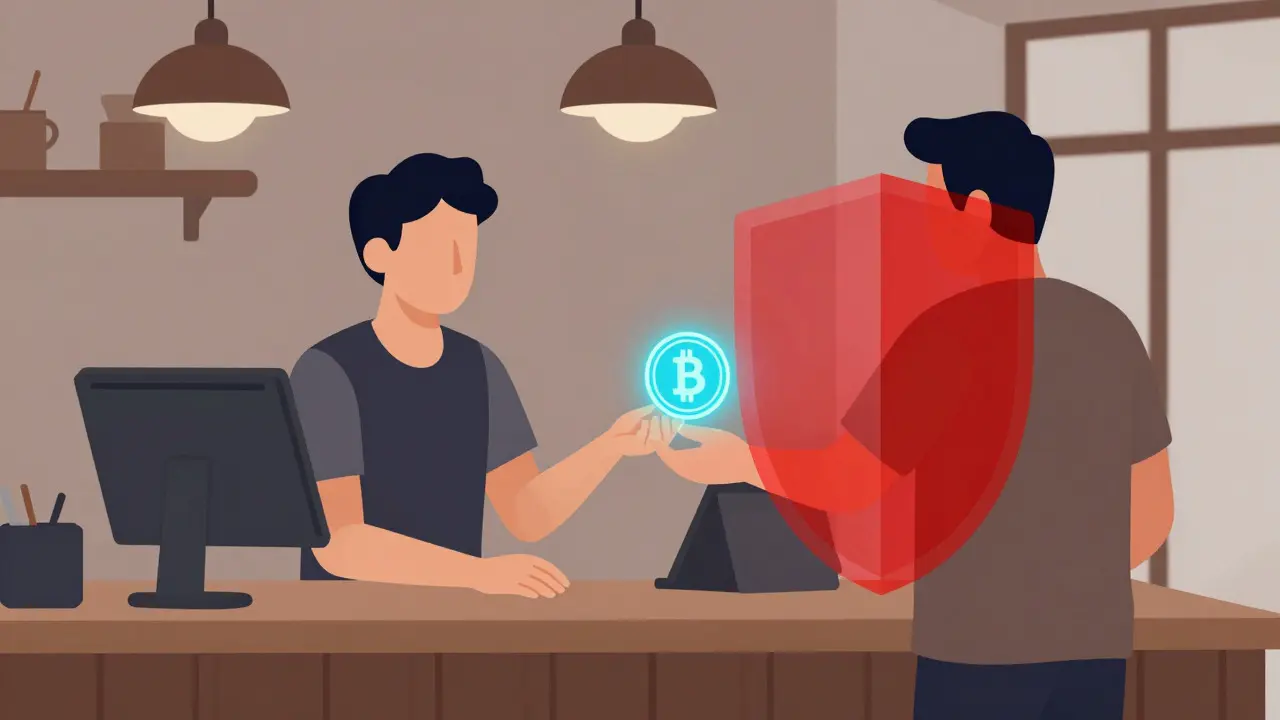
Imagine trying to buy a coffee with Bitcoin in Quito. In most countries, you might find a merchant willing to take it. In Ecuador, the bank will likely flag the transaction before the espresso even hits the cup. This isn't just a minor inconvenience; it is a structural wall built by the Ecuador Central Bank and regulatory bodies to protect the nation's unique status as a fully dollarized economy. If you are an investor, a remittance sender, or a local resident holding digital assets, understanding this Ecuador crypto ban is not optional-it is survival.
The situation is confusing because the law doesn't technically say "crypto is illegal." It says banks can't touch it. That distinction creates a gray zone where millions of dollars move through back channels, peer-to-peer deals, and offshore platforms. Here is what you need to know about how this works, who enforces it, and how people are navigating the system in 2026.
The Legal Framework: Why Banks Can't Touch Your Coins
To understand the restriction, you have to look at the root cause: dollarization. Since 2000, the US dollar has been Ecuador's only legal tender. Article 94 of the Monetary Code locks this in place. The government fears that if cryptocurrencies become too mainstream, they could undermine confidence in the dollar or facilitate capital flight out of the country.
This fear was formalized into hard rules between 2022 and 2025. The key documents are JPRM Resolution 001-22 (issued January 2022) and JPRM Resolution 002-23 (issued March 2023). These resolutions explicitly exclude cryptocurrencies from authorized payment methods for regulated financial institutions. So, while you aren't going to jail for holding Bitcoin, your bank is legally prohibited from processing a wire transfer to a known exchange like Binance or OKX.
The Superintendency of Banks (SB) is the muscle behind this policy. They maintain a public registry of unauthorized service providers. As of mid-2025, 47 entities were listed on this watchlist. If your bank sees a transaction matching one of these names, it gets flagged. In 2024 alone, 12 financial institutions received formal sanctions totaling $1.2 million for slipping up and facilitating crypto transactions. That’s a strong incentive for bankers to keep their fingers off the keyboard when they see a crypto-related keyword.
Who Enforces the Ban? A Look at the Key Players
It’s not just one agency making these calls. Four distinct governmental bodies share the responsibility, which makes compliance tricky for businesses.
- Central Bank of Ecuador (BCE): Sets monetary policy and issues consumer warnings. Between 2022 and 2025, they published 17 official notices warning citizens about crypto risks. Their stance is clear: they don't have the power to ban private trading, but they control the banks.
- Junta de Política y Regulación Monetaria y Financiera (JPRM): Determines legal tender status. Their resolutions are the primary legal barrier preventing banks from accepting crypto.
- Superintendency of Banks (SB): Enforces the banking prohibitions. They require all banks to use specific Transaction Monitoring Systems (TMS) to flag high-risk patterns.
- Internal Revenue Service (SRI): Handles taxation. Even though banking is restricted, you still owe taxes. Gains are taxed at progressive rates up to 35% for individuals and 25% for corporations.
This multi-layered approach means that even if you find a loophole in banking, the tax man is still watching. The SRI issued Circular 007-2024 in February 2024, clarifying exactly how these gains should be reported. Ignoring the tax side while dodging the banking side is a recipe for double trouble.
How People Actually Trade: The Workaround Economy
With direct banking routes blocked, how do the estimated 385,000 Ecuadorian crypto users move their money? They rely on creativity and risk tolerance. The IMF noted in its 2025 report that 63% of crypto transactions now occur through unregulated Telegram-based OTC (Over-The-Counter) desks. These are informal marketplaces where buyers and sellers meet directly.
Here are the most common workarounds documented by user communities and industry reports:
- Peer-to-Peer (P2P) Trading: This is the most popular method. Users sell crypto to local merchants or individuals in exchange for cash or bank transfers labeled as "personal loans" or "family support." On Reddit’s r/CryptoEcuador, 87% of recent comments mention account freezes lasting 3-14 days for first-time violations of bank rules, usually triggered by large P2P transfers.
- Stablecoin Settlements: Many users convert volatile assets like Bitcoin into USDT (Tether) first. Then, they try to move USDT via non-bank payment processors. While this doesn't violate the ban strictly (since it's not a bank), it carries chargeback risks. In Q2 2025, 147 users reported frozen funds totaling $382,000 due to mislabeled stablecoin transfers.
- Gift Cards and Prepaid Cards: About 22% of OTC volume involves exchanging crypto for gift cards, which can then be resold for cash. Another 17% uses dollar-denominated prepaid cards issued by non-bank entities.
- Cross-Border Services: Platforms like Wise are used by 31% of users because they don't explicitly prohibit crypto-derived funds, provided the source is declared correctly. However, fees average 4.8%, compared to just 1.2% in more permissive jurisdictions like Colombia.
The average Ecuadorian crypto user maintains 3.2 separate exchange accounts and spends nearly 9 hours a month managing these complexities. It’s a lot of effort for what should be a simple financial transaction.

Comparison: Ecuador vs. Neighboring Countries
To put the friction in perspective, let’s compare Ecuador’s environment with its neighbors. Brazil and Argentina have moved toward licensing frameworks, creating clearer paths for institutional investment. Ecuador remains isolated in its restrictive stance.
| Feature | Ecuador | Brazil | Argentina |
|---|---|---|---|
| Legal Tender Status | USD Only (Crypto Excluded) | BRL (Crypto Permitted) | ARS (Crypto Permitted) |
| Banking Access | Banned for Regulated Institutions | Allowed with Compliance | Allowed with Compliance |
| Market Size (Est.) | $185 Million | $1.2 Billion | $750 Million |
| Average User Fee (Workarounds) | 4.8% | 1.2% | 1.5% |
| Institutional VC Investment (2024) | $12.7 Million | $210 Million | $45 Million |
The data tells a story of missed opportunity. While Brazil attracts hundreds of millions in venture capital, Ecuador sees a fraction of that. The restrictive policy has deterred institutional players, leaving the market dominated by retail users and informal networks.
Taxation and Compliance: What You Still Have to Do
Even if you’re using workarounds, the tax obligation remains. The SRI requires you to report capital gains. For individuals, the rate is progressive, reaching up to 35%. For corporations, it’s a flat 25% on Ecuador-source income. Failure to report can lead to audits, especially if your bank flags unusual cash deposits resulting from P2P sales.
For businesses, the bar is higher. FinTech startups wanting to operate in the space must incorporate as sociedades anónimas with a minimum capital of $200,000, as per Executive Decree 142 (February 2025). They also face mandatory Anti-Money Laundering (AML) protocols, requiring customer verification against the National Registry of Persons (RENAP). This process averages 17 business days, adding significant friction to startup launches.

Future Outlook: Will the Ban Lift?
There are signs of movement, though slow. In May 2025, National Assembly member Shirley Rivera introduced Bill 6538. This bill proposes a formal licensing framework for exchanges, requiring a $500,000 minimum capital and real-time monitoring integration with the Financial Analysis Unit (UAF). Analysts predict at least 18 months for enactment, given its referral to three different committees.
Meanwhile, the Central Bank is exploring a Central Bank Digital Currency (CBDC). Prototype testing is scheduled for Q4 2025. Some experts argue a CBDC could complement private crypto, while others fear it will further tighten control. Dr. Carlos de la Torre, a BCE advisor, defended the current stance in 2025, arguing that a dollarized economy cannot risk alternative monetary instruments undermining confidence in the USD.
On the other hand, Dr. María Fernanda Espinosa criticized the policy as creating "unnecessary friction in financial inclusion," noting that 42% of Ecuadorian adults remain unbanked. For these people, crypto isn't a speculative gamble; it's a lifeline for cheaper remittances. The tension between monetary stability and financial inclusion is the core conflict driving this debate.
Frequently Asked Questions
Is cryptocurrency illegal in Ecuador?
No, owning or trading crypto privately is not illegal. However, regulated banks are banned from processing crypto transactions. Using banks to send money to exchanges can result in account freezes or fines.
Can I use my Ecuadorian bank card to buy crypto on Binance?
Directly, no. Most major banks flag transactions to known exchanges like Binance or OKX. If you attempt it, expect your account to be frozen for 3-14 days for review. P2P markets are the safer route for local users.
Do I have to pay taxes on crypto gains in Ecuador?
Yes. The Internal Revenue Service (SRI) taxes capital gains. Individuals face progressive rates up to 35%, while corporations pay 25% on Ecuador-source income. Keep detailed records of every transaction.
What is the best workaround for moving crypto to cash?
Peer-to-Peer (P2P) trading is the most common method. Selling to local merchants or individuals in exchange for cash or personal bank transfers avoids direct bank-flagged keywords. Be aware of counterparty risk and potential account freezes if the recipient reports the transfer.
Will the banking ban change soon?
Possibly, but slowly. Bill 6538, introduced in 2025, aims to create a licensing framework. Experts estimate at least 18 months for it to pass. Until then, the current restrictive regime is expected to continue, with possible adjustments based on the CBDC pilot results in late 2025.