Have you ever looked at a currency pair like EUR/USD and wondered why the numbers seem backward? You aren't alone. For many new traders, understanding how exchange rates are quoted is one of the biggest hurdles in entering the foreign exchange market. The confusion usually stems from two different ways of displaying prices: direct trading pairs and indirect trading pairs.
This distinction isn't just academic jargon; it affects how you calculate profits, manage risk, and even interpret market trends. In this guide, we will break down these concepts into plain English, showing you exactly how to read them, why they matter, and how to avoid costly mistakes that cost beginners millions every year.
What Are Direct and Indirect Quotes?
To understand direct versus indirect quotes, you first need to know what a "domestic currency" is. This is simply the currency you use every day-the money in your bank account. If you live in the United States, your domestic currency is the US Dollar (USD). If you are in Australia, it’s the Australian Dollar (AUD).
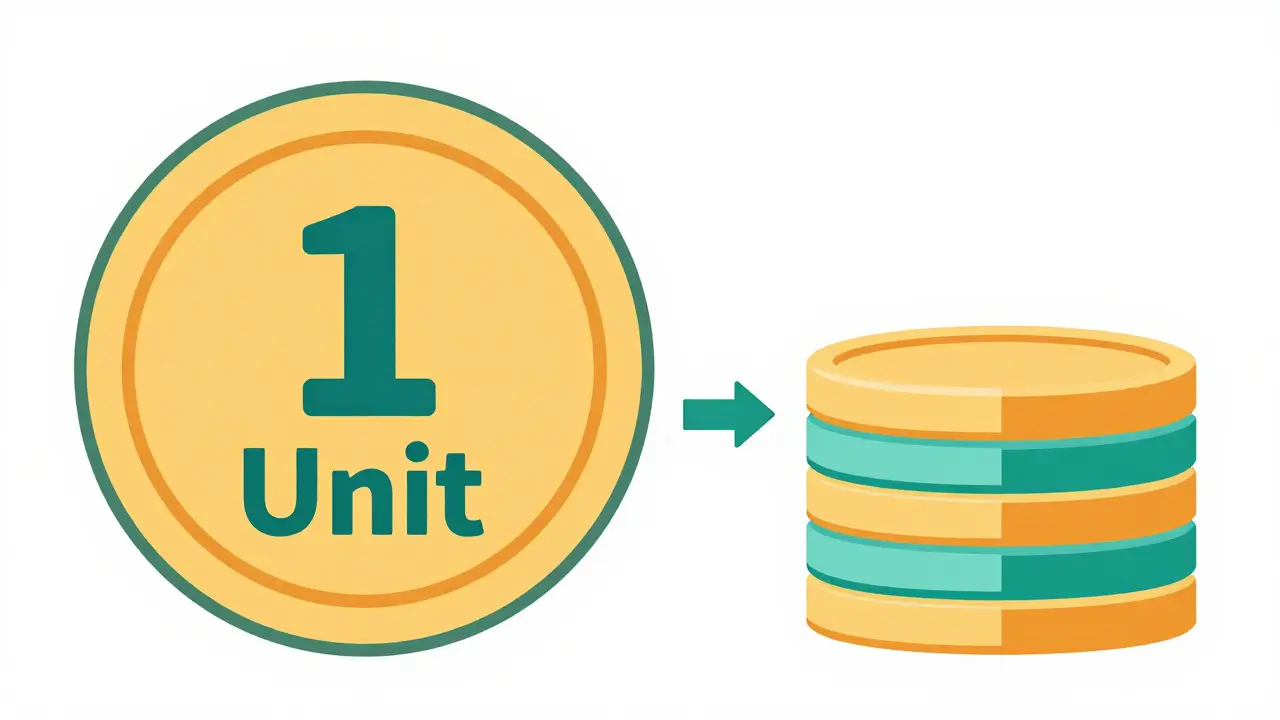
A Direct Quote tells you how much of your domestic currency you need to buy one unit of a foreign currency. Think of it like shopping. If you are in New York and want to buy Euros, a direct quote shows you the price tag on the Euro. For example, if EUR/USD is 1.0850, it means 1 Euro costs $1.0850. The foreign currency (Euro) is the base, and your domestic currency (Dollar) is the quote.
An Indirect Quote flips this logic. It tells you how much foreign currency you get for one unit of your domestic currency. Using the same example, an indirect quote for a US trader would show USD/EUR. If the rate is 0.9216, it means $1 gets you 0.9216 Euros. Here, your domestic currency is the base, and the foreign currency is the quote.
The key difference lies in perspective. Direct quotes answer "How much does it cost me?" while indirect quotes answer "What do I get for my money?" Most retail trading platforms default to direct quotes because they align with how we naturally think about purchasing goods.
How Currency Pairs Work: Base and Quote Currencies
Every currency pair consists of two parts: the Base Currency and the Quote Currency. The base currency always comes first, and its value is fixed at one unit. The quote currency follows, representing the amount needed to purchase that single unit of the base currency.
- Base Currency: The primary asset being traded (e.g., EUR in EUR/USD).
- Quote Currency: The secondary asset used to pay for the base (e.g., USD in EUR/USD).
In a direct quote for a US trader, the base currency is foreign, and the quote currency is domestic. In an indirect quote, the base is domestic, and the quote is foreign. Understanding this structure is crucial because all price movements, pips, and profit calculations are derived from this relationship.
| Feature | Direct Quote | Indirect Quote |
|---|---|---|
| Example Pair | EUR/USD | USD/EUR |
| Base Currency | Foreign (EUR) | Domestic (USD) |
| Quote Currency | Domestic (USD) | Foreign (EUR) |
| Meaning | Cost of 1 Foreign Unit | Value of 1 Domestic Unit |
| Pip Calculation | Constant ($10 per standard lot) | Variable (depends on rate) |
Why the Distinction Matters for Your Trades
You might wonder if this semantic difference actually impacts your wallet. The answer is a resounding yes. Misinterpreting quote types is one of the top five causes of beginner trading errors, accounting for roughly 22% of all erroneous position entries according to recent industry analysis.
Consider pip value calculation. In a direct quote like GBP/USD, a pip (the smallest price move) has a constant value regardless of where the exchange rate sits. If you trade a standard lot of 100,000 units, each pip is worth $10. This simplicity allows for quick mental math during fast-moving markets. However, in an indirect quote or a cross-currency pair like EUR/JPY, the pip value fluctuates as the exchange rate changes. This requires more complex calculations, increasing the cognitive load on traders.
Research from FXCM’s 2024 trader error study found that traders using direct quotes made 37% fewer calculation errors than those relying on indirect formats. For retail traders, especially those managing smaller accounts, this clarity can be the difference between a profitable month and a blown account.
Real-World Examples: Reading the Market
Let’s look at some practical scenarios to solidify your understanding. Imagine you are a trader based in London, so your domestic currency is the British Pound (GBP).
If you see the pair USD/GBP quoted at 0.7800, this is a direct quote for you. It means 1 US Dollar costs £0.78. If the rate moves to 0.7900, the Dollar has strengthened against the Pound, and it now costs you more pounds to buy the same dollar.
Conversely, if you look at GBP/USD at 1.2820, this is an indirect quote from your perspective. It means 1 Pound buys you $1.2820. If the rate drops to 1.2700, your Pound has weakened, buying fewer dollars.
For US traders, the most common pairs like EUR/USD and GBP/USD are technically indirect quotes because the USD is the quote currency, not the base. However, because the USD is the world's reserve currency, many platforms treat USD-based pairs as the standard reference point, blurring the lines for beginners. This is why explicitly defining your domestic currency perspective is vital before placing any trade.
Common Mistakes and How to Avoid Them
Even experienced traders can slip up when switching between different currency pairs or platforms. Here are the most frequent pitfalls and how to sidestep them.
- Reversing Position Direction: Confusing whether a rising price means the base currency is strengthening or weakening. Always remember: if the quote number goes up, the base currency is getting stronger.
- Miscalculating Profit/Loss: Assuming pip values are constant across all pairs. Cross-currency pairs often have variable pip values due to the indirect nature of the quote relative to your domestic currency.
- Ignoring Platform Defaults: Some brokers allow you to switch between direct and indirect displays. Check your platform settings to ensure the format matches your mental model.
A tragic example occurred in January 2024 when a European hedge fund lost $23 million because traders misinterpreted AUD/USD as a direct quote rather than an indirect one from their euro-centric perspective. They sized their positions incorrectly, leading to catastrophic losses. While most retail traders won’t face such massive sums, the principle remains: a small misunderstanding can lead to significant financial pain.

Tools and Tips for Clarity
Modern trading technology has made it easier to navigate these complexities. Many platforms now offer real-time quote conversion tools that automatically translate between direct and indirect formats. Brokers like Saxo Bank and Interactive Brokers provide features that display currency strength indicators, reducing interpretation errors by over 50%.
Here are some actionable tips to improve your accuracy:
- Use Color Coding: Many platforms use green to indicate a strengthening domestic currency and red for weakening. Leverage these visual cues.
- Stick to One Format: If possible, configure your platform to consistently show quotes in the format you find most intuitive. Consistency reduces cognitive load.
- Practice Deliberately: Spend the first few weeks of your trading journey focusing solely on reading quotes correctly without placing real money trades. Simulators are perfect for this.
As the market evolves, standards are shifting. The 2025 ISO 20022 update formalizes digital representation of quotation types, aiming to reduce cross-border settlement errors. Additionally, AI-assisted quote interpretation is becoming common in next-generation platforms, helping traders instantly understand the implications of any given rate.
Conclusion: Mastering the Basics
Understanding direct versus indirect trading pairs is foundational to successful forex trading. It may seem like a minor detail, but it underpins every calculation, strategy, and decision you make. By clearly identifying your domestic currency, recognizing the base and quote currencies, and leveraging modern tools, you can eliminate confusion and trade with confidence.
Remember, the goal isn't just to memorize definitions but to internalize the logic behind them. When you can instantly recognize whether a quote is direct or indirect and what that means for your capital, you remove a major source of risk from your trading process. Start slow, verify your quotes, and let clarity drive your success.
What is the main difference between direct and indirect quotes?
A direct quote shows how much of your domestic currency is needed to buy one unit of foreign currency. An indirect quote shows how much foreign currency you receive for one unit of your domestic currency. The difference lies in which currency is treated as the "base" (fixed at 1) and which is the "quote" (variable).
Is EUR/USD a direct or indirect quote for a US trader?
For a US trader, EUR/USD is an indirect quote. The base currency is Euro (foreign), and the quote currency is USD (domestic). It shows how many dollars are needed to buy one euro, which aligns with the definition of a direct quote in terms of cost, but technically, since the domestic currency is second, it is often categorized differently depending on the textbook. However, in practical retail trading, it is often treated as the standard benchmark. Strictly speaking, if USD is domestic, a direct quote would be USD/EUR. Most US platforms display EUR/USD, making it the de facto standard, but logically it represents the price of the foreign currency in domestic terms.
Why do most retail brokers use direct quotes?
Retail brokers prefer direct quotes because they are more intuitive for beginners. They mimic the shopping experience where you see the price of an item in your local currency. This reduces calculation errors and simplifies profit/loss tracking, as pip values remain constant in direct USD-based quotes.
How does the quote type affect pip value?
In direct quotes involving your domestic currency as the quote currency (like USD/JPY for a US trader), the pip value is constant. In indirect quotes or cross-pairs, the pip value fluctuates with the exchange rate, requiring dynamic calculation for accurate risk management.
Can I change the quote format on my trading platform?
Yes, many advanced platforms and professional brokers allow you to toggle between direct and indirect quote displays. This feature helps traders adapt to their preferred analytical style or specific institutional requirements.