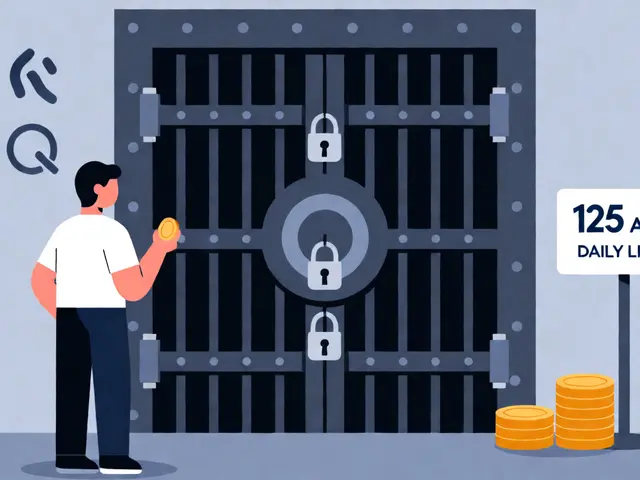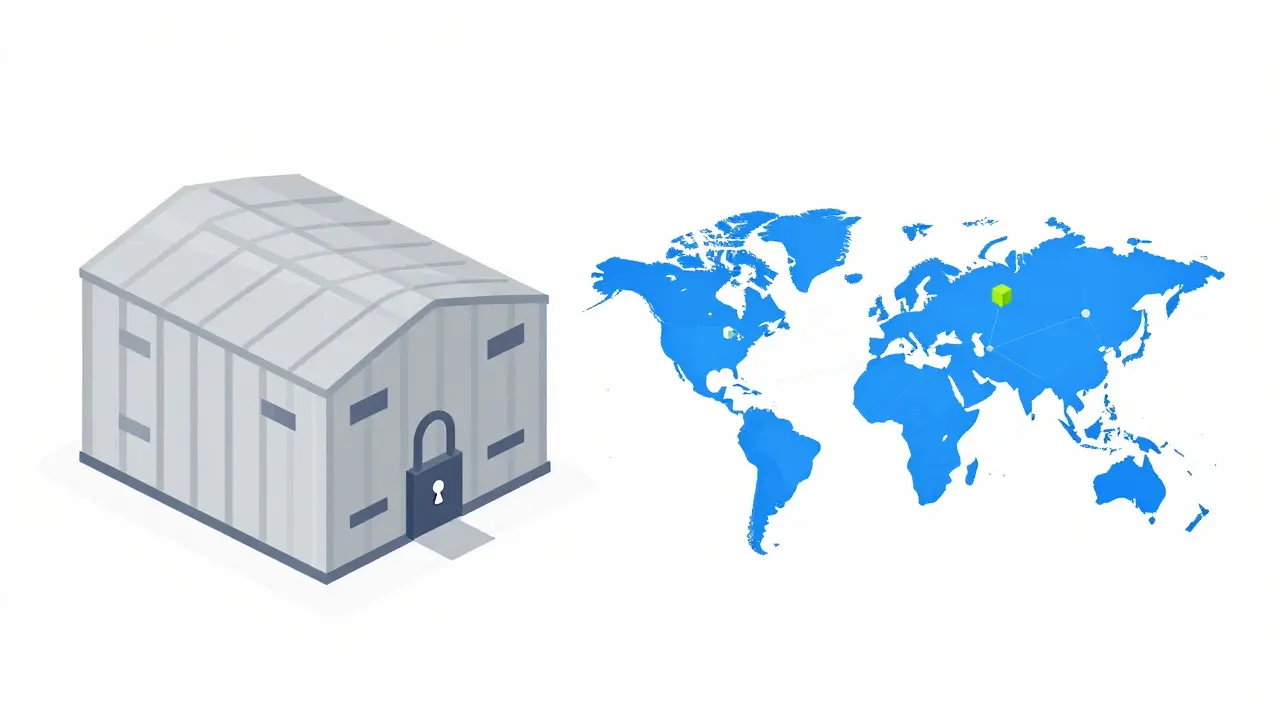
Most of us trust our photos, documents, and passwords to a handful of giant companies. But here is the scary part: those companies are single points of failure. If a single server farm goes dark or a database gets breached, millions of people lose their data instantly. This is why decentralized storage security has moved from a niche tech experiment to a critical necessity for anyone who cares about digital sovereignty.
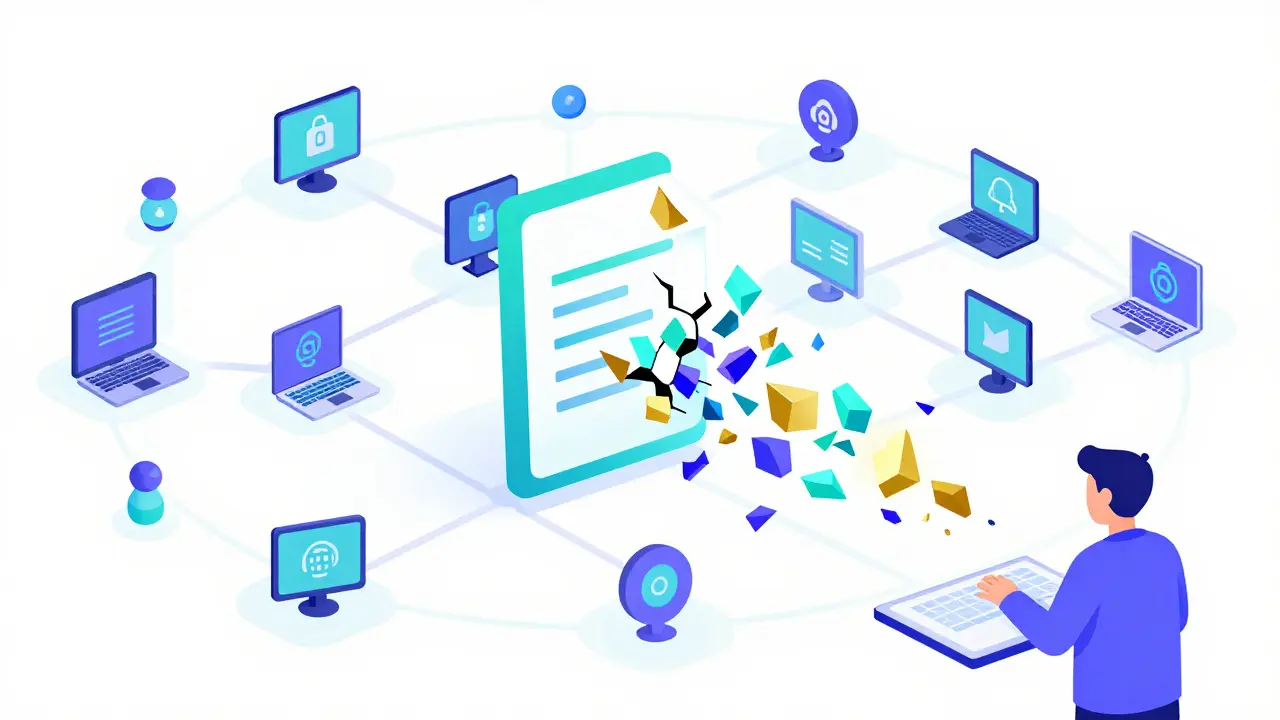
Imagine instead of putting your entire digital life in one giant warehouse owned by someone else, you broke your files into a thousand encrypted pieces and scattered them across thousands of different computers worldwide. No single person has the whole puzzle, and no single attack can take the whole system down. That is the core of how decentralized storage works. It doesn't just change where your data lives; it changes who controls it.
The Blueprint of Distributed Data Protection
To understand why this is safer, we have to look at the mechanics. In a traditional setup, you upload a file to a server. In a decentralized network, the system uses Cryptographic Fragmentation is the process of splitting data into small, encrypted shards and distributing them across a peer-to-peer network. This means that even if a hacker manages to break into a storage node, they only find a useless fragment of an encrypted file, not your actual data.
This architecture relies on several layers of defense:
- Client-Side Encryption: Your data is locked before it even leaves your device. The network never sees your raw files, only the encrypted shards.
- Redundancy and Erasure Coding: The system creates multiple copies of these shards. If a few nodes go offline, the network can still reconstruct your file from the remaining pieces.
- Consensus Mechanisms: Blockchain is a distributed ledger technology that verifies the integrity of data and ensures storage providers are actually keeping the files they promised. This removes the need to "trust" a corporate entity.
Decentralized vs. Centralized: A Security Face-Off
When we compare this to giants like Google Drive or AWS, the difference is stark. Centralized systems are efficient, but they are targets. A massive DDoS Attack is a malicious attempt to disrupt normal traffic of a targeted server by overwhelming the target or its surrounding infrastructure with a flood of Internet traffic can knock an entire company offline. In a decentralized network, there is no "center" to hit. Attackers would have to take down thousands of independent nodes simultaneously to cause a total outage, which is practically impossible.
| Feature | Centralized (Cloud) | Decentralized (Web3) |
|---|---|---|
| Point of Failure | Single (Central Server) | Distributed (Multiple Nodes) |
| Data Control | Managed by Provider | Managed by User (Keys) |
| Privacy | Provider can scan data | End-to-end encrypted |
| Resilience | Vulnerable to site outages | High (Self-healing network) |
| Access Risk | Corporate censorship/lockout | Censorship resistant |
The Power of User-Managed Access
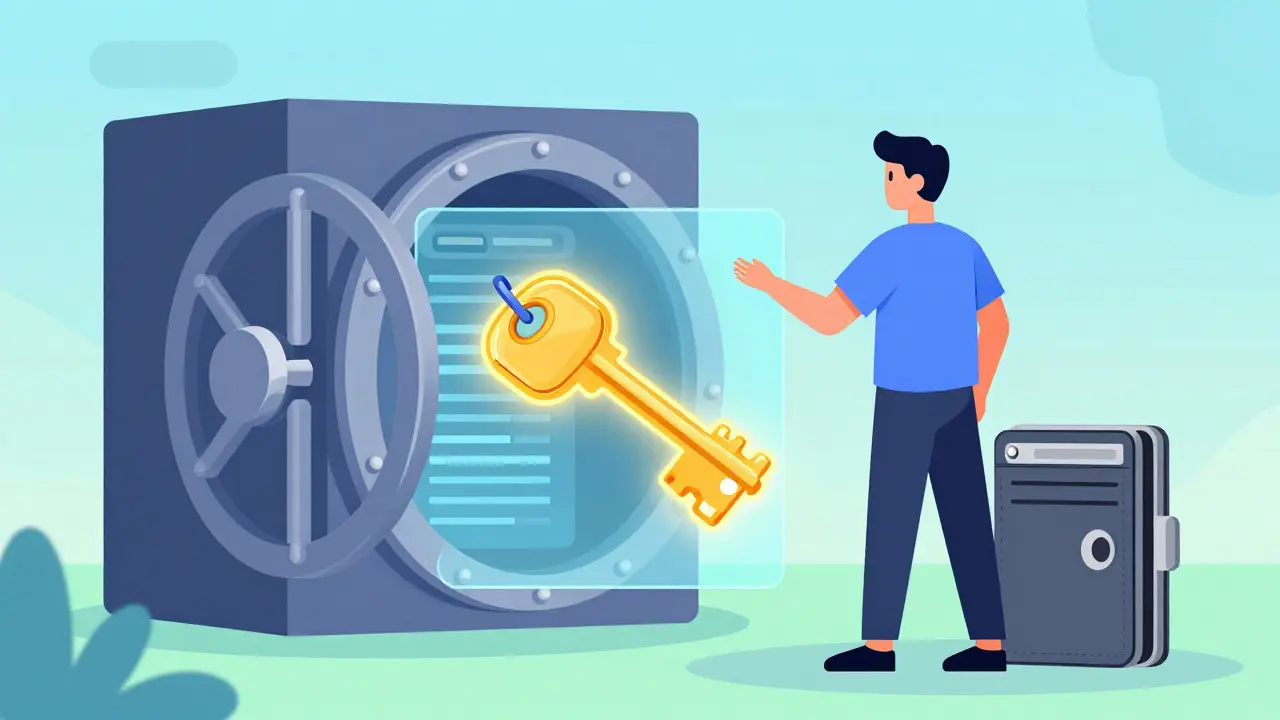
One of the biggest shifts here is the move from passwords to keys. In the old world, the provider manages your access. If they decide to ban your account or if their admin gets compromised, you lose your files. In a decentralized system, you hold the encryption keys. This gives you absolute sovereignty over your data.
However, this is a double-edged sword. When you are the only one with the key, there is no "Forgot Password" button. If you lose your keys, your data is gone forever. This shifts the security burden from the corporation to the individual. It requires a discipline in key management that most casual users aren't used to, but it's the only way to ensure that no one-not even the network operators-can peek at your files.
Leading Tech: IPFS and Filecoin
If you want to see this in action, look at the current industry leaders. IPFS (InterPlanetary File System) is a peer-to-peer hypermedia protocol designed to make the web faster, safer, and more open by using content-addressing instead of location-addressing. Instead of looking for a file at a specific URL (like a specific house address), IPFS looks for the content itself (like a fingerprint), meaning the file can be retrieved from any node that has it.
Then there is Filecoin, which adds an incentive layer to IPFS. It turns storage into a marketplace where people are paid in tokens to provide secure storage. This ensures that the network doesn't just exist on a few altruistic computers but is supported by a professionalized global infrastructure of storage providers who are financially incentivized to keep your data safe and available.
Practical Steps for Securing Your Data
Moving your data to a decentralized network isn't as simple as dragging and dropping a folder. To do it securely, you need a specific strategy. First, evaluate your needs. If you are storing public assets (like a website's images), IPFS is great. If you are storing sensitive corporate data, you need a layer of heavy client-side encryption.
Follow this security checklist for a smooth transition:
- Use a Hardware Wallet: Store your private keys on a device like a Ledger or Trezor rather than a software wallet to prevent remote hacking.
- Implement a Backup Seed Phrase: Write your recovery phrase on paper and store it in a fireproof safe. Never store it in a cloud-based note app.
- Audit Your Provider: If using a managed decentralized service, check if they are truly non-custodial or if they secretly hold a copy of your keys.
- Verify Integrity: Use the blockchain's cryptographic proofs to periodically verify that your data is still being hosted by the nodes.
The Future: Toward a Standard for Privacy
We are moving toward a world where decentralized storage isn't just for "crypto people." As privacy laws like GDPR become more stringent, companies are realizing that owning a giant database of user info is actually a liability. If they don't hold the data, they can't lose it in a breach. This is driving enterprise interest in Web3 storage.
The trajectory is clear: the "cloud" was just a fancy word for someone else's computer. The next phase of the internet is about returning that computer to the user. While the learning curve for key management is real, the trade-off is a level of security and privacy that was simply impossible in the centralized era.
Is decentralized storage actually safer than Google Drive?
From an architectural standpoint, yes. It eliminates the single point of failure. While Google can suffer a total outage or a company-wide breach, decentralized networks distribute data across thousands of nodes. However, it is "safer" only if you manage your encryption keys correctly; otherwise, you risk permanent data loss.
What happens if a node holding my data goes offline?
Because the system uses redundancy and erasure coding, your data is replicated across multiple different nodes. If one or even several nodes go offline, the network automatically retrieves the missing pieces from other nodes to reconstruct your file without any interruption.
Can someone steal my data if they find a fragment on their node?
No. Because of client-side encryption, the data is encrypted before it is split. A node operator only sees a random string of characters that is mathematically impossible to decrypt without your private key.
Do I need to be a programmer to use these systems?
Not anymore. While IPFS started as a tool for developers, there are now many user-friendly interfaces and "storage-as-a-service" layers that make decentralized storage feel like using a regular app, though you still need to handle your own keys.
How does blockchain help with storage security?
Blockchain acts as the auditor. It records the agreement between the user and the storage provider. Through cryptographic proofs, the blockchain can verify that the provider is still storing the data correctly without the user having to download the whole file to check.