Imagine spending months building a cryptocurrency exchange, only to have your operations shut down because you missed a single compliance deadline. For many businesses eyeing the Asian market, this is no longer a hypothetical nightmare-it’s a very real possibility under Singapore’s tightened regulatory framework.
If you are planning to launch or operate a crypto business in Singapore in 2026, the rules of the game have changed drastically. The era of operating with minimal oversight is over. With the Financial Services and Markets Act (FSMA) fully effective since June 30, 2025, the Monetary Authority of Singapore (MAS) has closed the loopholes that previously allowed firms to serve offshore clients without full local licensing.
This guide cuts through the legal jargon to explain exactly what you need to know about Singapore crypto exchange licensing, whether you fall under the older Payment Services Act or the new DTSP regime.
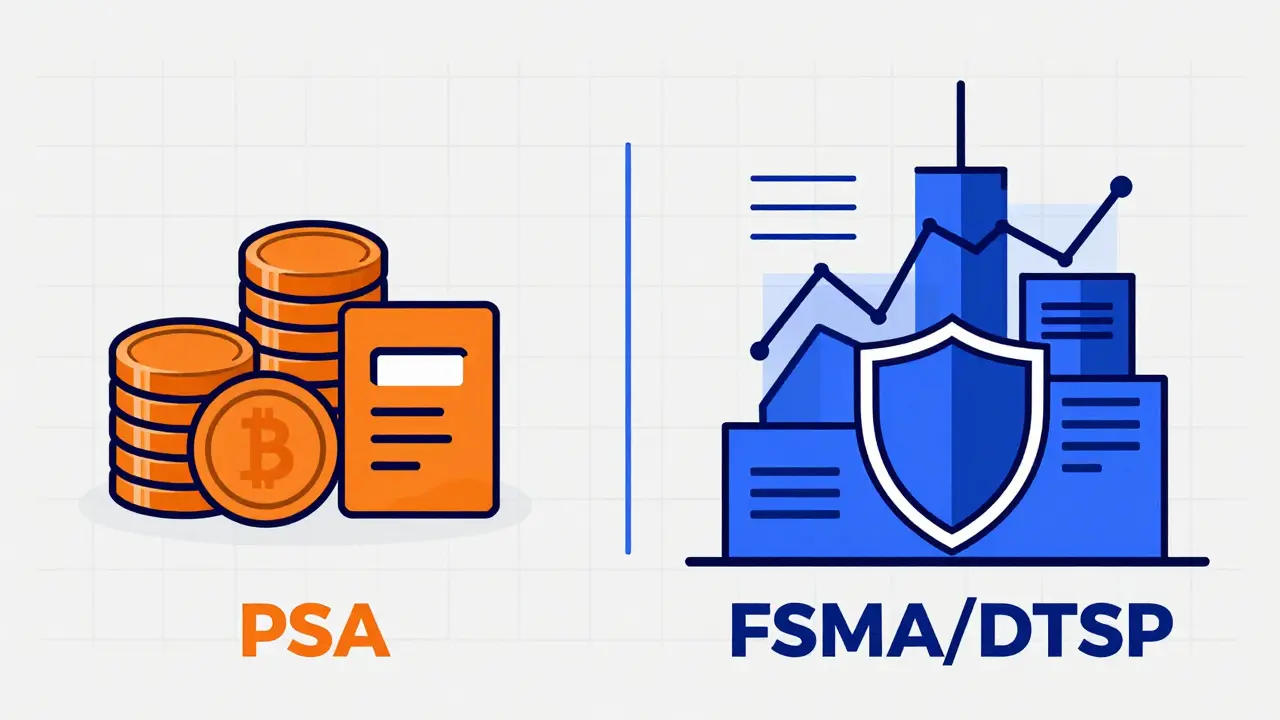
The Two Pillars: PSA vs. FSMA
To understand where you stand, you first need to identify which legislative framework applies to your business model. Currently, two main laws govern digital asset activities in Singapore. Knowing the difference between them determines your capital requirements, application timeline, and ongoing compliance burden.
The Payment Services Act 2019 (PSA) has been the baseline for crypto operators since 2020. It categorizes licenses based on transaction volume. However, the newer Financial Services and Markets Act 2022 (FSMA), which kicked in fully in mid-2025, introduces the Digital Token Service Provider (DTSP) license. This is the critical shift. The DTSP license covers entities that deal in digital payment tokens as investments, not just payments. If your platform allows users to trade tokens for profit rather than just spend them, you likely fall under FSMA.
| Feature | Payment Services Act (PSA) | FSMA / DTSP License |
|---|---|---|
| Primary Focus | Payment transactions, utility tokens | Investment tokens, trading services |
| Minimum Capital | SGD 100k - SGD 250k | Higher, risk-based assessment |
| Offshore Clients | Previously looser restrictions | Strictly regulated; no arbitrage |
| Implementation Date | January 2020 | June 30, 2025 |
Understanding the License Tiers
Under the PSA, your license type depends heavily on your monthly transaction volume. This tiered system ensures that smaller startups aren’t crushed by the same costs as global giants, but it also means you must monitor your growth closely. Upgrading from a Standard to a Major license isn’t automatic-it requires a fresh application and enhanced due diligence.
- Standard Payment Institution License: Suitable for smaller operators processing up to SGD 3 million per month. You need a minimum paid-up capital of SGD 100,000. This license covers basic operational standards, customer due diligence, and regular reporting.
- Major Payment Institution License: Required if your monthly transactions exceed SGD 3 million. The barrier to entry is higher, demanding SGD 250,000 in minimum capital. In return for this higher cost, you can operate at scale, but you face stricter scrutiny, including advanced risk management protocols and comprehensive auditing.
- Exempt Payment Service Provider: This category is for very specific, low-risk activities. It doesn’t require a full license but does require notification to MAS. Be careful here-the definition of "low-risk" is narrow, and misclassification can lead to severe penalties.
If you are dealing with investment-grade tokens, the DTSP license under FSMA replaces these tiers with a more holistic approach. MAS evaluates your entire business model, not just your transaction volume. There is no transitional period. As of mid-2025, you either meet the high compliance standards immediately or you cease operations.
The Non-Negotiables: AML and KYC Compliance
You cannot get a license in Singapore without a robust Anti-Money Laundering (AML) and Know Your Customer (KYC) framework. This isn’t just paperwork; it’s the core of your operational integrity. MAS Notice PSN02 sets the standard, requiring crypto platforms to operate with the same financial crime prevention rigor as traditional banks.
Your compliance program must include:
- Customer Verification Procedures: Real-time identity checks using reliable, independent source documents. Simple email verification is no longer sufficient.
- Ongoing Transaction Monitoring: Automated systems that flag unusual patterns. If a user suddenly moves millions of dollars worth of crypto after small deposits, your system must catch it.
- Suspicious Activity Reporting: Mandatory reporting of any suspicious transactions to the Suspicious Transaction Reporting Office (STRO). Failure to report can result in criminal liability for directors.
Chengyi Ong, head of Asia Pacific policy at Chainalysis, noted that MAS views financial integrity as a "red line." The goal is to insulate Singapore from reputational risks associated with illicit activity. If your platform is used for money laundering, even unknowingly, your license will be revoked.
The Application Process: What to Expect
Applying for a crypto license in Singapore is a marathon, not a sprint. Based on industry feedback and regulatory timelines, here is what the process looks like in practice.
First, you need to prepare extensive documentation. This includes a comprehensive business plan detailing your strategy, revenue projections, and marketing approach. You must submit Singapore-compliant KYC and AML policy documents. These aren’t templates you download online; they must be tailored to your specific business risks.
Next comes the risk assessment. You need to demonstrate how you identify potential threats and mitigate them. This includes cybersecurity measures, fund security protocols, and contingency plans for operational failures. MAS wants to see that you have thought through every possible point of failure.
Finally, you must prove you have the capital. This means providing audited financial statements or confirmed financial support letters showing you have the authorized capital required for your license tier. Annual internal and external audit reports are mandatory once you are live.
Timing varies significantly. A Standard Payment Institution License typically takes 3-6 months to process if you have professional legal support. A Major Payment Institution or DTSP license can take 6-12 months due to the enhanced due diligence. Many applicants report needing multiple submission rounds to satisfy MAS’s detailed expectations.
Why Singapore Tightened the Rules
The regulatory crackdown wasn’t random. It was a direct response to high-profile collapses that threatened Singapore’s reputation as a financial hub. The 2022 bankruptcies of Three Arrows Capital and Terraform Labs sent shockwaves through the industry. Both had ties to Singapore, and their failures highlighted the dangers of insufficient oversight.
MAS explicitly stated that it would not tolerate firms using Singapore as a base to evade regulation while servicing other markets. The previous loophole allowed companies to register in Singapore but serve only offshore clients, avoiding local consumer protection laws. The new FSMA framework closes this gap. If you are based in Singapore, you are subject to Singapore’s rules, regardless of where your customers are located.
This shift positions Singapore as a middle path. Unlike China’s outright ban, Singapore welcomes innovation but demands accountability. Compared to the United States’ fragmented state-by-state approach, Singapore offers a unified national standard. And unlike Switzerland’s extremely high capital requirements, which can reach several million francs, Singapore’s SGD 100,000-250,000 threshold makes it accessible to medium-sized operators who are serious about compliance.

Costs and Challenges for Operators
Let’s talk about the bottom line. Compliance is expensive. Smaller operators often struggle with the immediate implementation of the new rules. Without transitional periods, many were forced to restructure rapidly or exit the market entirely.
Larger exchanges generally welcome the clarity but cite high compliance costs. Enhanced monitoring systems, legal counsel, and compliance officers add significant overhead. Reddit discussions in crypto communities frequently highlight the difficulty of meeting documentation standards, with users reporting substantial legal and consulting expenses.
However, there is a silver lining. Regulatory certainty attracts institutional investors. While retail-focused platforms may find barriers to entry frustrating, institutional users appreciate the safety and legitimacy that come with strict MAS oversight. Well-capitalized, compliance-focused operators benefit from this trust, gaining a competitive advantage over less-regulated competitors.
Regional Context and Future Outlook
Singapore is positioning itself as the premier regulated crypto hub in Asia. While Hong Kong has introduced its own licensing framework, Singapore’s earlier implementation and comprehensive scope give it a first-mover advantage. Other regional jurisdictions are watching closely, potentially adopting similar standards.
Looking ahead, expect continued tightening. MAS has signaled that it will "set the bar high" and generally refuse licenses for operations serving only overseas clients if they pose reputational risks. The long-term viability of your business in Singapore depends on your ability to integrate compliance into your core operations, not treat it as an afterthought.
What is the minimum capital required for a crypto license in Singapore?
Under the Payment Services Act, the minimum capital is SGD 100,000 for a Standard Payment Institution License and SGD 250,000 for a Major Payment Institution License. For Digital Token Service Providers under FSMA, capital requirements are assessed based on risk but are generally higher to ensure robust operational stability.
Can I operate a crypto exchange in Singapore serving only offshore clients?
Not anymore. The FSMA regulations effective June 2025 closed the loophole that allowed firms to serve only offshore clients without full local licensing. MAS now regulates all DTSP operations based in Singapore, regardless of client location, to prevent regulatory arbitrage.
How long does it take to get a crypto license in Singapore?
The process typically takes 3-6 months for a Standard Payment Institution License and 6-12 months for a Major Payment Institution or DTSP license. Delays are common if documentation is incomplete or if MAS requests additional information during due diligence.
What is the difference between PSA and FSMA for crypto businesses?
The Payment Services Act (PSA) primarily covers payment transactions and utility tokens, with license tiers based on transaction volume. The Financial Services and Markets Act (FSMA) introduces the Digital Token Service Provider (DTSP) license, which focuses on investment tokens and trading services, applying stricter, risk-based oversight without volume-based tiers.
Is Singapore better than Hong Kong for crypto licensing?
Singapore has a first-mover advantage with a comprehensive framework implemented earlier than Hong Kong’s recent reforms. While both offer regulated environments, Singapore’s unified national standard under MAS provides clearer guidance compared to some regional alternatives, making it attractive for established, compliance-ready firms.