You’ve probably heard the term blockchain thrown around in meetings, news headlines, and crypto Twitter threads. But if you’re like most people, you might still be scratching your head wondering what it actually is. Is it just Bitcoin? Is it a database? Why does everyone say it’s going to change everything?
Here’s the truth: blockchain isn’t magic, but it is a clever way to solve a very old problem-trust. In the digital world, we usually rely on banks, governments, or big tech companies to keep our records straight. Blockchain removes the need for that middleman by letting strangers agree on data without needing to trust each other. It’s not just about money; it’s about creating a single, unchangeable version of the truth that everyone can see.
The Core Concept: A Shared Ledger
At its heart, blockchain is a distributed ledger system that records transactions across many computers so that the record cannot be altered retroactively. Think of it like a spreadsheet that thousands of people can update at the same time, but once a line is added, no one can delete it or change it without everyone else noticing.
This structure solves the "double-spend" problem. In the physical world, if I give you a $20 bill, I don’t have it anymore. In the digital world, copying a file is easy, so how do you stop someone from spending the same digital dollar twice? Blockchain uses cryptography to lock down ownership. When a transaction happens, it gets broadcast to the network, verified by peers, and then permanently recorded. No central authority needs to approve it because the math and the majority of the network do the work.
How Blocks Actually Link Together
The name comes from how the data is stored. Information is grouped into chunks called blocks. Each block contains three main things:
- Transaction Data: Who sent what to whom, when, and how much.
- A Timestamp: The exact moment the block was created.
- A Cryptographic Hash: This is the secret sauce. A hash is a unique string of characters generated from the block’s data. If you change even one comma in the data, the hash changes completely.
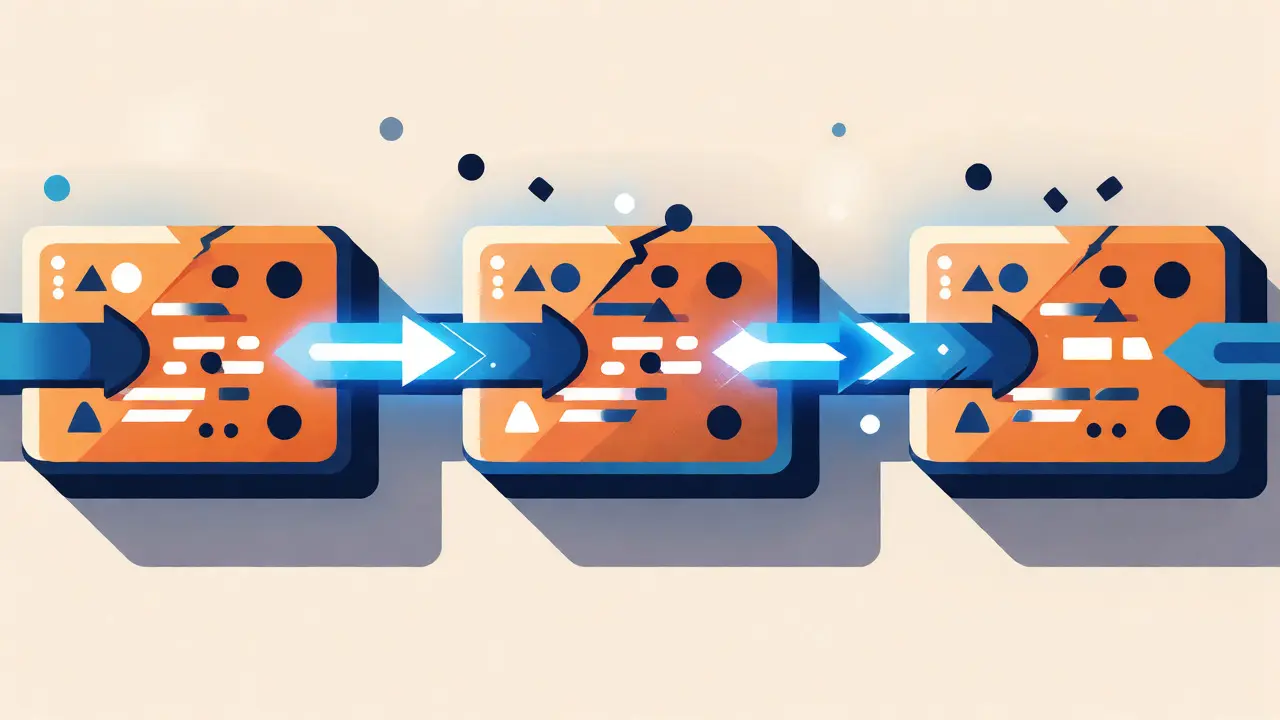
Crucially, every new block includes the hash of the previous block. This creates a chain. If a hacker tries to tamper with Block 100, the hash of Block 100 changes. Because Block 101 contains the old hash of Block 100, the link breaks. To fix it, the hacker would have to recalculate the hashes for Block 100, 101, 102, and every subsequent block faster than the rest of the network can add new ones. For large networks like Bitcoin, this is practically impossible.
Consensus: How Strangers Agree
If there’s no boss, who decides which transactions are valid? That’s where consensus mechanisms come in. These are rules that ensure everyone agrees on the state of the ledger. There are two main types you’ll hear about most often:
| Feature | Proof-of-Work (PoW) | Proof-of-Stake (PoS) |
|---|---|---|
| Primary Example | Bitcoin | Ethereum 2.0 |
| How it works | Miners use powerful computers to solve complex math puzzles. | Validators stake their own coins as collateral to verify transactions. |
| Energy Use | Very High (707 kWh per transaction) | Low (99% less energy than PoW) |
| Security Model | Attacking requires massive computing power. | Attacking requires losing staked financial assets. |
In Proof-of-Work, miners compete to solve a puzzle. The first one to find the solution gets to add the next block and earns a reward. It’s secure but slow and energy-intensive. Proof-of-Stake, used by Ethereum since its major upgrade, asks users to lock up (stake) their cryptocurrency. Validators are chosen randomly based on how much they stake. If they act dishonestly, they lose their money. It’s faster and greener, though critics argue it favors the wealthy.
Smart Contracts: Code That Executes Itself
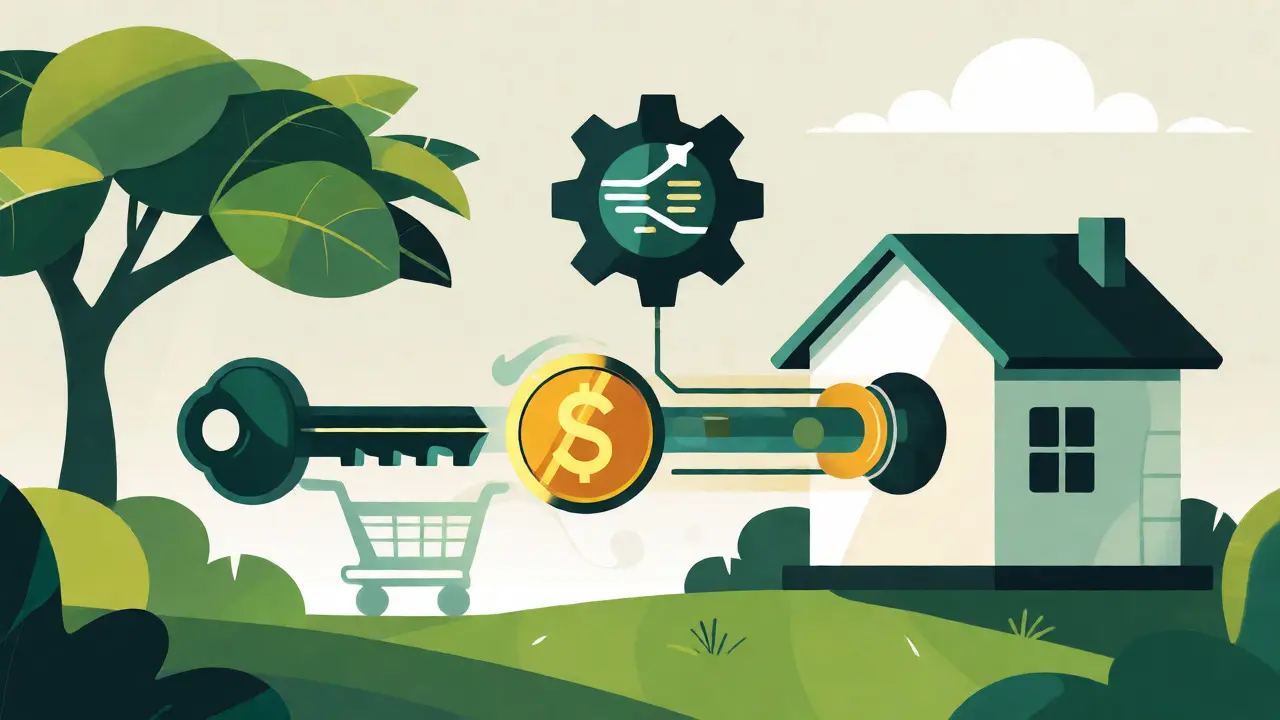
Bitcoin proved blockchain could handle payments. Ethereum took it further by introducing smart contracts, which are self-executing contracts with the terms of the agreement directly written into code. They run automatically when conditions are met, removing the need for lawyers or brokers to enforce them.
Imagine renting an apartment. Instead of signing a paper lease and hoping the landlord returns your deposit, a smart contract holds the deposit in escrow. Once the tenant moves out and the digital key is returned, the contract automatically sends the money back. No arguments, no delays. This capability has spawned entire industries, from Decentralized Finance (DeFi) lending platforms to NFT marketplaces.
Public vs. Private: Not All Blockchains Are Equal
When people talk about blockchain, they often mean public blockchains like Bitcoin or Ethereum. Anyone can join, read the ledger, and participate in consensus. This offers maximum transparency and censorship resistance.
However, businesses often prefer private or consortium blockchains. In these setups, access is restricted to known participants. For example, Walmart uses a private blockchain to track mangoes from farm to store. They don’t want competitors seeing their supplier data, but they do want all partners in their supply chain to share one immutable record. Platforms like Hyperledger Fabric allow for this permissioned control while keeping the core benefits of immutability and shared truth.
Real-World Impact and Limitations
So, where is this actually working? Supply chains are a huge win. Before blockchain, tracing the source of a food outbreak could take days. With Walmart’s implementation, it takes seconds. Financial settlements also benefit; cross-border payments that used to take days via SWIFT can now settle in minutes using stablecoins on blockchain rails.
But let’s be real-it’s not perfect. Scalability remains a headache. Bitcoin processes about 7 transactions per second (TPS), while Visa handles thousands. Solutions like Layer-2 networks (which bundle transactions off-chain before settling them on the main blockchain) are helping, but adoption is still catching up. Plus, user experience is rough. Managing private keys is scary; if you lose your password, your money is gone forever. There’s no "forgot password" button.
What’s Next for Blockchain?
We are moving past the hype phase. Gartner places blockchain on the "Slope of Enlightenment," meaning expectations are aligning with reality. By 2028, analysts predict mainstream enterprise adoption will hit 55%, driven by regulatory clarity like the EU’s MiCA framework. We’re also seeing interoperability protocols emerge, allowing different blockchains to talk to each other, breaking down silos.
Quantum computing poses a future threat to current encryption methods, but developers are already working on quantum-resistant algorithms. The technology isn’t replacing databases everywhere-it’s finding its niche where trust is scarce and multi-party coordination is expensive.
Is blockchain the same as cryptocurrency?
No. Cryptocurrency is a digital asset that uses blockchain technology to function. Blockchain is the underlying infrastructure-the ledger and the rules-that allows cryptocurrencies like Bitcoin to exist. You can have a blockchain without a cryptocurrency (like many enterprise solutions), but you generally can't have a decentralized cryptocurrency without a blockchain.
Why is blockchain considered secure?
Blockchain security relies on cryptography and decentralization. Data is hashed into blocks that are linked together. Changing one piece of data changes its hash and breaks the link to subsequent blocks. To hack the chain, an attacker would need to control more than 50% of the network's computing power simultaneously to rewrite the history, which is prohibitively expensive and difficult on large networks.
Can blockchain replace traditional databases?
Not entirely. Traditional databases are faster and cheaper for simple tasks where a single trusted entity manages the data. Blockchain shines when multiple parties who don't fully trust each other need to share and update data without a central administrator. It trades speed and efficiency for transparency and immutability.
What is a smart contract?
A smart contract is a program stored on a blockchain that runs when predetermined conditions are met. It automatically executes actions like releasing funds or registering vehicles. Because it lives on the blockchain, it is transparent, verifiable, and cannot be stopped or censored once deployed.
Is blockchain energy-efficient?
It depends on the consensus mechanism. Proof-of-Work blockchains like Bitcoin consume significant electricity. However, newer networks using Proof-of-Stake, such as Ethereum post-merge, reduce energy consumption by over 99%. Many modern enterprise blockchains are also designed to be highly energy-efficient.