Most crypto traders know the drill. You want to trade Bitcoin or Ethereum, but you’re stuck choosing between offshore platforms that might vanish overnight or U.S.-based options that feel like trying to drink water through a straw. If you are an institutional investor or a sophisticated trader looking for safety without sacrificing product variety, Bitnomial has quietly become the heavyweight champion of regulated digital asset derivatives.
Founded in 2014 and headquartered in Chicago, Bitnomial isn’t just another app on your phone. It is a fully CFTC-regulated exchange that offers something almost no one else does: physically delivered cryptocurrency futures and options. In this review, we break down why this platform is gaining traction among serious players, how its new features like digital margin collateral change the game, and whether it fits your trading style.
What Is Bitnomial? A Deep Dive into the Platform
Bitnomial is a Chicago-based financial services company specializing in digital asset derivatives trading, offering physically delivered futures, options, and perpetual contracts under strict U.S. regulatory oversight. Unlike many exchanges that started as tech startups and later sought regulation, Bitnomial was built from the ground up with compliance at its core.
The company achieved a major milestone in January 2024 when its clearinghouse launched as the first crypto-native exchange to hold the full set of CFTC derivatives licenses. This means Bitnomial acts as both the exchange and the clearinghouse. For those who don’t speak finance jargon, this vertical integration reduces counterparty risk significantly. You aren’t relying on a third party to settle your trades; the system is closed-loop and highly secure.
Who is this for? If you are a casual trader looking to buy $50 worth of Dogecoin, Bitnomial is likely not for you. The platform targets institutional clients, hedge funds, and sophisticated retail traders who understand derivatives, margin requirements, and the importance of regulatory protection. It is designed for people who prioritize capital preservation and legal certainty over flashy user interfaces.
Regulatory Status: Why It Matters in 2026
In the world of crypto, regulation is often seen as a buzzword. At Bitnomial, it is the entire business model. The exchange was designated as a Designated Contract Market (DCM) by the Commodity Futures Trading Commission (CFTC) in April 2020. Since then, it has expanded its license portfolio to include becoming a Futures Commission Merchant (FCM) and operating a registered Derivatives Clearing Organization (DCO).
Why should you care? Because if things go wrong, there is a regulator watching. Bitnomial’s assets are segregated, and its operations adhere to traditional commodity trading standards. This stands in stark contrast to offshore exchanges that have collapsed due to mismanagement or lack of oversight. For U.S. institutions, using Bitnomial ensures they are not violating securities laws while accessing deep liquidity in digital assets.
| Year | Milestone | Significance |
|---|---|---|
| 2020 | Designated Contract Market (DCM) | Allowed operation of margined/deliverable digital asset futures |
| 2022 | Futures Commission Merchant (FCM) | Enabled acceptance of customer funds and orders |
| 2024 | Derivatives Clearing Organization (DCO) | First crypto-native exchange with full CFTC licensing stack |
| 2025 | Digital Asset Margin Approval | First CFTC-regulated exchange to accept crypto as collateral |
Product Suite: Beyond Bitcoin Futures
One of the biggest complaints about regulated U.S. exchanges used to be limited product offerings. Bitnomial has aggressively expanded its catalog to compete with global giants. Their products are grouped into two main complexes: the Crypto Complex® and the Stablecoin Complex™.
The Crypto Complex® includes:
- Bitcoin (BTC) Futures: Margined, physically settled contracts launched in 2021.
- XRP Futures: The first-ever U.S. XRP futures, self-certified with the CFTC in August 2024 despite SEC scrutiny.
- Cardano (ADA) Futures: The first U.S. ADA futures, expanding altcoin access for regulated traders.
- Solana (SOL) Futures: The world's first physically delivered Solana futures, allowing direct ownership of the underlying asset upon expiration.
- Ethereum (ETH) Futures: Standardized contracts optimized for institutional hedging.
The Stablecoin Complex™ introduces:
- USDC Futures: The world's first USDC futures with physical delivery. This is crucial for treasury management, allowing companies to hedge stablecoin exposure without selling their holdings.
All these contracts feature physical delivery. What does that mean? When your contract expires, you actually receive the cryptocurrency in your wallet (or deliver it if you are short). This eliminates basis risk associated with cash-settled contracts and provides true economic parity with spot markets.
Key Innovation: Digital Margin Collateral
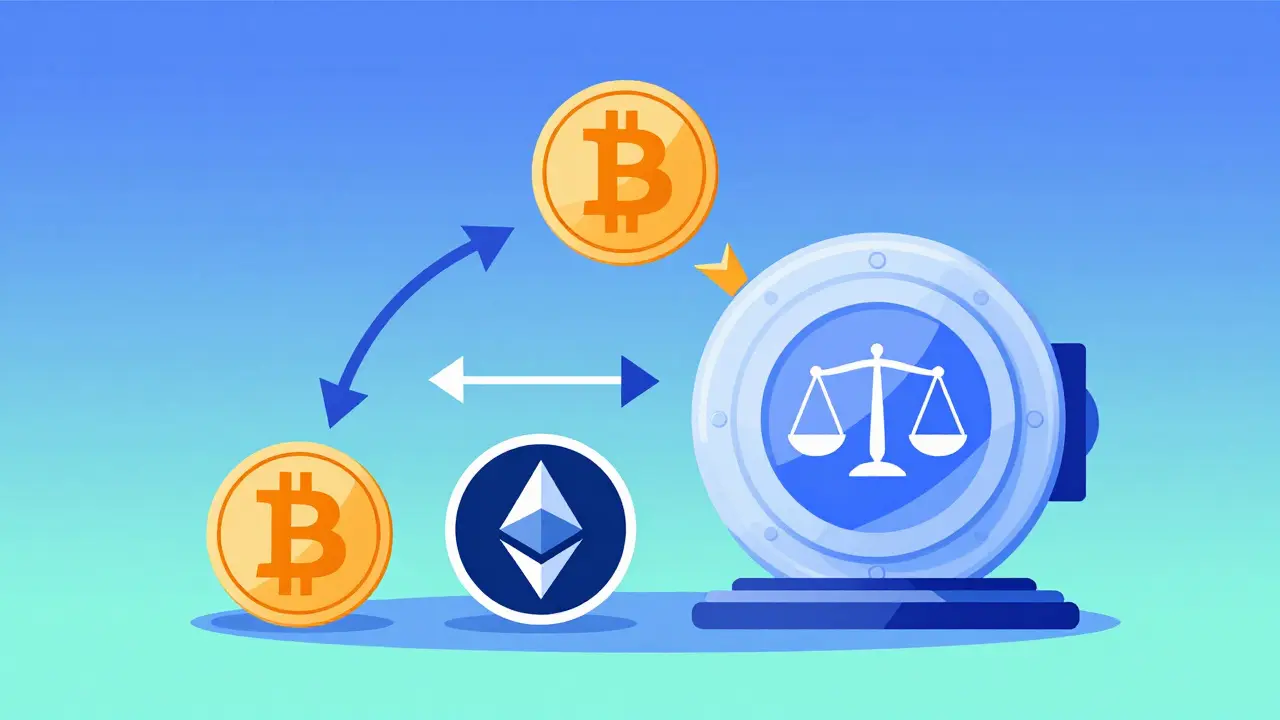
In September 2025, Bitnomial made history by becoming the first CFTC-regulated exchange to accept digital assets as margin collateral. Previously, traders had to convert their Bitcoin or Ethereum into fiat currency to post margin, which triggered tax events and added friction.
Now, you can use BTC and ETH directly as collateral. The exchange applies haircuts similar to traditional commodity practices to manage liquidation risk. This change dramatically improves capital efficiency. Institutional clients can keep their crypto holdings intact while leveraging them for new positions. According to Michael Dunn, President and Chief Commercial Officer, this allows clients to "post less bitcoin on the platform, avoid auto-liquidation, and achieve significantly improved capital efficiency."
This feature bridges the gap between offshore flexibility and onshore security. It acknowledges that crypto-rich investors do not want to exit their positions just to trade derivatives.
Perpetual Futures and the Botanical Platform
Perpetual swaps are popular because they allow traders to maintain long-term positions without rolling over expiring contracts. However, they are rare in regulated U.S. markets due to complexity. Bitnomial solved this with a unique design:
- 8-Hour Funding Intervals: Aligns with global trading sessions rather than arbitrary short intervals.
- 25-Year Term: Minimizes roll activity and allows for continuous exposure.
- Economic Parity: Includes floating basis and interest rate adjustments to mirror offshore pricing.
To make these products more accessible, Bitnomial launched Botanical, a new U.S. perpetual futures trading platform announced in October 2024 following a $25 million funding round led by Ripple. Botanical is designed to provide a compliant alternative to decentralized exchanges (DEXes) and VPN-based workarounds. With Ripple CEO Brad Garlinghouse joining the board, the platform signals a strong push into XRP-related derivatives and broader retail adoption within regulatory bounds.
Fees, Liquidity, and User Experience
Let’s talk about costs. Bitnomial operates on a professional-grade infrastructure model. Fees are competitive for institutional volumes but may seem high for small retail traders compared to unregulated offshore venues. However, you are paying for segregation of funds, CFTC compliance, and physical delivery guarantees.
Liquidity is deepening rapidly. The introduction of standardized contract sizes attracts market makers and large institutions, which tightens spreads. While it may not yet match the sheer volume of Binance or Bybit, the quality of liquidity is higher because it comes from verified, regulated entities.
The user experience is functional rather than flashy. Expect a desktop-first interface with advanced charting tools, order types, and risk management dashboards. It is built for traders who spend hours analyzing charts, not for those scrolling through social media feeds.
Risks and Considerations
No platform is perfect. Here are some potential drawbacks to consider:
- Complexity: Derivatives trading involves significant risk. Physical delivery requires understanding settlement cycles and wallet logistics.
- Regulatory Tension: The SEC has challenged Bitnomial’s XRP futures, leading to litigation. While Bitnomial argues this is overreach, regulatory uncertainty remains a factor.
- Minimum Requirements: Account verification and minimum deposit requirements cater to professionals, potentially excluding beginners.
Conclusion: Is Bitnomial Right for You?
If you are a U.S.-based institution or a sophisticated trader seeking safe, regulated access to crypto derivatives, Bitnomial is currently unmatched. Its combination of CFTC licensing, physical delivery, and innovative features like digital margin collateral sets a new standard. For casual users, other platforms may offer simpler experiences, but they come with higher counterparty risks.
As the regulatory landscape evolves, Bitnomial’s first-mover advantage in clearinghouse operations and product diversity positions it as a key player in the future of compliant digital asset trading.
Is Bitnomial available to all U.S. residents?
Bitnomial is available to eligible U.S. persons, including institutions and accredited investors. Retail participation may require meeting specific suitability criteria due to the complex nature of derivatives trading.
Can I withdraw my profits as cryptocurrency?
Yes. Because Bitnomial offers physically delivered contracts, you can take delivery of the underlying cryptocurrency (e.g., BTC, ETH, SOL) upon contract expiration and withdraw it to your external wallet.
How does digital margin collateral work?
You can deposit Bitcoin or Ethereum as collateral for your trades instead of converting to fiat. The exchange applies a haircut to account for volatility, ensuring sufficient buffer against liquidation while improving your capital efficiency.
What is the difference between Bitnomial and Binance?
Binance is an offshore exchange with less regulatory oversight in the U.S. Bitnomial is fully CFTC-regulated, offers physical delivery, and segregates client assets. Bitnomial prioritizes compliance and security, while Binance focuses on global volume and variety.
Is the SEC lawsuit affecting Bitnomial's operations?
The SEC contested Bitnomial's XRP futures jurisdiction, but Bitnomial continues to operate and has filed suit in response. The exchange maintains that its products comply with CFTC guidelines, and operations remain uninterrupted.