The Arch Network airdrop isn't just another crypto giveaway - it's one of the most ambitious attempts to bring real smart contract functionality to Bitcoin without using bridges. If you're holding Bitcoin and wondering how to get involved in the next big thing, this guide breaks down exactly what you need to do, what you’ll earn, and how to avoid missing out.
What Is Arch Network?
Arch Network isn't another Ethereum clone or a Layer 2 that relies on complex bridges. It’s a Bitcoin-native protocol built to let developers create DeFi apps - like lending, DEXs, and DAOs - directly on Bitcoin’s blockchain. Unlike other projects that wrap Bitcoin or move it off-chain, Arch uses a custom virtual machine and zero-knowledge proofs to enable programmability while keeping Bitcoin’s security intact.
This matters because Bitcoin has over $1 trillion in locked value, but almost no way to use it for loans, trading, or automated contracts. Arch changes that. It lets you interact with Bitcoin like you would with Ethereum - but without trusting third-party bridges. The network launched in June 2025 and already has over 250,000 active wallet connections.
The Archstronaut Program: How the Airdrop Works
Arch Network calls its airdrop the Archstronaut Program. It’s not a one-time event. It’s a multi-phase rewards system where you earn XP (experience points) by doing real tasks on testnet and off-chain platforms. The more XP you collect, the bigger your share of the future ARCH token distribution.
There are four phases:
- Phase I - Off-chain missions: Complete tasks on Twitter/X and Discord. These are simple, like following accounts, sharing posts, or joining discussions.
- Phase II - Testnet participation: This is where the real rewards come from. You’ll need to interact with the Arch testnet by making swaps, providing liquidity, and completing daily transactions.
- Phase III - Mainnet activities: Once the mainnet launches, you’ll earn more XP by staking, validating, or using live protocols.
- Phase IV - Beyond mainnet: Ongoing rewards for long-term contributors, like governance participation or developer contributions.
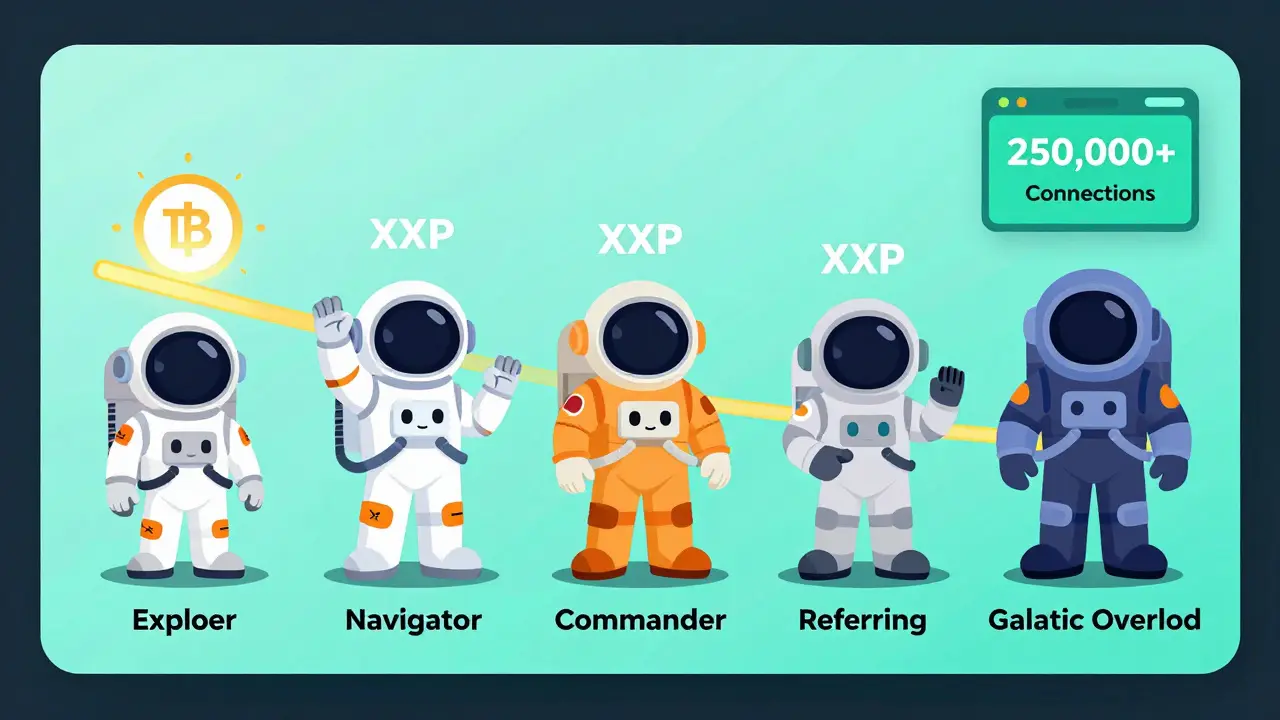
Your progress is tracked through a ranking system:
- Cadet
- Explorer
- Navigator
- Commander
- Galactic Overlord
Higher ranks unlock XP multipliers. For example, reaching Galactic Overlord might give you 3x the base reward. It’s not just about doing tasks - it’s about consistency.
How to Join and Start Earning XP
You don’t need to buy anything to join. But you do need a Bitcoin wallet - specifically, a Unisat wallet. This is because Arch Network is built for Bitcoin UTXOs, and Unisat is the most compatible wallet for testnet interactions.
Here’s how to get started:
- Download and set up your Unisat wallet on your browser or mobile device.
- Go to the Arch Network dashboard and connect your Unisat wallet.
- Head to the Uniset testnet platform - this is where you’ll interact with Arch’s testnet.
- Claim Bitcoin testnet tokens (TBTC) from the faucet. You’ll need these to pay for transactions.
- Swap your TBTC for USDC on the testnet DEX. Then, use USDC to provide liquidity on trading pairs like BTC/USDC or TBTC/USDC.
Once you’ve done this, daily missions unlock:
- Complete 3 swaps on the testnet (each counts as 50 XP)
- Add liquidity to one pool (100 XP)
- Delegate your testnet stake (75 XP)
- Refer a friend (500 XP + 10% of their XP)
Weekly missions include contests - like the biggest liquidity provider or most swaps in a week. These can net you 5,000+ XP in a single task.
What’s the Catch? Risks and Realities
Let’s be clear: there’s no guarantee you’ll get a single ARCH token. The team hasn’t officially confirmed the total supply, allocation, or distribution date. But the structure of the Archstronaut Program makes it clear they’re building toward a fair launch.
Here are the real risks:
- No security audit: Arch Network hasn’t had its code audited by a third party. That means there could be unknown bugs or vulnerabilities. Don’t stake real Bitcoin. Stick to testnet.
- Small funding round: Reports say Arch raised between $7M and $25M. That’s modest compared to other Layer 2s like zkSync or Starknet, which raised hundreds of millions. This suggests the airdrop might be smaller - maybe 1-3% of total supply - not 10% or more.
- Testnet is temporary: If you stop doing daily missions, your XP stops growing. Your rank won’t reset, but you’ll fall behind others who stay active.
Still, the upside is huge. If Arch succeeds, it could become the backbone of Bitcoin DeFi. Early participants could see life-changing returns.
How Arch Compares to Other Bitcoin Projects
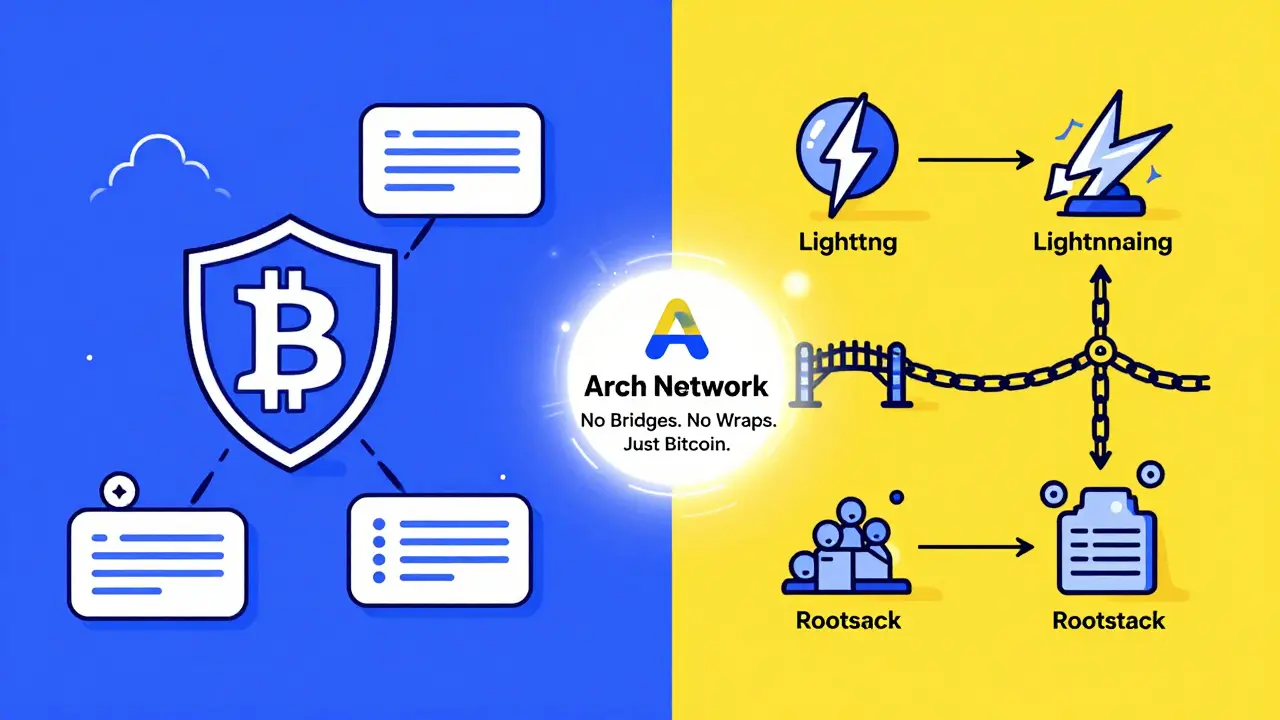
Arch isn’t alone. Other projects like Lightning Network, Rootstock, and Stacks also aim to bring smart contracts to Bitcoin. But here’s how Arch stands out:
| Project | Bridge Used? | Privacy Features | Developer Tools | Current User Base |
|---|---|---|---|---|
| Arch Network | No - native on Bitcoin | Yes - zero-knowledge proofs | Custom VM, full DeFi stack | 250,000+ |
| Lightning Network | No - Layer 1 | No | Payment-only | 10,000+ channels |
| Stacks | Yes - via PoX | Minimal | Clarity smart contracts | 80,000+ |
| Rootstock | Yes - 2-way peg | No | EVM-compatible | 50,000+ |
Arch’s biggest advantage? Zero-knowledge privacy and no bridges. That means your transactions are private, and your Bitcoin never leaves its native chain. That’s a big deal for users who care about security and sovereignty.
What Happens After the Airdrop?
Once ARCH tokens are launched, they’ll power the network’s Proof-of-Stake consensus. Validators will stake ARCH to secure the network and earn rewards. There’s also talk of a DAO where token holders vote on upgrades, treasury spending, and new features.
The team has said they’re building for long-term adoption - not a quick pump. That means the real value will come from real usage: people lending Bitcoin, trading assets, and building apps on top of Arch.
If you’re still holding Bitcoin and not doing anything with it, this is your chance to get involved in the next evolution of Bitcoin DeFi.
Pro Tips to Maximize Your Airdrop
- Do daily missions - even 5 minutes a day adds up. Missing one day doesn’t reset you, but it lets others pass you.
- Refer friends - it’s the easiest way to boost your XP. Share your link on Reddit, Twitter, or crypto Discord servers.
- Join the official Arch Discord. They often announce bonus missions or early access to new features.
- Don’t use real Bitcoin on testnet. Only use TBTC from the faucet. Losing real funds is a real risk.
- Track your XP weekly. The dashboard updates every 24 hours. If it’s not moving, you might have a connection issue.
Is the Arch Network airdrop confirmed?
The Arch Network team hasn’t issued an official announcement saying "there will be an airdrop." But the Archstronaut Program, with its XP system, rankings, and testnet missions, is clearly designed to prepare users for a future token distribution. Based on their structure and community activity, an airdrop is highly likely - and participation now is your best chance to qualify.
Do I need to buy ARCH tokens to join the airdrop?
No. You don’t need to buy anything. All you need is a Unisat wallet and time to complete missions on testnet and social platforms. The airdrop is designed to reward early contributors, not early buyers.
What wallet should I use for the Arch Network airdrop?
You must use a Unisat wallet. It’s the only wallet that fully supports Bitcoin UTXO interactions with Arch’s testnet. Other wallets like Ledger or Trust Wallet won’t work for testnet missions. Make sure you’re using the browser extension or mobile app version that supports Bitcoin testnet.
How much ARCH can I expect to receive?
There’s no official number yet. But based on similar projects and Arch’s modest funding, the total airdrop pool is likely between 1% and 3% of the total supply. If the network reaches $1 billion in market cap, that could mean $10M-$30M in token value distributed. Your share depends on your XP rank - top users could get 10-100x more than casual participants.
Is Arch Network safe to use?
On testnet? Yes - it’s safe to use TBTC and complete missions. On mainnet? Not yet. The network hasn’t been audited, and there’s no official launch date. Don’t send real Bitcoin or tokens to any Arch-related address. Stick to the testnet dashboard and official links. Always double-check URLs - scam sites copy the real dashboard.
What if I miss the testnet phase?
You’ll still have a chance when mainnet launches. Phase III will include on-chain activities like staking, liquidity provision, and governance participation. But the bulk of rewards go to those who built the network from the start. Missing testnet means missing the biggest multiplier opportunities. Don’t wait - start now.
If you’re serious about Bitcoin’s future, this isn’t just another airdrop. It’s a chance to help build the first truly native DeFi layer on Bitcoin. The clock is ticking - and the network grows every day.