
The landscape of digital assets in the United States changed permanently on July 18, 2025. That was the day President Donald J. Trump signed the Guiding and Establishing National Innovation for U.S. Stablecoins Act of 2025, commonly known as the GENIUS Act. This legislation marks the first time the federal government has established a comprehensive regulatory framework specifically for stablecoins. For anyone holding, issuing, or trading these digital assets, the rules have shifted from a gray area to a strict set of guidelines.
As we navigate through mid-2026, the dust is settling, but the clock is ticking. The full force of the GENIUS Act will take effect on January 18, 2027, or 120 days after implementing regulations are issued, whichever comes first. This means you have a clear window to understand what is changing, why it matters, and how it affects your wallet. The core promise of this act is simple: bring stability, security, and clarity to the chaotic world of crypto payments while protecting the dominance of the US dollar.
What Exactly Is the GENIUS Act?
To understand the restrictions, you first need to know what the law covers. The GENIUS Act focuses specifically on payment stablecoins. These are not just any cryptocurrency; they are digital assets designed primarily as a means of payment or settlement. Crucially, the issuer must be obligated to redeem them for a fixed amount of monetary value, keeping their price stable relative to that currency-usually the US dollar.
This definition excludes volatile cryptocurrencies like Bitcoin or Ethereum, which do not promise a fixed redemption value. It also targets tokens used for everyday transactions rather than speculative investment. By narrowing the scope to "payment stablecoins," the legislators aimed to protect consumers who use these assets for buying goods and services, ensuring that when you spend a stablecoin, it actually holds the value you expect.
Who Can Issue Stablecoins Under the New Law?
One of the most significant changes introduced by the GENIUS Act is the restriction on who can create these digital currencies. In the past, any tech company with sufficient capital could launch a stablecoin. Now, the door is closed to most private entities. The law limits issuance to insured depository institutions. This includes traditional banks, credit unions, and bank subsidiaries.
There is a narrow exception for nonbank financial institutions, but only if they receive explicit approval from the Federal Reserve and demonstrate robust compliance capabilities. This effectively brings stablecoin issuance under the same rigorous oversight as traditional banking. If you are a fintech startup looking to launch a new stablecoin, you now face the same hurdles as a major national bank. This shift aims to eliminate the risk of rogue issuers disappearing with user funds, a fear that haunted the industry during previous market crashes.
Strict Reserve Requirements and Audits
Trust in stablecoins relies entirely on one question: "Is there real money behind the token?" The GENIUS Act answers this with a hard requirement. All permitted issuers must maintain 1:1 reserves for every stablecoin in circulation. You cannot issue $1 billion worth of tokens unless you hold $1 billion in approved assets.
But what counts as an approved asset? The law is specific. Reserves must be held in physical currency, US Treasury bills, repurchase agreements, and other low-risk assets approved by regulators. High-yield corporate bonds or risky commercial paper are off the table. Furthermore, these reserves must be segregated. Issuers cannot commingle stablecoin backing funds with their own operational cash or other client assets. This separation ensures that if the issuing bank goes bankrupt, your stablecoin reserves remain untouched and available for redemption.
Transparency is enforced through mandatory reporting. Issuers must regularly disclose the composition of their reserves. More importantly, these reserves are subject to regular audits by registered public accounting firms. No more vague attestation letters from consultants; you get full, independent audits similar to those required for public companies. This level of scrutiny addresses long-standing concerns about whether stablecoins were truly backed by cash or just promises.
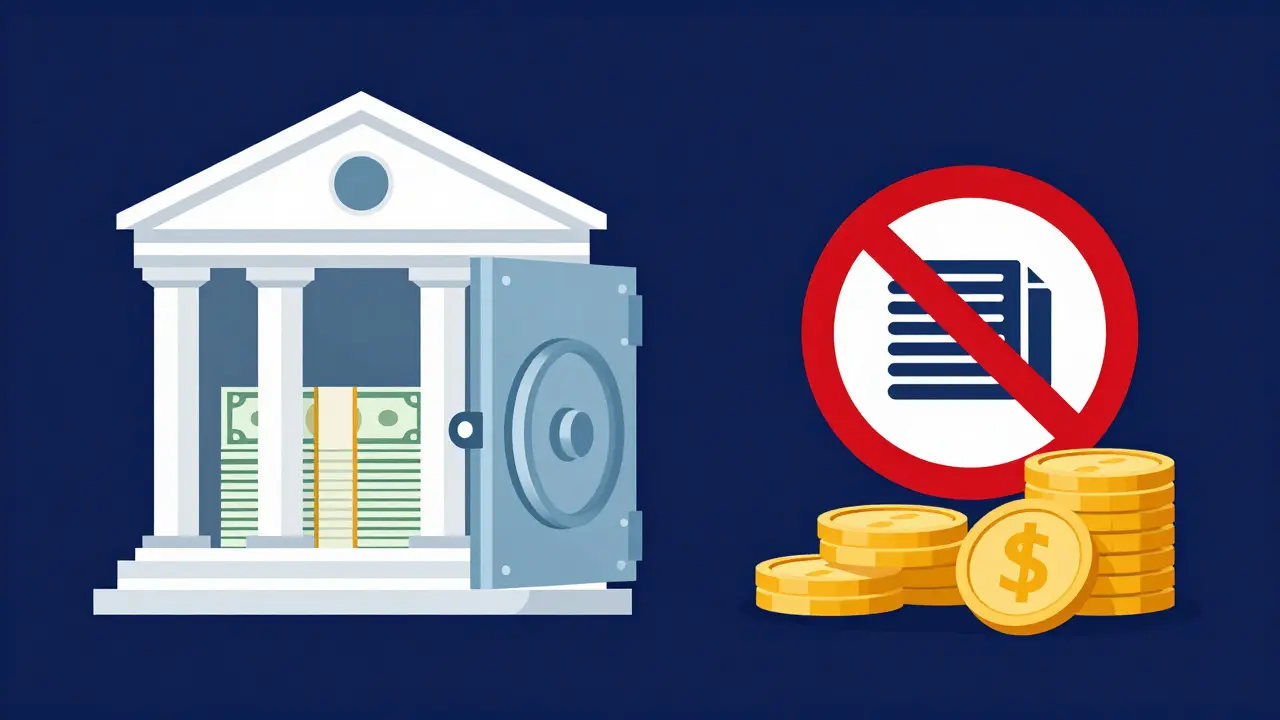
Operational Restrictions and Custody Rules
The GENIUS Act doesn't just control who issues stablecoins; it controls what they can do with them. Permitted activities are strictly limited to issuing and redeeming stablecoins, managing reserves, and providing custodial services. Issuers cannot engage in unrelated business ventures using the stablecoin infrastructure.
A critical restriction involves rehypothecation. In finance, rehypothecation means using collateral pledged to you as your own collateral elsewhere. The GENIUS Act prohibits payment stablecoin issuers from rehypothecating collateral held in reserves. There is a tiny exception for creating liquidity to meet reasonable redemption expectations, such as pledging Treasury bill reserves for short-term repurchase agreements cleared by approved central clearing counterparties. However, this requires prior regulatory approval or strict adherence to clearing standards. This rule prevents the complex chain reactions that can occur when lenders fail, protecting the stability of the reserve pool.
Custody is another tight spot. Services for holding stablecoin reserves or private keys can only be performed by entities under federal or state banking regulator oversight. Interestingly, the act includes an exclusion for persons providing hardware or software to facilitate customer self-custody. If you keep your stablecoins in a personal hardware wallet, you are largely exempt from these institutional custody rules. This protects the right of individuals to control their own assets without needing a bank's permission.
Anti-Money Laundering and Consumer Protection
No discussion of financial regulation is complete without mentioning AML/CFT compliance. The GENIUS Act mandates that all issuers comply with the Bank Secrecy Act. This means stablecoin issuers must implement robust anti-money laundering (AML) and counter-financing of terrorism (CFT) measures. They must monitor transactions, report suspicious activities, and verify the identity of users engaging in large transfers.
This aligns stablecoins with traditional banking standards, making it harder for illicit actors to use them for anonymous crime. For legitimate users, this might mean slightly more friction when moving large amounts, such as KYC (Know Your Customer) checks. However, it significantly reduces the risk of your platform being shut down due to association with illegal activity, enhancing the long-term viability of the ecosystem.

The Role of the Stablecoin Certification Review Committee
To ensure consistency across the country, the GENIUS Act establishes the Stablecoin Certification Review Committee (SCRC). Chaired by the Secretary of the US Department of Treasury, this committee includes the Federal Reserve Chair and the FDIC Chair. Their job is to review state-level stablecoin regulatory frameworks and determine if they are "substantially similar" to the federal requirements.
This creates a unified approach. Previously, each state could have different rules, forcing companies to navigate a patchwork of regulations. The SCRC aims to prevent this fragmentation by setting a high federal bar. If a state's rules are deemed insufficient, the federal framework takes precedence. However, some legal experts note that state-issued stablecoins might still exist in a gray area, potentially leading to some residual inconsistency. Still, the SCRC represents a massive step toward national uniformity.
Comparison: Old vs. New Regulatory Environment
| Feature | Pre-GENIUS Act (2024 & earlier) | Post-GENIUS Act (2026 onwards) |
|---|---|---|
| Issuers Allowed | Any entity with capital | Insured depository institutions or Fed-approved nonbanks |
| Reserve Backing | Varied; often opaque | 1:1 in cash, Treasuries, or approved low-risk assets |
| Audits | Voluntary attestations | Mandatory annual audits by public accounting firms |
| Commingling | Often permitted | Prohibited; strict segregation required |
| Rehypothecation | Common practice | Prohibited except for specific liquidity needs |
| Oversight Body | Fragmented state/federal agencies | Stablecoin Certification Review Committee (SCRC) |
Why This Matters for You
If you are a consumer, the GENIUS Act offers peace of mind. When you use a stablecoin to pay for groceries or send money to family, you can trust that the token is backed by real, audited assets held in a regulated institution. The risk of a "depeg" event-where the stablecoin loses its value due to poor reserve management-is significantly reduced.
For businesses, the clarity allows for better integration of stablecoins into payment systems. Knowing that the regulatory framework is stable encourages adoption. For developers, the focus shifts from building compliant backends from scratch to integrating with permitted issuers. The exclusion for self-custody tools remains a bright spot for privacy-focused innovators.
The international context also plays a role. With Hong Kong passing its own Stablecoin Ordinance in May 2025, the US is positioning itself as a leader in digital asset regulation. The GENIUS Act helps maintain the US dollar's status as the global reserve currency by ensuring that dollar-pegged digital assets are safe, transparent, and reliable. As we approach the 2027 implementation deadline, expect to see major banks launching their own branded stablecoins, replacing many of the decentralized options currently on the market.
When does the GENIUS Act officially take effect?
The GENIUS Act is scheduled to take effect on January 18, 2027. However, it may become effective sooner, specifically 120 days after the final implementing regulations are issued by federal agencies, whichever date comes first.
Can I still use my existing stablecoins?
Yes, you can continue to hold and use existing stablecoins. However, the issuers of those stablecoins must transition to comply with the new GENIUS Act requirements by the effective date. This may involve changing reserve structures, undergoing audits, or partnering with regulated banks. Non-compliant issuers may cease operations in the US.
Does the GENIUS Act affect Bitcoin or Ethereum?
No. The GENIUS Act specifically targets "payment stablecoins"-digital assets pegged to a fixed monetary value like the US dollar. Volatile cryptocurrencies like Bitcoin and Ethereum are not considered payment stablecoins under this definition and are not subject to these specific reserve and issuance rules.
What happens if a stablecoin issuer goes bankrupt?
Under the GENIUS Act, stablecoin reserves must be segregated from the issuer's other assets. This means that if the issuing bank fails, the assets backing the stablecoins are protected and should not be seized to pay the bank's other creditors. Users should still be able to redeem their stablecoins for the underlying value.
Are foreign stablecoins banned in the US?
The GENIUS Act prohibits the issuance of payment stablecoins in the United States by non-permitted entities. While it doesn't explicitly ban holding foreign stablecoins, it restricts their domestic distribution and usage within the US financial system unless they comply with federal standards. Issuers must be permitted payment stablecoin issuers approved by federal or state regulators.
How does the GENIUS Act protect against money laundering?
All permitted stablecoin issuers must comply with the Bank Secrecy Act. This requires them to implement Anti-Money Laundering (AML) and Counter-Financing of Terrorism (CFT) programs. They must verify user identities for certain transactions, monitor for suspicious activity, and report such activities to authorities, similar to traditional banks.
Can I store my stablecoins in a personal wallet?
Yes. The GENIUS Act includes an exclusion for persons providing hardware or software to facilitate customer self-custody. You are free to hold your stablecoins in a personal hardware or software wallet without needing to use a bank's custodial services, preserving your ability to control your private keys.