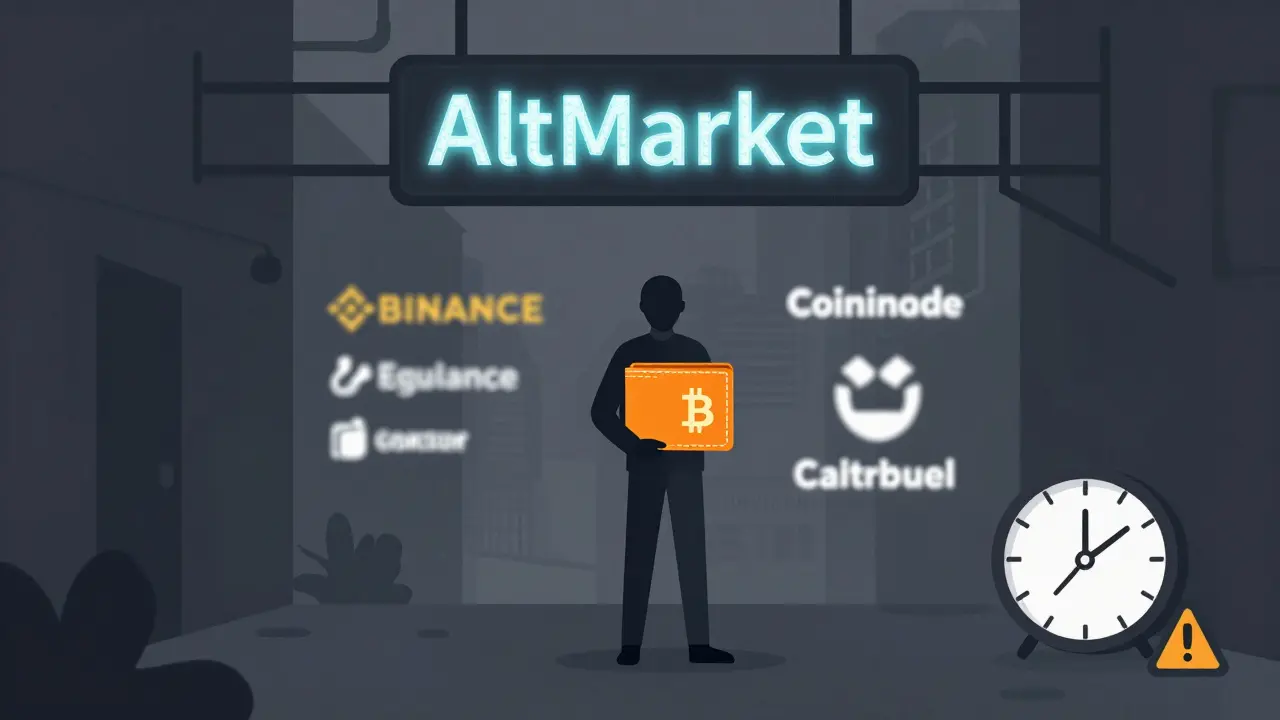
AltMarket isn't another Binance or Coinbase. It doesn't have millions of users, flashy apps, or regulatory backing. Instead, it exists in the shadows - a no-KYC crypto exchange that promises quick, anonymous trading for people who want to avoid identity checks. If you're already holding Bitcoin or Ethereum and just want to swap them without handing over your driver's license, AltMarket might seem like a quiet haven. But here’s the truth: it’s a trade-off. Speed and privacy come at a cost - slow withdrawals, shaky support, and zero safety net if things go wrong.
What AltMarket Actually Offers
AltMarket lets you trade around 20 cryptocurrencies, including Bitcoin, Ethereum, Tao, and Syscoin. That’s it. No USD deposits. No bank transfers. No credit cards. You need to already have crypto in your wallet to even get started. That’s not a bug - it’s the whole point. This exchange targets users in countries where banking access is limited or where privacy is non-negotiable. If you’re in a region where mainstream exchanges block you, AltMarket might be one of the few options left.
The sign-up process is simple: enter an email, set a password, and you’re in. No ID. No selfie. No proof of address. You can start trading within minutes. That’s a big deal for people who value anonymity. But it also means there’s no recovery path if you forget your password or get hacked. There’s no customer service team to call, no reset link to email - just you and your keys.
Fees and Trading Costs
AltMarket charges a flat 0.25% fee for both makers and takers. That’s higher than most major exchanges today, which typically charge between 0.10% and 0.15%. On a $1,000 trade, you pay $2.50 instead of $1 to $1.50. That’s noticeable over time.
But here’s the twist: withdrawal fees are unusually low. For Bitcoin, AltMarket charges just 0.000051 BTC per withdrawal. Compare that to the industry average of 0.00053 BTC - AltMarket is about 15-20% cheaper. For users making small, frequent transfers, this adds up. If you’re moving around 0.1 BTC every few weeks, you’re saving real money.
Still, low fees don’t mean fast service. Withdrawals are where most users hit a wall.
Withdrawal Delays: The Real Problem
AltMarket claims instant processing. Reality? Users report delays of 3 to 5 business days - sometimes longer. One user on Trustpilot withdrew 0.5 BTC and waited four days. When they contacted support, they were asked to submit ID verification - even though they never had to provide any during sign-up. That’s not just frustrating. It’s a red flag.
Support response times are consistently slow. Reports say it takes 72+ hours just to get a reply. And there’s no live chat. No phone number. No ticket system that works. If you’re stuck with a pending withdrawal on a Friday, you’re probably waiting until next Tuesday.
Community advice? Submit withdrawals early in the week. Keep amounts under 1 BTC. Avoid weekends. These aren’t tips - they’re workarounds for a broken system.
Security Claims vs. Reality
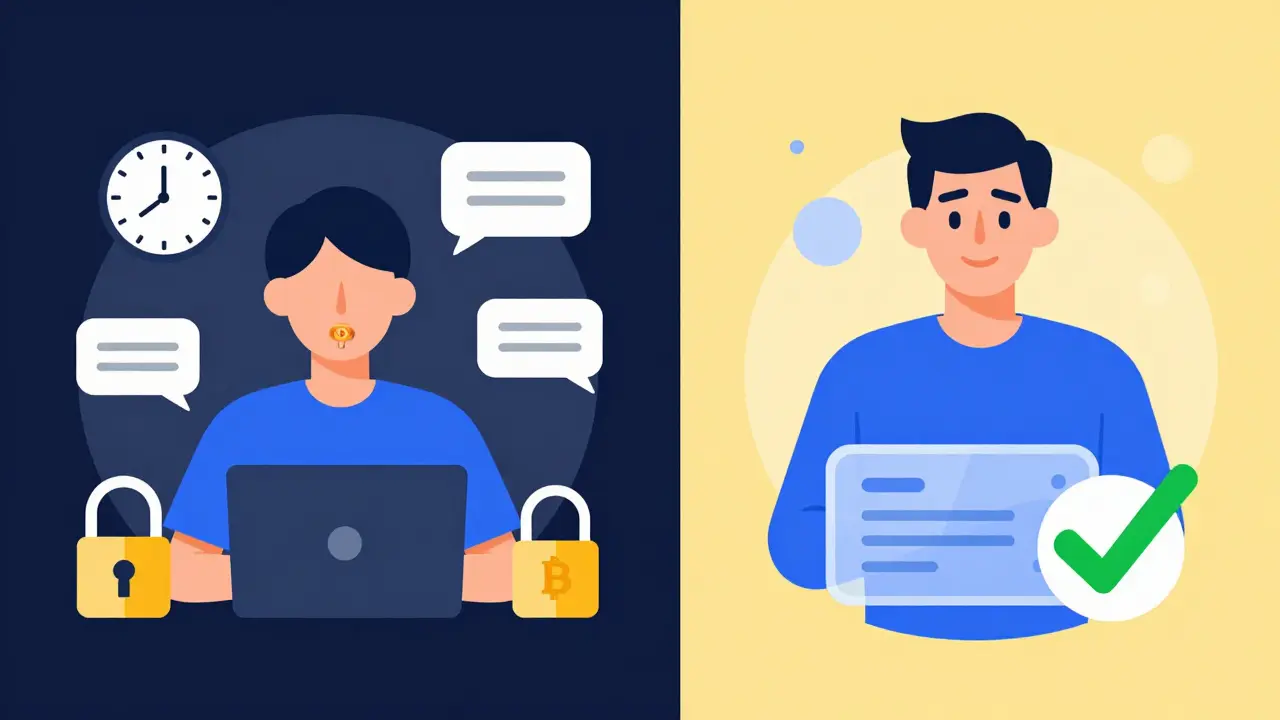
AltMarket says it uses “robust cold storage,” “multisignature wallets,” and “air-gapped master keys across multiple continents.” Sounds impressive, right? Here’s the catch: there’s zero proof. No independent audit. No transparency report. No public wallet addresses to verify holdings. You’re trusting their word.
Compare that to Kraken or Coinbase - both publish regular proof-of-reserves reports. AltMarket doesn’t. That’s not just a lack of transparency - it’s a risk. If the exchange gets hacked, there’s no way to know if your coins are still there. And if they disappear, you have no recourse.
Even worse, a 2025 report from Cryptolegal.uk lists “OCTAMARKET” as a suspected scam. The spelling is different - OCTAMARKET vs. AltMarket - but the similarities in structure, domain, and no-KYC model are too close to ignore. Is this the same platform? No one knows. But the association alone should make you pause.
Who Should Use AltMarket?
AltMarket isn’t for beginners. It’s not for people who want to buy crypto with a credit card. It’s not for anyone who needs fast access to funds.
It’s for one type of user: someone who already holds cryptocurrency, doesn’t trust centralized systems, and is okay with waiting days for withdrawals. If you’re trading small amounts - under 0.5 BTC - and you’re okay with zero customer service, then maybe it fits. But even then, you’re gambling on a platform with no accountability.
For most people, decentralized exchanges like Uniswap or PancakeSwap are safer. You control your keys. No withdrawal delays. No hidden ID requests. Yes, gas fees can spike - but at least you know where your coins are.
Why AltMarket Stands Out (For the Wrong Reasons)
Most exchanges compete on volume, features, and security. AltMarket competes on anonymity - and it’s losing.
Its trading volume is so low, it doesn’t even show up on CoinGecko or CoinMarketCap. That’s not a badge of honor - it’s a warning. If no one else is trading there, why should you? Low volume means slippage. Low volume means fewer liquidity pools. Low volume means your orders might not fill.
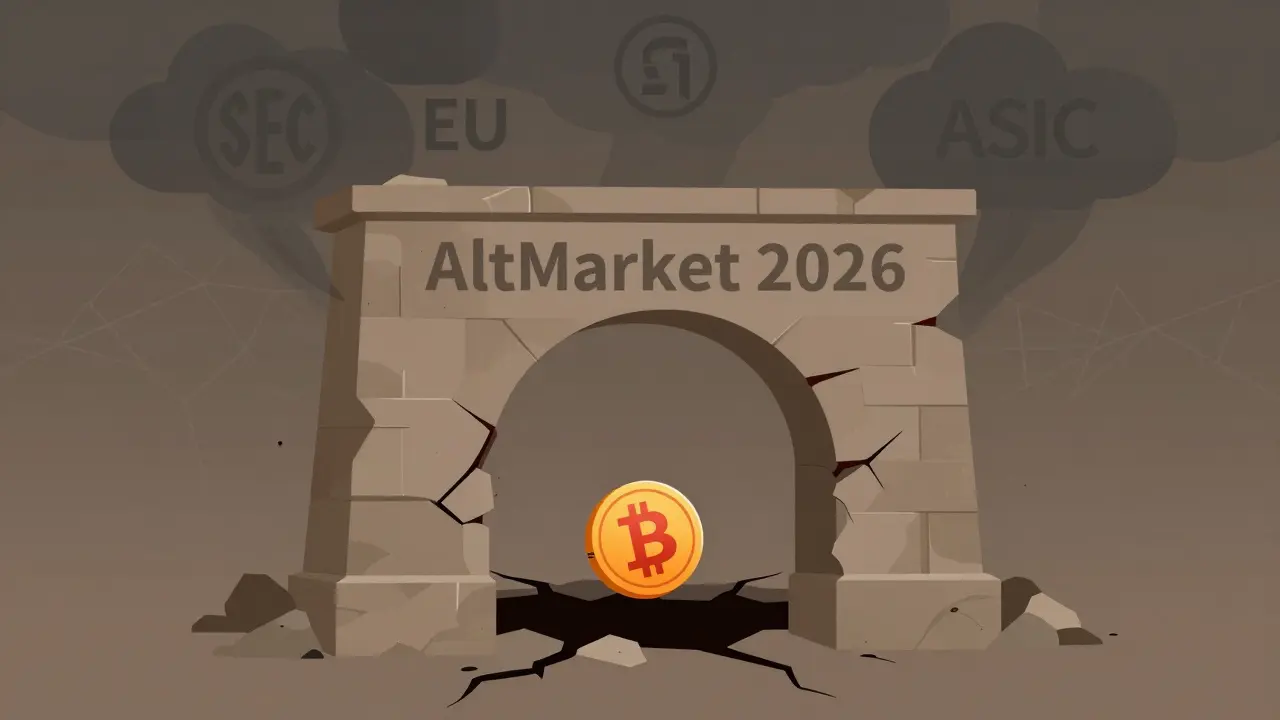
And with regulatory pressure tightening globally, unlicensed exchanges like this are becoming targets. The SEC, EU regulators, and Australia’s ASIC are all cracking down. AltMarket doesn’t have a legal team. It doesn’t have compliance officers. It doesn’t have insurance. One regulatory move - even a takedown notice - could shut it down overnight.
Alternatives to Consider
- Uniswap (v3): Decentralized. No KYC. You control your wallet. Gas fees vary, but withdrawals are instant.
- FixedFloat: Centralized but no-KYC. Supports fiat on-ramps via crypto. Faster support than AltMarket.
- Kraken: Fully regulated. Strong security. Withdrawals under 24 hours. KYC required, but worth it for safety.
- Bitfinex: Offers no-KYC trading for small amounts (under 1 BTC). Better support, higher volume.
None of these are perfect. But they all offer more stability than AltMarket.
The Bottom Line
AltMarket is a relic of the wild west era of crypto. It’s fast to join. It’s cheap to withdraw. But it’s unreliable, opaque, and risky. If you’re looking for convenience, safety, or trust - walk away.
If you’re a privacy-focused trader with small amounts and patience, maybe it’s worth a try. Just don’t put more in than you can afford to lose. And never, ever treat it like a bank.
Is AltMarket safe to use?
AltMarket isn’t safe in the traditional sense. It has no regulatory oversight, no public audits, and no proven track record of protecting user funds. Its security claims - like air-gapped keys and cold storage - can’t be verified. There are also reports linking it to a flagged entity on Cryptolegal.uk’s scam list. If you use it, assume your funds are at risk.
Does AltMarket require KYC?
No, AltMarket does not require KYC during sign-up. You only need an email and password. However, users report being asked for ID verification after attempting withdrawals - even though they never provided it before. This inconsistency makes the platform unpredictable and potentially misleading.
Can I deposit fiat currency on AltMarket?
No, AltMarket does not accept any fiat deposits - not USD, EUR, AUD, or any other currency. You must already own cryptocurrency to trade on this platform. That means you can’t use it to buy Bitcoin with a bank transfer or credit card.
How long do withdrawals take on AltMarket?
AltMarket claims instant withdrawals, but users consistently report delays of 3 to 5 business days. Some have waited over a week. Support responses take 72+ hours. There’s no guaranteed timeline, and delays often come with unexpected ID requests - even for users who never completed KYC.
What cryptocurrencies can I trade on AltMarket?
AltMarket supports around 20 cryptocurrencies, including Bitcoin (BTC), Ethereum (ETH), Tao, Syscoin, and a few others. It offers roughly 20-25 trading pairs, all for spot trading only. There are no futures, options, or margin trading. The selection is very limited compared to major exchanges like Binance or Kraken, which support hundreds of assets.
Is AltMarket listed on CoinGecko or CoinMarketCap?
No, AltMarket is not listed on CoinGecko or CoinMarketCap. Its trading volume is too low to be tracked by major data providers. This lack of visibility is a red flag - it means the platform operates outside mainstream oversight and has little to no liquidity.
What are the trading fees on AltMarket?
AltMarket charges a flat 0.25% fee for both makers and takers. This is higher than the industry average of 0.10%-0.15%. However, withdrawal fees are unusually low - Bitcoin withdrawals cost just 0.000051 BTC, which is about 15-20% lower than the global average.
Can I use AltMarket on mobile?
AltMarket is a web-based platform with no official mobile app. You can access it through your phone’s browser, but there’s no dedicated app for iOS or Android. This limits usability and makes it harder to monitor trades or respond quickly to market changes.
Is AltMarket a scam?
There’s no definitive proof AltMarket is a scam, but there are serious warning signs. It lacks transparency, has no audits, and has been associated with a flagged entity on Cryptolegal.uk’s scam list. Combined with frequent withdrawal delays, poor support, and inconsistent policies, it operates in a high-risk gray zone. Many users treat it as a last-resort option - not a trusted platform.
What’s the best alternative to AltMarket for no-KYC trading?
For no-KYC trading, decentralized exchanges like Uniswap or PancakeSwap are safer. You control your wallet, there are no withdrawal delays, and transactions are transparent on the blockchain. If you prefer a centralized option, FixedFloat or Bitfinex offer limited no-KYC trading with better support and reliability than AltMarket.