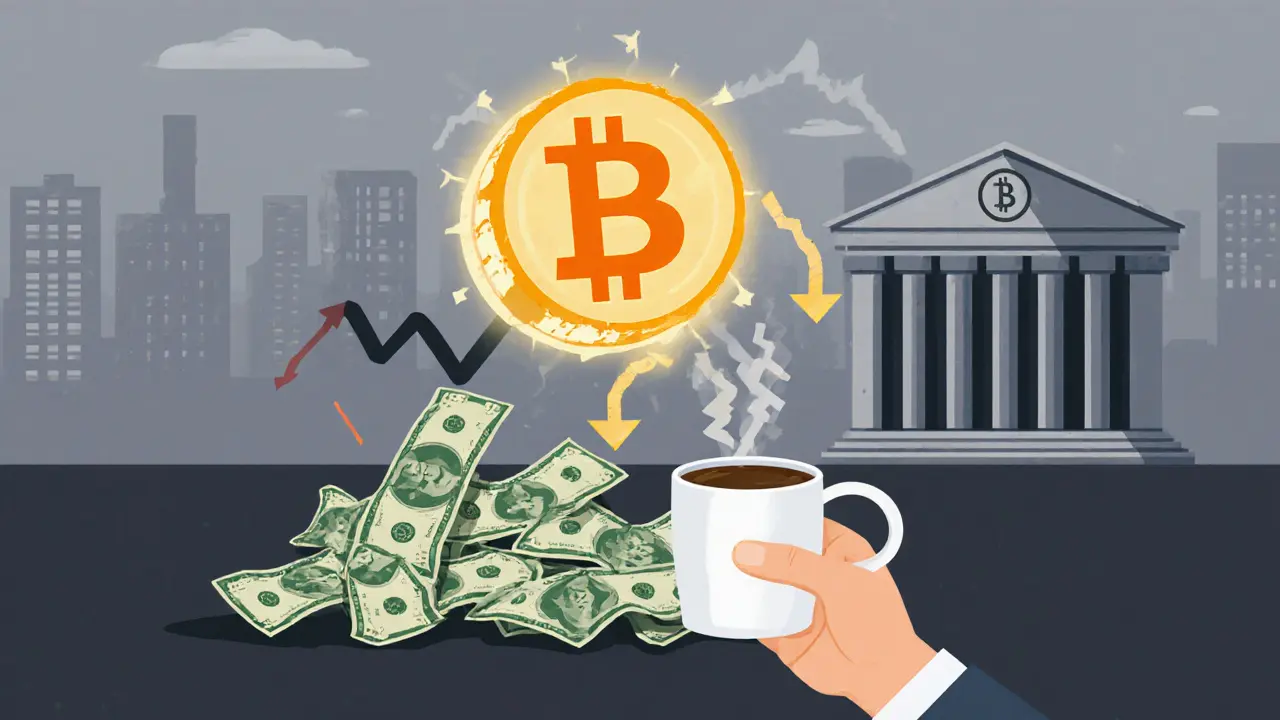
Fiat Currency Disadvantages: Why Crypto Is Gaining Ground in Southeast Asia
When you hold fiat currency, government-issued money like the Thai baht, Indonesian rupiah, or Philippine peso that has no intrinsic value. Also known as legal tender, it works because the state says so — not because it’s backed by gold, silver, or anything physical. That’s fine until you realize how much control banks and governments have over it. You can’t print more Bitcoin. But they can print more pesos, baht, or rupiah — and they do. All the time.
This isn’t just theory. In 2023, Indonesia’s inflation hit 5.5%, and Thailand’s central bank raised rates to fight it. Meanwhile, in the Philippines, remittance fees for sending money home from abroad can eat up 7% of every transfer. That’s central bank control, the power of governments and banks to manipulate money supply and interest rates in action. And when you can’t access your money because of capital controls — like in Nigeria or Iran — you start asking: Why am I stuck with this?
Inflation risk, the loss of purchasing power over time due to excessive money printing is the quiet killer of savings. A thousand baht in 2010 buys you maybe a third of what it did back then. Crypto doesn’t fix everything, but it gives you a way out. You can store value without asking permission. You can send money across borders without middlemen taking a cut. And when local banks freeze accounts or limit withdrawals — like during the 2021 crypto ban in Nigeria — people turned to P2P platforms and stablecoins to keep their money moving.
That’s why the posts below aren’t just about coins or exchanges. They’re about people in Southeast Asia finding real solutions to real problems. From UAE residents avoiding income tax on crypto gains to Iranian businesses using stablecoins to trade, the shift isn’t theoretical — it’s happening in kitchens, markets, and small shops. You’ll find reviews of exchanges that actually work for locals, warnings about fake airdrops that prey on desperation, and deep dives into how DeFi lets you earn without a bank account.
There’s no magic bullet. But if you’re tired of watching your money lose value, paying high fees to send cash, or being locked out of your own finances — you’re not alone. And you’re not stuck. The alternatives are here. Let’s look at what’s working — and what’s not.