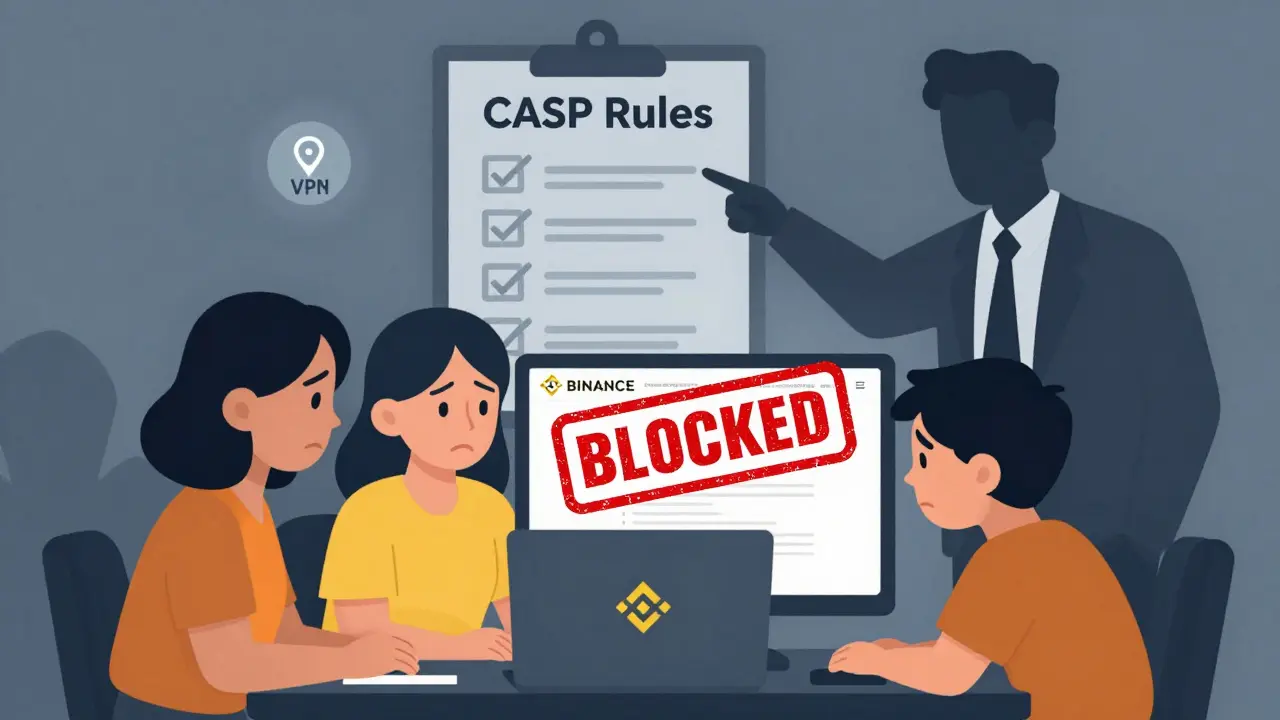
Bitget Restrictions: What You Can and Can't Do on the Exchange
When you use Bitget, a global cryptocurrency exchange that supports spot, futures, and copy trading. Also known as Bitget Global, it's one of the most popular platforms for traders in Asia, Latin America, and parts of Europe—but it’s not open everywhere. If you’ve tried signing up and got blocked, or noticed certain coins or features missing, it’s not a glitch. It’s a restriction. Bitget enforces rules based on where you live, your verification level, and even the type of trading you want to do.
Many users don’t realize that Bitget restrictions, are tied to local laws and financial regulations. Also known as regional compliance limits, they vary by country. For example, users in the U.S. can’t access derivatives or leverage trading on Bitget, even if they’re verified. Meanwhile, traders in Southeast Asia can use full features—but only if they complete strict KYC, the process of verifying your identity with government-issued ID and proof of address. Also known as Know Your Customer, it’s not optional if you want to withdraw more than a few hundred dollars. Some countries, like Russia and Iran, are outright banned. Others, like the UK and Canada, allow trading but limit leverage and certain tokens. These aren’t arbitrary. They’re responses to money laundering rules, tax reporting demands, and pressure from global financial watchdogs.
Even if you’re in a permitted region, Bitget can freeze your account without warning if it detects suspicious activity—like rapid transfers between wallets, using a VPN, or trading coins flagged as high-risk. You won’t get a detailed reason. You just get locked out. And unlike some exchanges, Bitget doesn’t offer an appeals process that’s easy to navigate. That’s why so many users end up stuck. The platform also blocks certain tokens outright, especially memecoins or new listings that haven’t passed their internal security review. If you’re looking to trade something obscure, check the list first. You’ll save yourself hours of frustration.
What you’ll find in the posts below are real cases: users who hit walls with Bitget, scams pretending to be Bitget support, and guides on how to legally work within its limits. Some posts explain how to switch to another exchange if Bitget won’t let you trade what you want. Others break down exactly which countries are banned and why. There’s even one about how Bitget’s rules compare to other platforms like MEXC or Bybit. No fluff. No guesses. Just what’s actually happening on the ground.