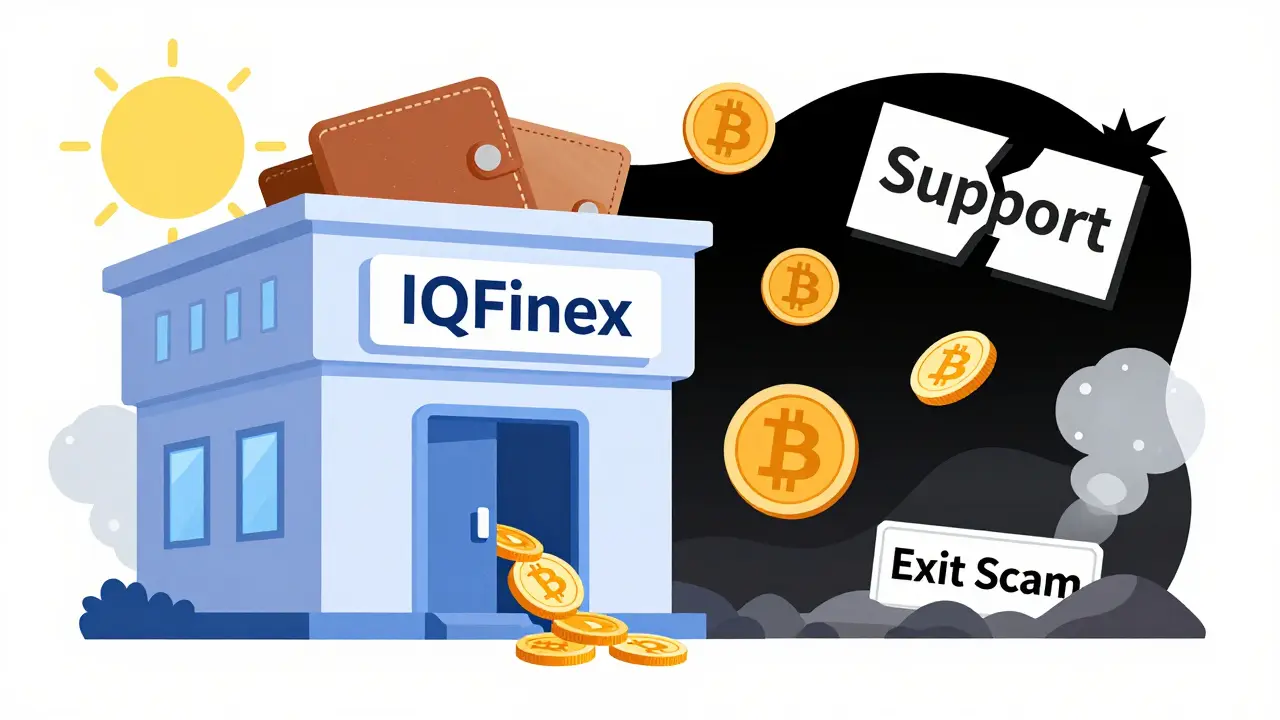
IQFinex Shutdown: What Happened and What It Means for Crypto Users
When IQFinex shutdown, a crypto exchange that promised fast trades and high rewards suddenly vanished without warning. Also known as IQFinex collapse, this wasn't just another platform going offline—it was a full exit scam that wiped out user balances and erased trust overnight. The same pattern shows up again and again: a platform with flashy marketing, no clear team, and zero transparency. IQFinex wasn't alone. COSS, United Exchange, and EXIR all followed similar paths—offering promises they couldn't keep, then disappearing when users tried to withdraw.
What makes IQFinex stand out is how quickly it moved from hype to silence. One day, users were trading with low fees and easy deposits. The next, the website was down, customer support vanished, and social media accounts went dark. This is the classic sign of a crypto exchange failure, a platform built to collect funds, not to operate as a real trading service. It relates directly to exchange scam, a term used when a platform intentionally misleads users into depositing assets with no intention of returning them. These scams thrive in unregulated markets where users don’t verify licensing, team backgrounds, or audit history.
The fallout from IQFinex isn’t just about lost money. It’s about how these failures shape what traders look for next. After IQFinex, users started asking harder questions: Is there a real team behind this? Are the trading volumes real? Is there a public audit? The same questions apply to platforms like United Exchange or Bit Hotel—places that look shiny but lack proof of legitimacy. This is why the most trusted exchanges—like Binance, Kraken, or even regional ones like EXIR—prioritize transparency, even if they’re not perfect. They publish team info, regulatory status, and security practices. IQFinex did none of that.
If you’ve ever wondered why some exchanges vanish overnight while others last years, the answer is simple: legitimacy. IQFinex shutdown happened because it had none. The same risks exist today. New platforms pop up promising rewards, low fees, or exclusive access. But if you can’t find a real person behind the project, or if the website looks like a template from 2018, walk away. The posts below cover other platforms that failed the same way—COSS, United Exchange, and even the misleading claims around VLXPAD and SUKU. Each one teaches the same lesson: if it sounds too good to be true, it probably is. And if the team is invisible, your money is too.